campaign
creatives

7 Best Top Features To Look For In Marketing Software That Drive Real ROI
Discover the top features to look for in marketing software that consistently deliver measurable results, from integrated CRM capabilities to automated workflows that scale your campaigns.
Choosing marketing software feels overwhelming when you're staring at dozens of platforms, each promising to revolutionize your campaigns. You know you need something more powerful than spreadsheets and disconnected tools, but with monthly subscriptions ranging from $50 to $5,000+, making the wrong choice could drain your budget without delivering results.
The marketing software landscape has exploded in recent years, with over 11,000 solutions competing for your attention. Yet most businesses still struggle with fragmented data, manual reporting, and campaigns that don't deliver measurable ROI.
Smart marketers focus on specific capabilities rather than flashy demos. The most successful implementations happen when teams identify their core needs first, then match those requirements to platforms that excel in those areas.
This guide examines the marketing software platforms that consistently deliver results, focusing on the features that matter most for driving growth. We'll explore tools that excel in different areas—from automated marketing solutions for small businesses to enterprise-grade platforms that handle massive scale. By the end, you'll know exactly which features to prioritize and which platforms deliver them best.
1. HubSpot Marketing Hub
Best for: All-in-one inbound marketing with integrated CRM capabilities
HubSpot Marketing Hub leads the inbound marketing space with its comprehensive platform that connects every touchpoint in your customer journey.
Where This Tool Shines
HubSpot excels at unifying your entire marketing operation under one roof. Unlike platforms that force you to integrate multiple tools, HubSpot's native CRM integration means every email, form submission, and website visit automatically connects to detailed contact profiles.
The platform's strength lies in its ability to track the complete customer journey from first touch to closed deal. Their drag-and-drop email builder, landing page creator, and workflow automation work seamlessly together, eliminating the data silos that plague most marketing teams.
Key Features & Capabilities
Native CRM Integration: Detailed contact scoring and lifecycle stages automatically update based on engagement.
Advanced Email Marketing: A/B testing and behavioral triggers optimize campaign performance.
Landing Page Builder: Conversion optimization tools help maximize lead generation.
Social Media Management: Scheduling and monitoring across all major platforms from one dashboard.
Marketing Automation: Visual workflow builder creates sophisticated nurture sequences without coding.
Comprehensive Analytics: Attribution reporting connects marketing activities to revenue outcomes.
Lead Nurturing: Sequences trigger based on user behavior and demographic data.
Best For / Ideal Users
Perfect for growing businesses that want to scale their inbound marketing efforts without managing multiple tool integrations. The platform suits teams that prioritize lead nurturing and need detailed visibility into how marketing activities drive sales results.
Organizations currently managing five or more separate marketing tools often find the operational simplicity justifies HubSpot's premium pricing. Companies struggling with lead handoff processes between marketing and sales gain immediate value from unified contact visibility.
Pricing
Free tier available with basic features. Paid plans start at $45/month for Starter, with Professional at $800/month and Enterprise at $3,200/month.
2. Marketo Engage
Best for: Enterprise-level marketing automation with advanced lead scoring
Marketo Engage powers sophisticated B2B marketing operations for organizations managing complex, multi-touch sales cycles that span months rather than days.
Where This Tool Shines
Marketo's architecture was built specifically for the messy reality of enterprise B2B marketing—where a single deal involves multiple stakeholders, countless touchpoints, and revenue that justifies serious investment in lead intelligence. The platform excels at tracking and scoring prospects across extended engagement periods, automatically identifying which leads show genuine buying intent versus casual research.
The real power emerges in how Marketo handles attribution complexity. When a prospect attends three webinars, downloads five whitepapers, visits your pricing page twice, and finally converts after a sales call, Marketo's revenue cycle analytics connect every interaction to the final outcome. This visibility transforms marketing from a cost center into a measurable revenue driver.
Key Features & Capabilities
Predictive Lead Scoring: Machine learning algorithms analyze historical conversion patterns to score new leads based on which behaviors actually correlate with closed deals, not just assumptions.
Account-Based Marketing Tools: Coordinate campaigns across all contacts within target accounts, with account-level engagement scoring that identifies when entire buying committees show interest.
Revenue Cycle Modeling: Custom lifecycle stages map precisely to your sales process, measuring conversion rates and velocity at each stage to identify bottlenecks.
Multi-Touch Attribution: Sophisticated models distribute credit across all marketing touchpoints, showing which campaigns contribute to pipeline even when they're not the final conversion point.
Dynamic Content Personalization: Automatically serve different content variations based on industry, company size, engagement history, or any custom attribute without creating separate campaigns.
Best For / Ideal Users
Marketing operations teams at B2B companies with deal sizes that justify dedicated marketing automation specialists. Organizations where sales cycles involve multiple decision-makers and require coordinated nurturing across 6-18 month timeframes.
Companies already invested in Salesforce or Microsoft Dynamics CRM who need deep integration between marketing activities and sales pipeline data. Businesses that must prove marketing's contribution to revenue with detailed attribution reporting.
Pricing
Growth edition starts at $1,195/month for up to 10,000 contacts. Plus and Advanced editions require custom quotes, typically ranging from $3,000-$15,000+ monthly depending on database size and feature requirements.
3. Mailchimp All-in-One Marketing Platform
Best for: Small to medium businesses seeking user-friendly email marketing with expansion capabilities
Mailchimp All-in-One Marketing Platform has evolved from a simple email tool into a comprehensive marketing platform that maintains its signature ease-of-use while adding sophisticated automation and analytics capabilities.
Where This Tool Shines
Mailchimp's greatest strength is democratizing professional marketing for non-technical users. Small business owners can launch sophisticated campaigns without hiring specialists or spending weeks learning complex systems. The interface feels intuitive from day one, with drag-and-drop builders and pre-designed templates that look professionally crafted.
The platform's AI-powered recommendations analyze your audience behavior to suggest optimal send times, subject line variations, and content adjustments. These insights help small teams compete with larger marketing departments by automating decisions that would otherwise require extensive testing and analysis.
Key Features & Capabilities
Drag-and-Drop Email Builder: Create mobile-responsive campaigns without coding knowledge using customizable templates.
Audience Segmentation: Target specific groups based on purchase history, engagement patterns, and demographic data.
Marketing Automation: Build customer journeys with pre-built templates for welcome series, abandoned cart recovery, and re-engagement campaigns.
Multi-Channel Integration: Manage Facebook and Instagram ads alongside email campaigns from a single dashboard.
Landing Page Builder: Design conversion-optimized pages with A/B testing capabilities to improve campaign performance.
E-commerce Tools: Connect with Shopify, WooCommerce, and other platforms for automated product recommendations and purchase follow-ups.
Performance Analytics: Track open rates, click-throughs, and revenue with industry benchmarking to understand competitive positioning.
Best For / Ideal Users
Perfect for small to medium businesses prioritizing quick implementation and ease-of-use over advanced enterprise features. E-commerce businesses benefit particularly from Mailchimp's product recommendation engine and abandoned cart automation.
Service providers and content creators appreciate the platform's ability to grow alongside their business, starting with basic email campaigns and expanding into sophisticated automation as needs evolve.
Pricing
Free plan supports up to 500 contacts with basic email features. Essentials starts at $13/month, Standard at $23/month adds automation and testing, while Premium at $350/month includes advanced segmentation and multivariate testing.
4. Pardot (Salesforce Marketing Cloud Account Engagement)
Best for: B2B companies already using Salesforce CRM seeking seamless integration
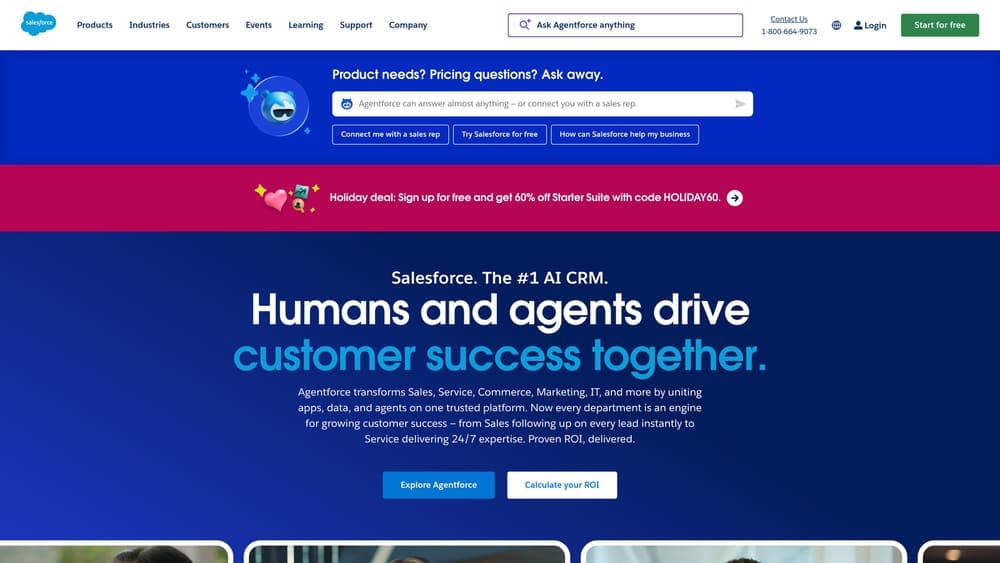
Pardot (now rebranded as Salesforce Marketing Cloud Account Engagement) delivers B2B marketing automation that lives natively inside the Salesforce ecosystem.
Where This Tool Shines
Pardot eliminates the friction between marketing and sales teams by sharing a unified data foundation with Salesforce CRM. Every prospect interaction—email opens, form submissions, website visits—flows directly into Salesforce contact records without middleware or sync delays.
The platform's lead scoring sophistication stands out. You can assign points based on explicit criteria (job title, company size, industry) and implicit behaviors (content downloads, webinar attendance, pricing page visits). Sales teams see exactly which prospects are engaging and what they're interested in, making follow-up conversations more relevant and timely.
Key Features & Capabilities
Native Salesforce Integration: Bi-directional data sync means marketing activities and sales interactions appear in one unified timeline.
Progressive Profiling: Forms automatically hide fields prospects already completed, gradually building detailed profiles without form fatigue.
Dynamic Content: Email and landing page content adapts based on industry, company size, or engagement history for personalized experiences.
Lead Scoring and Grading: Separate scores measure engagement level while grades assess fit against your ideal customer profile.
ROI Reporting: Track which campaigns generate pipeline and closed revenue by connecting marketing touches to Salesforce opportunities.
Best For / Ideal Users
B2B companies already invested in Salesforce who need sophisticated lead nurturing without managing separate systems. Organizations with dedicated sales and marketing teams benefit most from Pardot's lead handoff workflows and shared visibility.
The platform works particularly well for businesses with longer sales cycles where multiple touchpoints influence purchase decisions. If your sales team needs context about prospect engagement before making calls, Pardot delivers that intelligence automatically.
Pricing
Growth edition starts at $1,250/month for up to 10,000 contacts. Plus edition at $2,500/month and Advanced edition at $4,000/month add features like advanced email analytics and multivariate testing.
5. ActiveCampaign
Best for: Advanced email marketing automation with CRM functionality at mid-market pricing
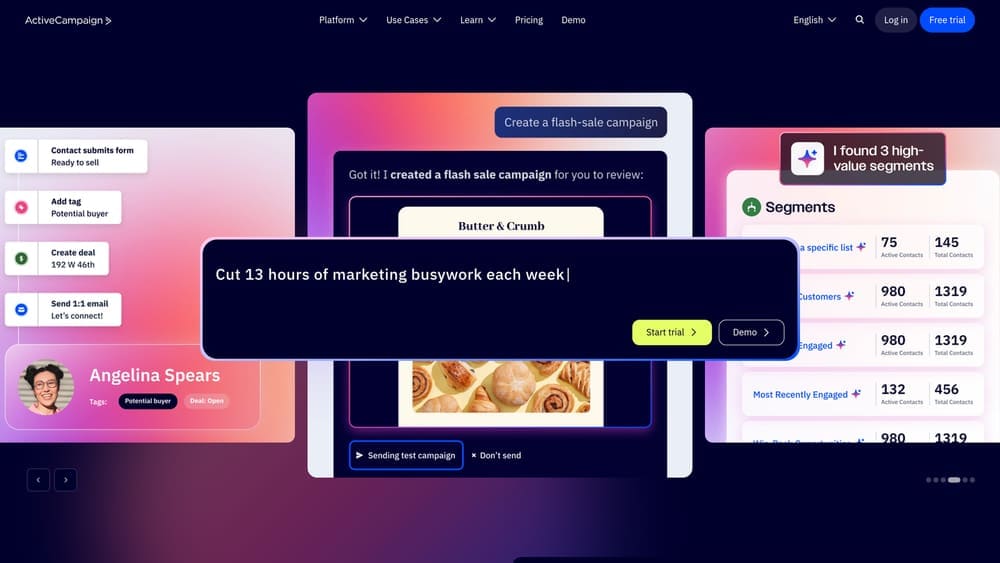
ActiveCampaign is a marketing automation platform that uses AI agents to handle email, SMS, WhatsApp and other marketing channels, backed by billions of data points.
Where This Tool Shines
ActiveCampaign occupies the sweet spot between basic email tools and enterprise platforms. The platform delivers sophisticated automation capabilities that rival solutions costing three times as much, while maintaining an interface that doesn't require a marketing operations specialist to navigate.
What sets ActiveCampaign apart is its autonomous marketing approach powered by AI agents. These agents handle repetitive marketing tasks automatically, cutting significant time from weekly marketing operations. The platform's visual automation builder allows you to create complex workflows with conditional logic, split testing, and multi-channel triggers without writing code.
Key Features & Capabilities
Visual Automation Builder: Create sophisticated workflows with conditional logic, wait conditions, and split testing through an intuitive drag-and-drop interface.
Multi-Channel Marketing: Coordinate campaigns across email, SMS, and WhatsApp from a single platform, with AI agents optimizing delivery and content.
Built-in CRM: Manage sales pipelines directly within the platform, tracking deals from first contact through closed revenue without separate CRM software.
Predictive Sending: Machine learning algorithms analyze individual contact behavior to determine optimal send times, improving open rates automatically.
Site Messaging and Chat: Engage website visitors with targeted messages and live chat capabilities that integrate with your automation workflows.
Advanced Segmentation: Target audiences using over 100 different criteria including behavior, demographics, purchase history, and engagement patterns.
Attribution Reporting: Connect marketing activities directly to revenue outcomes with detailed attribution reports showing which campaigns drive actual sales.
Best For / Ideal Users
Growing businesses that need enterprise-level automation without the enterprise price tag find ActiveCampaign particularly valuable. The platform works especially well for e-commerce companies managing complex customer journeys from first visit through repeat purchases.
Service businesses benefit from the integrated CRM functionality, eliminating the need for separate sales management tools. Marketing teams that want to implement sophisticated behavioral triggers and personalization without technical expertise can leverage the visual builder effectively.
Companies transitioning from basic email tools but not ready for platforms like Marketo discover ActiveCampaign provides the automation depth they need while remaining accessible to non-technical users.
Pricing
Lite plan starts at $15/month for basic email marketing. Plus at $70/month adds CRM and automation features. Professional at $159/month includes advanced capabilities like predictive sending and site messaging, with Enterprise at $279/month for larger organizations.
6. Klaviyo
Best for: E-commerce businesses requiring advanced customer data integration and segmentation
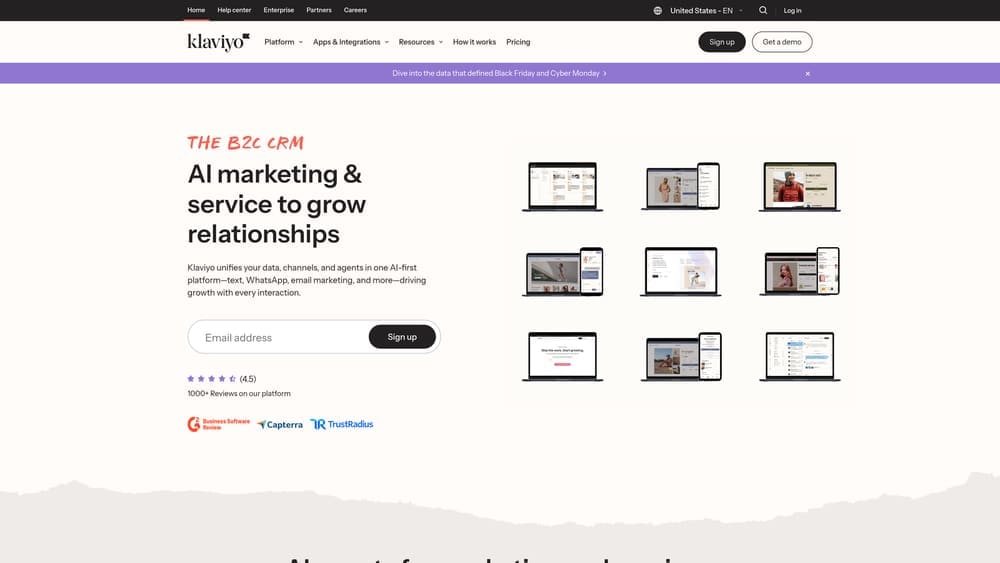
Klaviyo is a B2C CRM platform that unifies AI-powered email marketing and SMS to drive growth, retention, and measurable results through personalized, omnichannel experiences.
Where This Tool Shines
Klaviyo's laser focus on e-commerce shows immediately when you connect your store. The platform automatically pulls in every customer touchpoint—purchase history, browsing behavior, cart abandonment patterns, and product preferences—creating incredibly detailed customer profiles without manual data entry.
What sets Klaviyo apart is how it transforms transactional data into actionable marketing intelligence. Their predictive analytics calculate customer lifetime value and churn risk in real-time, letting you identify high-value customers before competitors do. The segmentation engine allows targeting based on specific purchase patterns like "bought winter coats but not accessories" or "browses frequently but hasn't purchased in 60 days."
Key Features & Capabilities
Deep E-commerce Platform Integrations: Native connections with Shopify, WooCommerce, Magento, and BigCommerce sync customer data in real-time, creating unified profiles that update with every interaction.
Predictive Analytics Engine: AI-powered predictions for customer lifetime value, next purchase date, and churn probability help prioritize outreach to customers most likely to convert.
Behavioral Segmentation: Create hyper-specific segments based on purchase frequency, product categories, average order value, seasonal buying patterns, and engagement preferences.
Pre-Built E-commerce Flows: Automated sequences for abandoned cart recovery, browse abandonment, post-purchase upselling, win-back campaigns, and customer reactivation launch in minutes.
Unified Email and SMS: Coordinate messaging across channels with consistent customer profiles, ensuring SMS and email campaigns work together rather than competing for attention.
Revenue Attribution Reporting: Track exactly which campaigns, flows, and segments drive revenue with detailed ROI metrics that connect marketing activities to actual sales.
Best For / Ideal Users
E-commerce brands of all sizes that prioritize customer retention and repeat purchases. Particularly valuable for businesses with product catalogs where cross-selling and upselling opportunities exist.
Online retailers who want to move beyond basic email blasts to sophisticated, behavior-triggered campaigns that feel personally relevant to each customer.
Growing e-commerce businesses ready to leverage customer data strategically rather than treating all subscribers the same way.
Pricing
Free plan includes up to 250 contacts and 500 monthly email sends. Email plans start at $20/month for 500 contacts, scaling based on contact volume. SMS messaging requires additional per-message fees.
7. GetResponse
Best for: All-in-one marketing platform with strong webinar and landing page capabilities
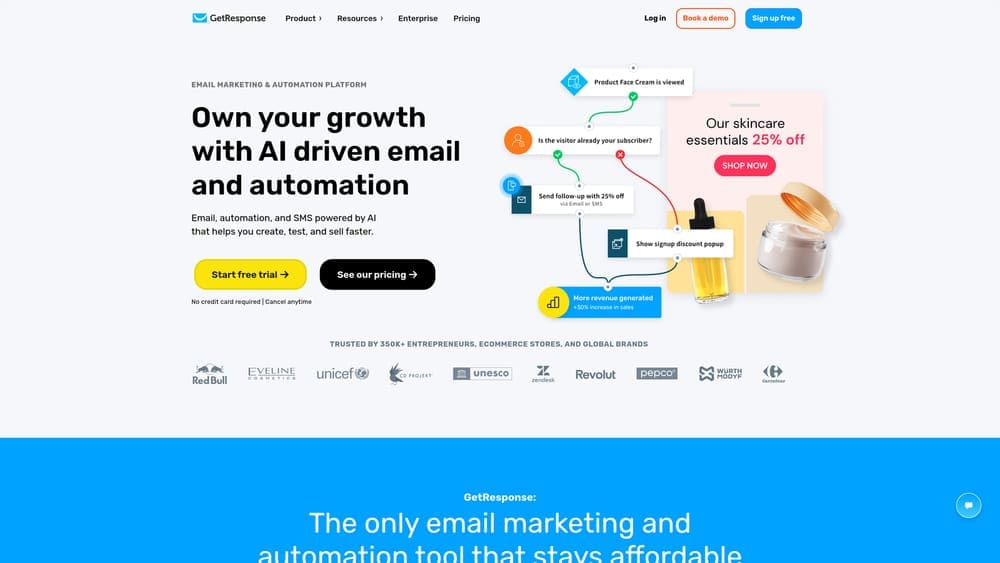
GetResponse is an AI-driven email marketing and automation platform trusted by 350,000+ businesses worldwide, combining email, automation, SMS, and webinar hosting in one comprehensive system.
Where This Tool Shines
GetResponse's unique strength lies in its integrated webinar platform—a rare feature among marketing automation tools. This makes it perfect for businesses that use educational content and live presentations for lead generation and nurturing. While competitors force you to integrate third-party webinar tools, GetResponse handles everything from registration pages to automated follow-up sequences natively.
The platform's conversion funnel builder creates complete marketing funnels from landing pages to checkout, eliminating the need to stitch together separate tools. Their AI-powered features across email creation, landing page design, and website building help businesses create professional campaigns faster without requiring design expertise.
Key Features & Capabilities
Integrated Webinar Hosting: Host up to 1,000 attendees with automated registration, reminder emails, and post-webinar follow-up sequences all managed within the platform.
AI-Driven Email Creation: AI email generator creates complete campaigns including subject lines, content, and design based on your business goals and audience.
Conversion Funnel Builder: Drag-and-drop interface creates complete sales funnels with landing pages, thank-you pages, and checkout integration for digital products.
Advanced Autoresponders: Unlimited automation workflows with behavioral triggers based on email opens, link clicks, website visits, and purchase activity.
Landing Page Creator: Over 200 mobile-responsive templates with A/B testing capabilities and conversion optimization tools built in.
E-commerce Integration: Native connections to major platforms with abandoned cart recovery, product recommendations, and purchase-based segmentation.
Multi-Channel Marketing: Combine email, SMS, web push notifications, and social media advertising in coordinated campaigns.
Best For / Ideal Users
Content marketers and educators who use webinars as a primary lead generation tool. The integrated webinar platform eliminates the need for separate tools like Zoom or GoToWebinar while maintaining professional presentation capabilities.
Service providers and consultants who combine educational content with direct sales. The conversion funnel builder allows you to guide prospects from webinar registration through purchase without technical complexity.
E-commerce businesses seeking an affordable all-in-one solution. GetResponse provides sophisticated automation and segmentation capabilities at pricing that remains accessible as your contact list grows.
Pricing
Basic plan starts at $19/month for email marketing with unlimited newsletters and landing pages. Plus at $59/month adds marketing automation and webinar hosting. Professional at $119/month includes advanced features like webinars for up to 300 attendees and paid webinars. Max at $419/month provides enterprise features including dedicated support and custom solutions.
Making the Right Choice
Selecting the right marketing software depends on matching platform strengths to your specific business needs and growth stage. HubSpot delivers unmatched simplicity for teams wanting everything under one roof, while Marketo's sophisticated automation serves enterprises managing complex B2B cycles. For e-commerce businesses, Klaviyo's customer data integration consistently outperforms general-purpose platforms.
Consider your primary use case first. B2B companies benefit most from Pardot's lead scoring capabilities when already using Salesforce, while growing businesses typically find ActiveCampaign's automation features provide enterprise-level sophistication at mid-market pricing. Content marketers and educators should explore GetResponse's integrated webinar platform, and small businesses prioritizing ease-of-use often succeed fastest with Mailchimp.
Budget matters, but focus on cost per result rather than monthly fees. A platform that doubles your conversion rate justifies higher investment compared to a cheaper tool that barely moves the needle. Most successful implementations start with core features like email automation and basic analytics, then gradually adopt advanced capabilities as teams become proficient.
The most important factor is implementation capability. Choose a platform your team can actually use effectively rather than the most feature-rich option. Remember that switching platforms later becomes increasingly difficult as your data and processes become more complex.
Invest time in trials and demos to ensure your chosen platform aligns with both current needs and future growth plans. The right marketing software becomes the foundation for scalable, data-driven growth that compounds over time.
Ready to implement a comprehensive marketing strategy? Learn more about our services and discover how our team helps businesses choose and optimize the right marketing software for their specific goals and budget.
Campaign
Creatives
quick links
contact
© 2025 Campaign Creatives.
All rights reserved.