campaign
creatives

Top 8 Marketing Automation For Small Businesses Tools To Maximize ROI
Discover the most effective marketing automation for small businesses platforms that save time, nurture leads automatically, and deliver results without requiring technical expertise or additional staff.
Running a small business means wearing multiple hats—and marketing often gets squeezed between customer service, operations, and everything else demanding your attention. You know you should be nurturing leads, sending personalized emails, and staying active on social media, but manually managing all these touchpoints? That's a full-time job you don't have time for.
Marketing automation promises to solve this problem, but here's the challenge: most platforms were built for enterprise teams with dedicated marketing departments and IT support. Small business owners need something different—tools that work out of the box, don't require a technical degree to set up, and actually save time instead of creating more work.
The right marketing automation platform can transform how you connect with customers. We're talking about automatically nurturing leads while you sleep, sending perfectly timed follow-ups without lifting a finger, and personalizing customer experiences at scale—all without hiring additional staff.
We've tested and evaluated the leading marketing automation platforms specifically through the lens of small business needs: quick setup, intuitive interfaces, affordable pricing, and features that deliver results without requiring a learning curve measured in months. Here are the top tools that actually work for businesses like yours.
1. HubSpot Marketing Hub
Best for: Small businesses wanting an all-in-one platform that grows with them
HubSpot Marketing Hub has become the go-to choice for small businesses serious about marketing automation, and for good reason.
Where This Tool Shines
HubSpot's real strength is its freemium model that actually delivers value—not just a limited trial. Small businesses can start with robust free tools including email marketing, forms, landing pages, and basic automation, then upgrade only when they're ready.
The platform's intuitive visual workflow builder makes creating automation sequences feel less like programming and more like drawing a flowchart. What sets HubSpot apart is how everything connects: your CRM, email campaigns, social media, and analytics all live in one ecosystem, eliminating the integration headaches that plague small teams using multiple disconnected tools.
Key Features & Capabilities
Visual Workflow Builder: Create automated sequences without coding using drag-and-drop interface.
Built-in CRM: Tracks every customer interaction automatically in one unified database.
Email Marketing Tools: Smart personalization and A/B testing capabilities included.
Landing Page Builder: Conversion-optimized templates with form builders integrated.
Social Media Management: Schedule and monitor all platforms from one dashboard.
Lead Scoring: Automatically identifies your hottest prospects based on behavior.
Revenue Analytics: Detailed reporting showing which campaigns actually drive sales.
Best For / Ideal Users
HubSpot works best for small businesses planning to grow and wanting a platform that scales with them. If you're currently doing marketing manually and ready to automate, or if you're using scattered tools that don't talk to each other, HubSpot provides the unified system you need.
It's particularly valuable for B2B service businesses and companies with longer sales cycles where nurturing relationships matters more than quick transactions.
Pricing
Free tier includes essential tools for up to 1,000 contacts. Paid plans start at $45/month for Starter (more automation features) and scale to $800/month for Professional (advanced automation, custom reporting). Most small businesses find the Starter tier sufficient initially.
2. ActiveCampaign
Best for: Email-focused businesses needing sophisticated automation at small business prices
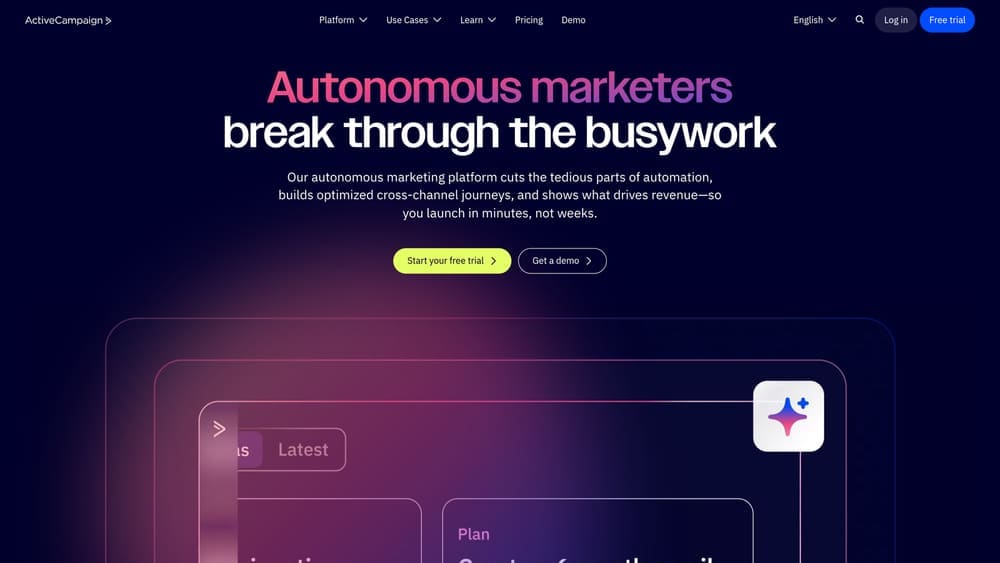
ActiveCampaign is an autonomous marketing platform that goes beyond traditional marketing automation, using AI agents to handle email, SMS, WhatsApp and other channels, backed by billions of data points.
Where This Tool Shines
ActiveCampaign's automation builder is remarkably powerful yet surprisingly accessible. The platform excels at conditional logic—"if this happens, then do that"—allowing you to create sophisticated customer journeys that respond to behavior in real-time.
What sets ActiveCampaign apart is how it combines email marketing, CRM, and sales automation in one affordable package. The platform's machine learning features, like predictive sending that automatically times emails when each contact is most likely to engage, give small businesses capabilities typically reserved for companies with data science teams. This autonomous approach means the platform learns from billions of data points to optimize your campaigns without manual intervention.
Key Features & Capabilities
Advanced Automation Builder: Create complex workflows with conditional logic and branching paths that respond to contact behavior.
AI-Powered Predictive Sending: Machine learning optimizes email timing for each individual contact based on their engagement patterns.
Built-in CRM with Pipeline Management: Track deals and manage sales processes alongside your marketing automation.
Multi-Channel Marketing: Integrate email, SMS, and WhatsApp campaigns into unified automated workflows.
Site Tracking and Behavioral Triggers: Monitor website activity and trigger automations based on specific pages visited or actions taken.
Dynamic Content Personalization: Automatically customize email content based on contact data, behavior, and preferences.
850+ Pre-Built Automation Recipes: Start with proven templates for common scenarios across different industries and business types.
Best For / Ideal Users
ActiveCampaign is ideal for small businesses where email marketing drives significant revenue—think e-commerce stores, online course creators, consultants, and service providers with engaged email lists.
If you're ready to move beyond basic email blasts and create personalized customer journeys based on actual behavior, ActiveCampaign provides the sophistication you need without overwhelming complexity.
The platform works particularly well for businesses that have outgrown simpler tools but aren't ready for enterprise-level pricing. You get advanced features like lead scoring, event tracking, and multi-channel automation without needing a technical team to implement them.
Pricing
Plans start at $29/month for 1,000 contacts with the Lite plan.
3. Mailchimp
Best for: Small businesses and solopreneurs wanting familiar, easy-to-use automation
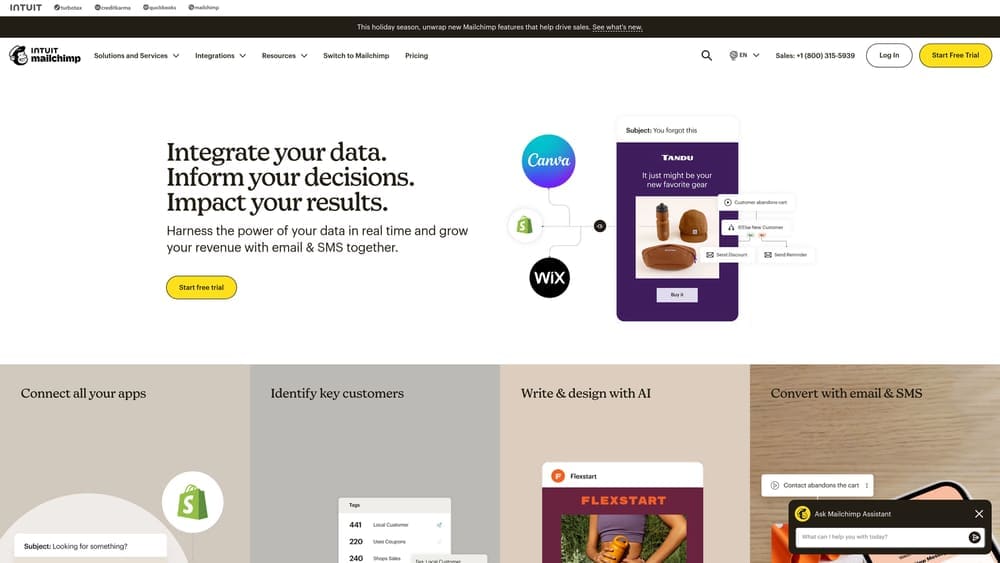
Mailchimp has evolved from a simple email tool into a comprehensive marketing platform while maintaining the user-friendly approach that made it famous.
Where This Tool Shines
Mailchimp's greatest asset is its approachability—if you've never used marketing automation before, Mailchimp won't intimidate you. The platform offers pre-built automation journeys for common scenarios like welcome series, abandoned cart recovery, and post-purchase follow-ups that you can activate with a few clicks.
Small businesses appreciate how Mailchimp handles the basics exceptionally well: beautiful email templates, straightforward list management, and clear reporting that actually makes sense. The InLine AI Assistant helps design emails and generate content suggestions, which is invaluable when you don't have a design team or copywriter on staff.
Key Features & Capabilities
Pre-built Automation Templates: Common small business scenarios ready to activate immediately.
Drag-and-Drop Email Builder: Hundreds of mobile-responsive templates that look professional without design skills.
Real-Time Behavior Data: Tracks customer actions to trigger relevant automated responses.
AI-Powered Recommendations: Machine learning optimizes for opens, clicks, and sales automatically.
SMS Marketing Integration: Combine email and text campaigns in unified workflows.
Product Recommendations: E-commerce features suggest relevant items based on purchase history.
Landing Page Builder: Create conversion-focused pages without separate tools.
Best For / Ideal Users
Mailchimp works best for small businesses and solopreneurs just starting with marketing automation who want something intuitive and reliable. It's particularly strong for e-commerce businesses using platforms like Shopify or WooCommerce, as the integrations are seamless and the e-commerce features are well-developed.
The platform suits businesses that prioritize ease of use over advanced conditional logic. If you need to get campaigns running quickly without extensive training, Mailchimp delivers.
Pricing
Free tier supports up to 500 contacts with basic email and limited automation. Essentials plan at $13/month adds more automation and removes Mailchimp branding. Standard at $20/month includes advanced automation and optimization tools. Most small businesses outgrow the free tier quickly but find Essentials sufficient for their needs.
4. Keap
Best for: Service-based businesses needing CRM and automation tightly integrated
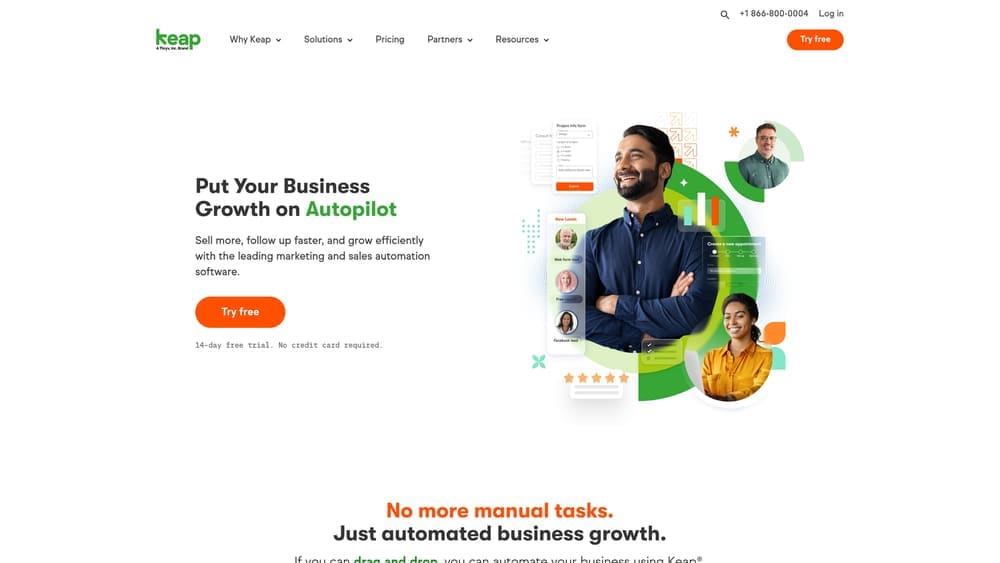
Keap has spent over 20 years building automation specifically for small service businesses—coaches, consultants, agencies, and professional services—with tools that support the entire client lifecycle from first contact to final invoice.
Where This Tool Shines
Keap understands that service businesses don't just need email automation—they need appointment scheduling, invoice generation, payment processing, and client management all working together seamlessly. The platform's automation handles complex scenarios that service businesses face daily: automatically sending contracts when a lead books a consultation, following up if the contract isn't signed within 48 hours, and triggering onboarding sequences the moment payment is received.
Small service businesses appreciate how Keap eliminates the need for multiple disconnected tools. It's your CRM, email platform, scheduler, payment processor, and client portal in one system. The text messaging capabilities are particularly strong, allowing automated SMS reminders and follow-ups that actually get read—critical for reducing no-shows and maintaining client engagement.
Key Features & Capabilities
Appointment Scheduling: Built-in calendar with automated reminders via email and SMS that sync with your availability.
Keap Pay Payment Processing: Accept payments and generate invoices directly within the platform with automated follow-up for unpaid invoices.
Service Business Pipeline: Pipeline management specifically designed for service-based sales processes with stages that reflect consultation-to-client journeys.
Text Message Marketing: SMS campaigns integrated with email automation for multi-channel follow-up sequences.
Smart Forms and Landing Pages: Conditional logic that shows different questions based on previous answers, capturing qualified leads efficiently.
Persistent Follow-Up Automation: Sequences that continue nurturing prospects until they respond or take action, eliminating manual follow-up tasks.
Client Portal: Secure area for document sharing, communication, and project updates that keeps everything organized.
Best For / Ideal Users
Keap is purpose-built for service-based small businesses where personal relationships and consistent follow-up drive revenue. Think coaches, consultants, real estate agents, financial advisors, marketing agencies, and professional services firms. If your sales process involves appointments, proposals, contracts, and ongoing client relationships rather than one-time transactions, Keap's integrated approach makes sense.
The platform works particularly well for businesses charging premium prices where reducing no-shows and maintaining professional communication directly impacts revenue. If you're currently juggling separate tools for scheduling, invoicing, email, and CRM, Keap's unified system can significantly streamline operations.
Pricing
Plans start at $249/month for Pro with 1,500 contacts, CRM, and basic automation. Max at $299/month adds advanced automation and sales pipeline features.
5. Drip
Best for: E-commerce businesses wanting sophisticated customer journey automation
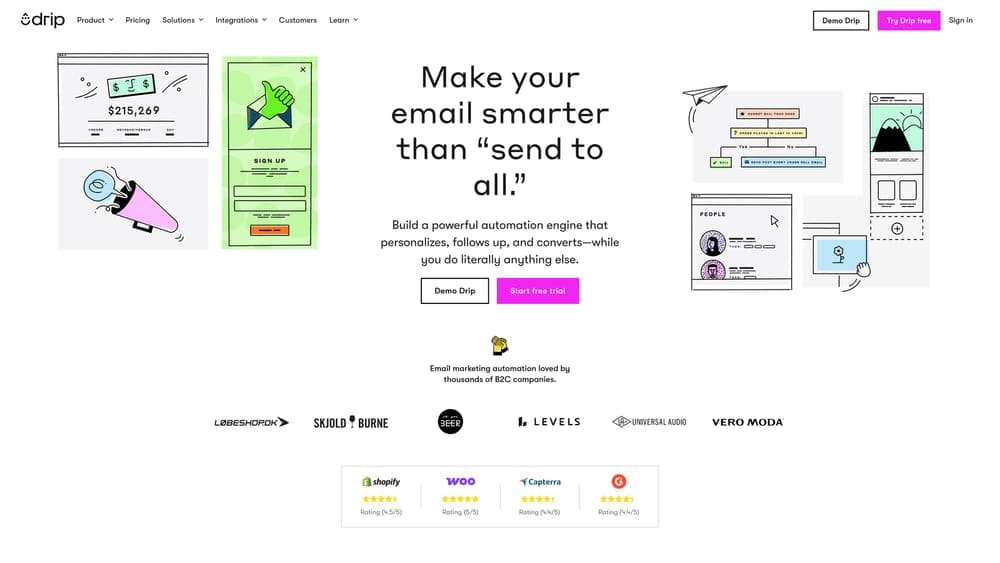
Drip was built specifically for e-commerce, and that focus shows in every feature.
Where This Tool Shines
Drip excels at turning browsing behavior into automated marketing actions. The platform tracks what products customers view, what they add to cart, what they purchase, and uses this data to trigger highly relevant automation. Small e-commerce businesses love features like abandoned cart recovery that includes the actual products left behind, post-purchase sequences that recommend complementary items, and win-back campaigns targeting customers who haven't purchased recently.
The visual workflow builder makes creating complex, behavior-based automation accessible even if you're not technical. Drip's segmentation capabilities are particularly powerful, allowing you to create hyper-targeted campaigns based on purchase history, browsing patterns, and engagement levels. The platform's revenue attribution shows exactly which emails drive sales—critical data for small businesses needing to justify marketing spend.
Key Features & Capabilities
E-commerce-Specific Workflows: Pre-built automation for cart abandonment, browse abandonment, and post-purchase sequences that understand shopping behavior.
Product Recommendation Engine: Automatically suggests products based on purchase and browsing history, increasing average order value without manual curation.
Revenue Attribution: Tracks exactly which emails drive sales, showing clear ROI for every campaign and automation.
Advanced Segmentation: Creates hyper-targeted segments using purchase data, browsing patterns, and engagement levels for personalized campaigns.
SMS Marketing Integration: Combines email and text messaging in unified workflows for multi-channel customer engagement.
Onsite Personalization: Changes website content based on visitor data, creating personalized shopping experiences at scale.
Deep E-commerce Integrations: Seamless connections with Shopify, WooCommerce, Magento, and other platforms with automatic data syncing.
Best For / Ideal Users
Drip is ideal for small to medium e-commerce businesses that have moved beyond basic email blasts and want sophisticated automation based on customer behavior. If you're selling physical or digital products online and ready to personalize the shopping experience at scale, Drip provides the tools you need.
The platform works particularly well for online retailers with diverse product catalogs where personalized recommendations drive significant revenue. Businesses that have outgrown their current platform's e-commerce capabilities will appreciate Drip's retail-focused approach.
Pricing
Plans start at $39/month for up to 2,500 contacts with full automation features.
6. Sendinblue (now Brevo)
Best for: Budget-conscious small businesses needing email, SMS, and basic automation
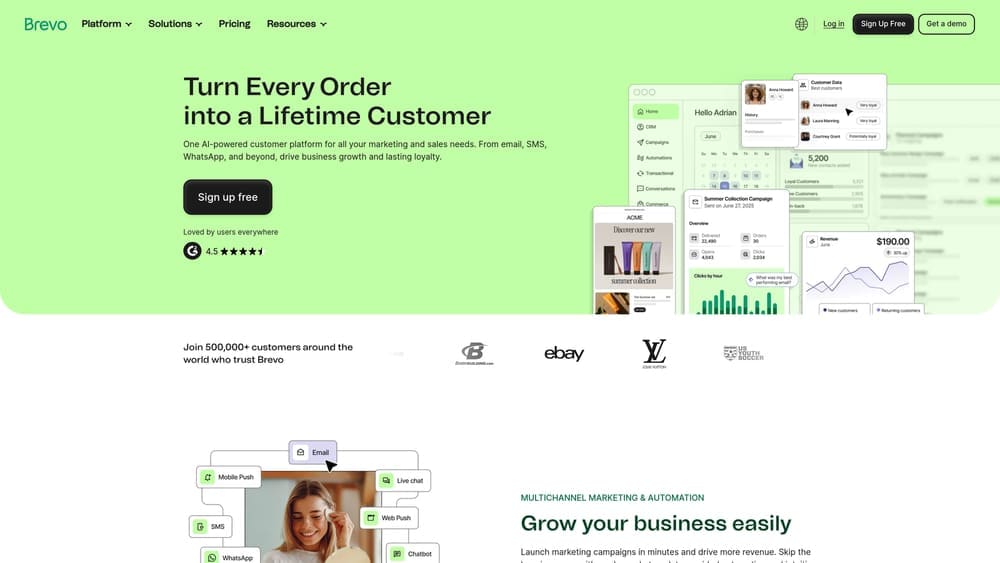
Brevo (formerly Sendinblue) turns the traditional pricing model upside down—you pay for emails sent, not contacts stored.
Where This Tool Shines
Brevo's pricing structure solves a real problem: you've built a list of 10,000 contacts but only email them twice monthly. Traditional platforms would charge you for those 10,000 contacts. Brevo charges you for the 20,000 emails you actually send. This model particularly benefits businesses with large lists but modest sending frequency.
The platform combines email, SMS, chat, and transactional email in one affordable package. You can build automation that sends an email, waits three days, follows up with SMS if unopened, then triggers a chat message when someone visits your website—all from one workflow. The transactional email service handles order confirmations, password resets, and notifications with high deliverability rates that rival dedicated services costing significantly more.
Key Features & Capabilities
Unlimited Contact Storage: Store your entire contact database without pricing penalties—you only pay when you actually send messages.
Multi-Channel Workflows: Create automation sequences that combine email, SMS, and chat based on customer behavior and engagement.
Transactional Email Service: Reliable delivery of order confirmations, shipping notifications, and account-related messages with detailed tracking.
Visual Automation Builder: Drag-and-drop interface for creating workflows with conditional logic and behavioral triggers.
Integrated Live Chat: Website chat functionality with chatbot capabilities included in paid plans, not as expensive add-on.
Best For / Ideal Users
Brevo works best for small businesses with tight marketing budgets who need reliable multi-channel capabilities without premium pricing. It's particularly valuable if you maintain a large contact database but don't email frequently—think seasonal businesses, event-based companies, or B2B services with longer sales cycles.
SaaS companies and online businesses needing transactional email alongside marketing automation find Brevo's combined offering eliminates the need for separate services. The platform also suits businesses just starting with SMS marketing who want to test the channel without committing to SMS-specialized platforms.
Pricing
Free tier includes unlimited contacts and 300 emails daily—genuinely useful for very small businesses or testing. Lite plan at $25/month provides 20,000 emails with no daily sending limit. Premium at $65/month adds marketing automation, landing pages, and advanced features.
7. GetResponse
Best for: Small businesses wanting webinar capabilities integrated with automation
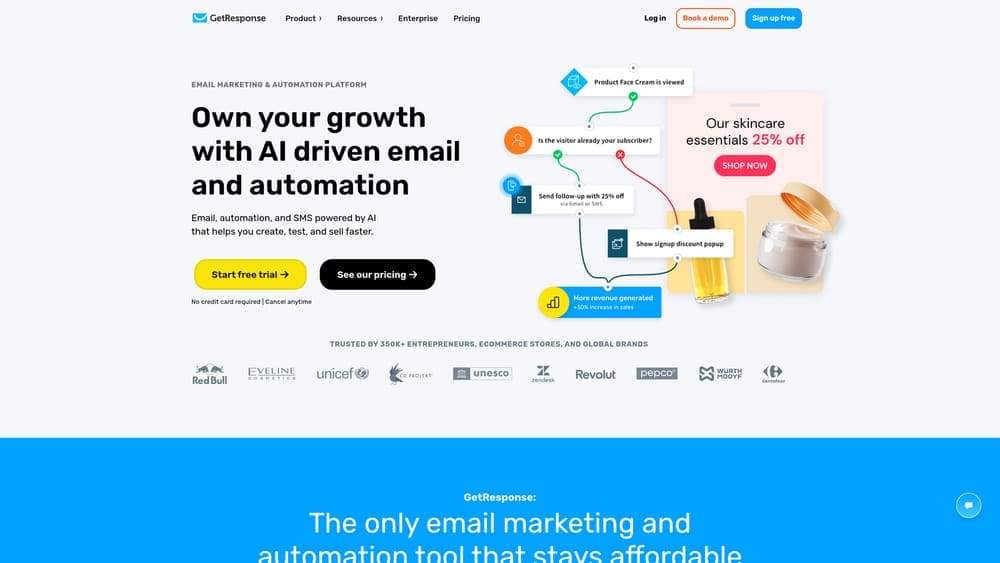
GetResponse combines email marketing and automation with built-in webinar hosting—a unique pairing that eliminates the need for separate platforms when webinars drive your marketing strategy.
Where This Tool Shines
GetResponse's webinar functionality sets it apart from typical marketing automation platforms. You can create automated sequences that promote upcoming webinars, send reminder emails as the event approaches, and trigger different follow-up campaigns for attendees versus no-shows—all within one system. This integration means your webinar engagement data automatically flows into your automation workflows.
The platform uses AI across multiple features, from email creation to landing page design, helping small businesses produce professional marketing assets without design expertise. The automation builder provides unlimited workflows even on entry-level plans, with pre-built templates for common scenarios like welcome series, abandoned cart recovery, and post-purchase sequences that you can customize for your business.
Key Features & Capabilities
Built-in Webinar Hosting: Host webinars for up to 1,000 attendees without third-party tools, with automated promotion and follow-up sequences.
AI-Powered Content Creation: Generate email copy, design landing pages, and create website content using AI assistance.
Unlimited Marketing Automation: Create as many automated workflows as needed with visual builder and conditional logic.
Conversion Funnels: Pre-built funnel templates guide you through creating complete campaigns from landing page to sale.
Website Builder: Create full websites with AI assistance, not just landing pages, consolidating more of your marketing stack.
E-commerce Integration: Connect with major platforms for abandoned cart recovery, product recommendations, and purchase-based automation.
Best For / Ideal Users
GetResponse works best for coaches, consultants, course creators, and B2B service providers who use webinars as a primary lead generation or sales tool. If you're currently paying for separate webinar software (like Zoom Webinar or WebinarJam) plus email marketing, GetResponse's integrated approach simplifies your tech stack while reducing costs.
The platform also suits small e-commerce businesses wanting solid automation without the complexity of specialized e-commerce platforms, particularly if you're selling information products or services alongside physical goods.
Pricing
Email Marketing tier starts at $19/month for 1,000 contacts with basic automation and unlimited newsletters. Marketing Automation tier at $59/month adds advanced workflows and webinars for up to 100 attendees. E-commerce tier at $119/month includes webinars for 300 attendees plus advanced e-commerce features.
8. Moosend
Best for: Small businesses wanting powerful automation at the lowest possible price
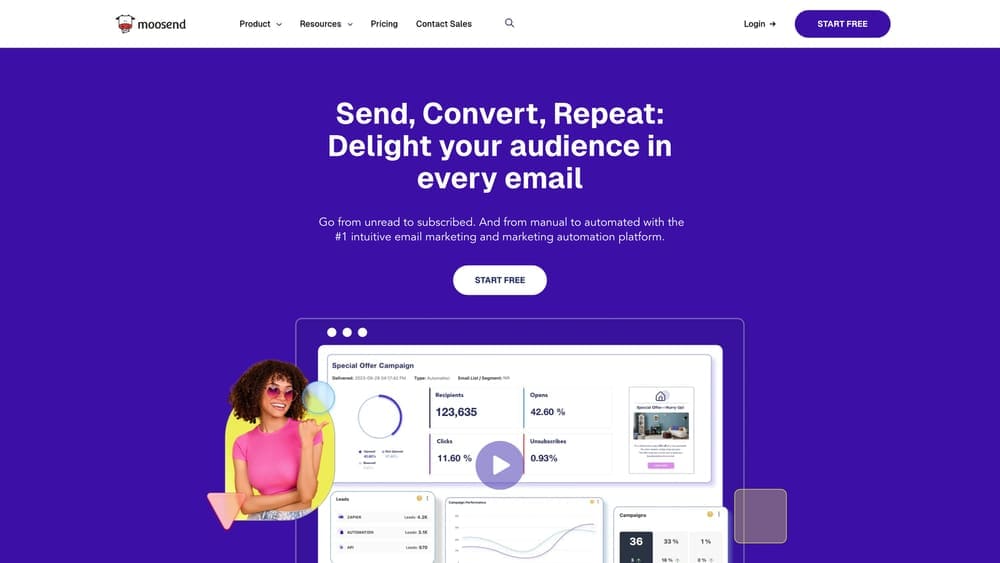
Moosend delivers surprisingly sophisticated automation capabilities at prices that undercut most competitors, proving that budget-friendly doesn't mean feature-poor.
Where This Tool Shines
Moosend's value proposition is refreshingly straightforward: enterprise-level features without the enterprise price tag. The automation builder is genuinely powerful, offering conditional logic, advanced triggers, and behavior-based workflows that rival platforms costing three times as much. What sets Moosend apart is its democratic approach to features—even the entry-level plan includes the full automation builder with no artificial limitations.
Small businesses appreciate how Moosend doesn't play the "pay more to unlock features" game. You get the complete automation toolkit from day one, whether you're spending $9 or $90 monthly. The platform's e-commerce capabilities are particularly impressive for the price point, including AI-powered product recommendations, abandoned cart recovery, and detailed revenue tracking that shows exactly which campaigns drive sales.
Key Features & Capabilities
Advanced Automation Builder: Create sophisticated workflows with conditional logic, time delays, and behavioral triggers without feature restrictions by tier.
AI-Powered Product Recommendations: Automatically suggest relevant products based on browsing history and purchase patterns to increase average order value.
Real-Time Behavioral Tracking: Monitor website activity and trigger campaigns based on specific actions like page visits or product views.
Landing Page Builder with A/B Testing: Create conversion-optimized landing pages and test variations to improve performance without additional tools.
Advanced Segmentation: Build precise audience segments using purchase data, engagement metrics, and custom fields for targeted campaigns.
Revenue Attribution Analytics: Track exactly how much revenue each campaign generates, not just opens and clicks.
SMTP Server Included: Send transactional emails through Moosend's reliable infrastructure for order confirmations and notifications.
Best For / Ideal Users
Moosend works best for budget-conscious small businesses and startups that refuse to compromise on automation sophistication. If you're currently using a basic email tool and ready for real automation but can't justify $100+ monthly fees, Moosend bridges that gap perfectly.
E-commerce businesses find particular value here—the product recommendation engine and revenue tracking provide capabilities typically reserved for expensive enterprise platforms. Online retailers selling through Shopify, WooCommerce, or similar platforms appreciate the seamless integrations and e-commerce-specific automation templates.
Pricing
Plans start at just $9/month for up to 500 contacts with full automation features included.
Making the Right Choice
The right marketing automation platform depends less on feature count and more on how well it matches your actual workflow. HubSpot remains the strongest all-around choice if you want a platform that grows with you—start free, upgrade when ready, and never worry about outgrowing it. ActiveCampaign delivers the most sophisticated automation at small business prices, perfect if email drives your revenue. For pure simplicity and e-commerce focus, Mailchimp and Drip respectively offer specialized excellence without overwhelming complexity.
Here's the practical decision framework: If you're just starting with automation, begin with HubSpot's free tier or Mailchimp to learn the basics without financial risk. Service businesses needing CRM, scheduling, and payments in one place should seriously consider Keap despite the higher price—you're replacing multiple tools. E-commerce stores benefit most from Drip's behavior-based automation or Moosend's budget-friendly power. Budget-conscious businesses with large lists should explore Brevo's send-based pricing model.
The best approach? Start with one platform's free tier or trial, focus on automating your single biggest time drain first—whether that's welcome sequences, abandoned carts, or appointment reminders—and prove the value before expanding. Marketing automation works when you actually implement it, not when it sits configured but unused.
Ready to develop a comprehensive marketing strategy that leverages automation effectively? Learn more about our services and how we help small businesses implement marketing systems that actually deliver results.
Campaign
Creatives
quick links
contact
© 2025 Campaign Creatives.
All rights reserved.