campaign
creatives

7 Best CRM Tools For Marketing Integration That Connect Your Entire Customer Journey
Discover the best CRM tools for marketing integration that transform scattered marketing efforts into seamless, revenue-driving systems by connecting social media, email, content, and sales processes into one unified platform.
What if you could turn every customer interaction into a perfectly orchestrated marketing opportunity? A potential customer downloads your lead magnet, and within minutes, they receive a personalized email sequence, get tagged for targeted social media ads, and trigger a follow-up task for your sales team—all automatically.
In 2026, the line between customer relationship management and marketing automation has completely blurred. Modern businesses need systems that don't just store contact information but actively fuel their entire marketing engine. The challenge? Most CRMs treat marketing as an afterthought, offering basic email features while leaving you to juggle multiple disconnected tools.
The best CRM tools for marketing integration solve this by becoming the central nervous system of your customer journey. They connect your social media campaigns, email sequences, content marketing, and sales processes into one seamless experience. Whether you're running Facebook ads, nurturing leads through email sequences, or tracking customer lifetime value, the right CRM transforms scattered marketing efforts into cohesive, revenue-driving machines.
Here are the leading platforms that excel at connecting every marketing touchpoint to drive measurable results.
1. HubSpot CRM
Best for: All-in-one marketing and sales automation for growing businesses
HubSpot CRM stands as the gold standard for marketing-integrated customer relationship management, offering a comprehensive platform that seamlessly connects every aspect of your customer journey from first touch to closed deal.
Where This Tool Shines
HubSpot excels at creating unified customer experiences across all touchpoints. Their marketing hub integrates directly with the CRM, allowing you to track a prospect's journey from first website visit through closed deal.
The platform automatically captures lead sources, tracks email engagement, and scores leads based on behavior. What sets HubSpot apart is its ability to trigger marketing actions based on CRM data—when a deal moves to "proposal sent," it can automatically enroll the contact in a nurture sequence or notify your marketing team to create case study content.
Key Features & Capabilities
Native Marketing Automation: Email sequences, landing pages, and forms built directly into the platform without third-party tools.
Behavioral Lead Scoring: Automatic scoring based on website visits, email engagement, and content downloads with customizable criteria.
Social Media Integration: Manage and monitor social channels with all interactions logged to contact records.
Revenue Attribution Reporting: Connect marketing activities directly to closed deals with multi-touch attribution models.
Workflow Automation: Visual builder creates complex automation sequences that bridge marketing and sales processes seamlessly.
Content Management System: Built-in CMS with SEO tools and dynamic personalization based on contact data.
Ad Management Platform: Track ROI from Facebook, Google, and LinkedIn ads with automatic contact creation and attribution.
Best For / Ideal Users
HubSpot works best for small to medium businesses ready to scale their marketing efforts systematically. Companies with 5-200 employees find the platform hits the sweet spot between power and usability.
It's particularly valuable for companies with longer sales cycles who need to nurture prospects over time while maintaining detailed visibility into marketing performance. B2B service companies and SaaS businesses see strong results.
Teams wanting to consolidate multiple marketing tools into one platform benefit from HubSpot's unified approach, eliminating data silos and manual synchronization headaches.
Pricing
Starts free with basic CRM features including contact management and email tracking. Marketing Hub begins at $45/month for starter features, with professional plans scaling based on contact volume and advanced automation needs.
2. Salesforce with Marketing Cloud
Best for: Enterprise-level marketing automation with advanced lead management and multi-touch attribution
Salesforce with Marketing Cloud represents the apex of enterprise marketing integration, combining Salesforce's legendary CRM capabilities with Marketing Cloud's sophisticated automation engine to handle the most complex B2B marketing scenarios imaginable.
Where This Tool Shines
This powerhouse combination excels when you're dealing with intricate sales processes involving multiple stakeholders, long decision cycles, and the need to track every touchpoint across months or even years. Marketing Cloud's Journey Builder lets you create automation sequences that adapt in real-time based on CRM data changes—when a deal stage shifts or an account owner changes, your marketing responds automatically.
The platform's true strength emerges in account-based marketing environments. You can track engagement at both the contact and account level, seeing which companies are showing buying signals even before individual leads reach out. This account-level intelligence, combined with Salesforce's robust opportunity tracking, creates visibility that simpler platforms simply can't match.
Key Features & Capabilities
Einstein AI Lead Scoring: Machine learning analyzes historical data to predict which leads will convert, continuously refining its models based on actual outcomes.
Journey Builder Workflows: Visual automation that responds to both marketing engagement and CRM data changes, creating truly dynamic customer experiences.
Account-Based Marketing Tools: Track engagement across entire buying committees, score accounts based on collective activity, and orchestrate coordinated outreach.
Multi-Touch Attribution: Connect every marketing touchpoint to revenue outcomes with sophisticated attribution models that go far beyond first or last touch.
Progressive Profiling: Gradually collect prospect information across multiple interactions without overwhelming forms, with data flowing directly into CRM fields.
Best For / Ideal Users
This solution fits enterprise organizations with complex sales processes, multiple product lines, and dedicated marketing operations teams. Companies with average deal sizes above $50K and sales cycles exceeding 90 days will appreciate the sophisticated tracking and attribution capabilities.
You'll need technical resources—either in-house Salesforce administrators or ongoing consultant relationships. The platform assumes you have the infrastructure and expertise to leverage its depth.
Pricing
Marketing Cloud starts at $1,250/month for up to 10,000 contacts, with Salesforce CRM adding separate licensing costs. Enterprise implementations typically require significant setup investment and ongoing management resources, making total cost of ownership a major consideration.
3. ActiveCampaign
Best for: Advanced email marketing automation with robust CRM capabilities
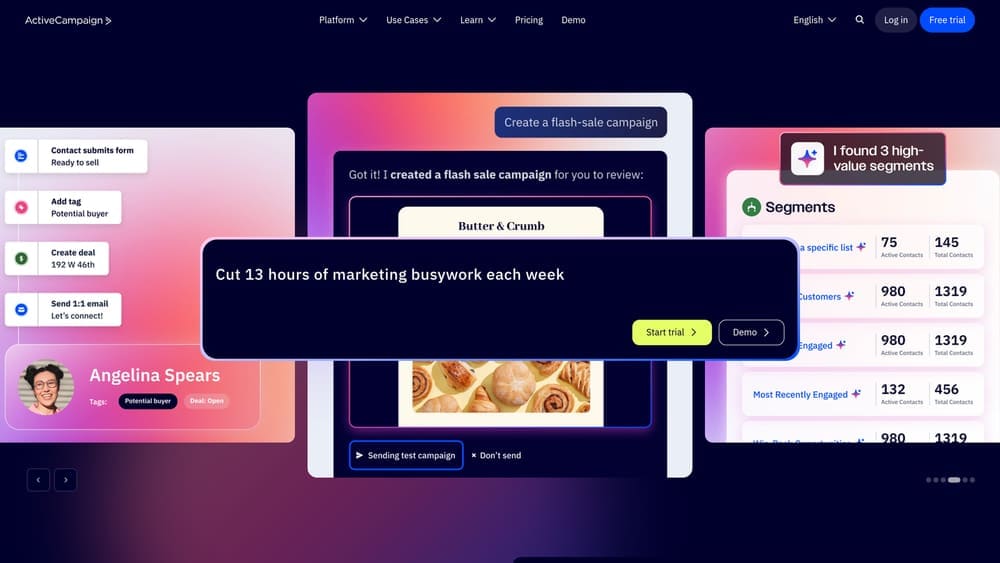
ActiveCampaign is an autonomous marketing platform that goes beyond traditional marketing automation, using AI agents to handle email, SMS, WhatsApp and other marketing channels, backed by billions of data points.
Where This Tool Shines
ActiveCampaign's visual automation builder stands out as one of the most intuitive yet powerful in the market. The platform excels at behavioral-based marketing, tracking customer actions across email, website, and social media to trigger highly personalized campaigns that feel remarkably human.
What makes ActiveCampaign particularly compelling is its autonomous marketing approach powered by AI agents. The platform cuts 13 hours of marketing busywork each week by handling routine tasks automatically while maintaining sophisticated personalization. Their machine learning capabilities optimize send times, predict customer behavior, and automatically score leads based on engagement patterns—all without constant manual intervention.
Key Features & Capabilities
Visual Automation Builder: Create complex multi-channel campaigns with conditional logic, split testing, and goal tracking using an intuitive drag-and-drop interface.
Multi-Channel Marketing: Unified platform for email, SMS, and WhatsApp marketing with consistent customer messaging across all channels.
Site Tracking & Event Triggers: Monitor website behavior and trigger automated campaigns based on specific actions, page visits, or custom events.
Advanced Segmentation: Build dynamic lists based on CRM data, behavioral patterns, and engagement history for precise audience targeting.
Sales Automation & CRM: Integrated deal tracking, pipeline management, and sales automation that connects marketing activities directly to revenue outcomes.
Best For / Ideal Users
Perfect for businesses that rely heavily on email marketing but need CRM functionality to track customer relationships throughout the entire lifecycle. The platform works exceptionally well for e-commerce businesses managing complex customer journeys with multiple touchpoints.
SaaS companies and service businesses benefit from ActiveCampaign's ability to nurture leads over extended periods while maintaining detailed engagement histories. The autonomous marketing features particularly appeal to lean marketing teams who need enterprise-level automation without enterprise-level staffing.
Pricing
Plans start at $29/month for 1,000 contacts with basic automation features, scaling to higher tiers with advanced capabilities and larger contact volumes. The pricing structure remains competitive compared to enterprise platforms while delivering sophisticated functionality.
4. Pipedrive with Campaigns
Best for: Sales-focused teams wanting simple but effective marketing automation
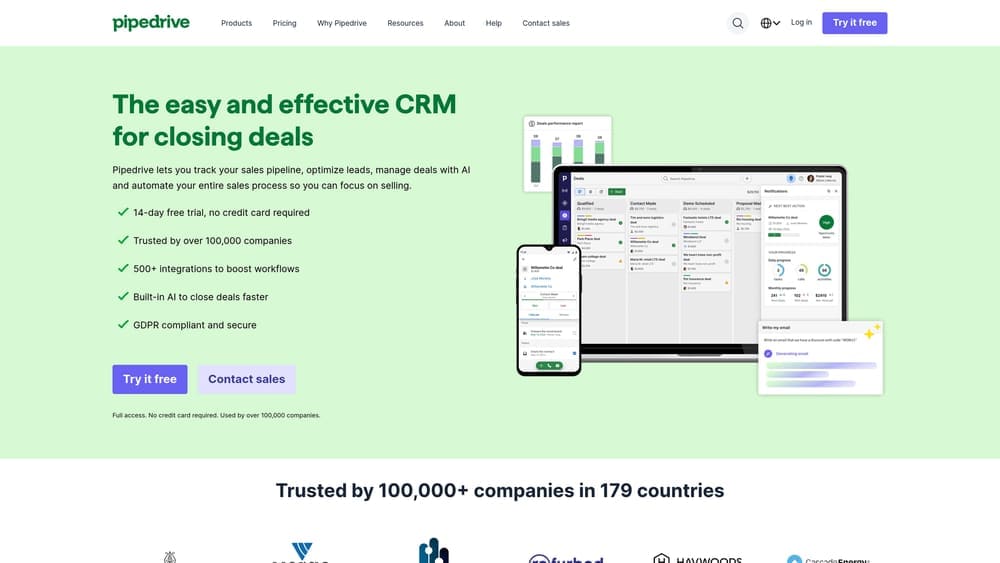
Pipedrive has evolved from a pure sales CRM into a marketing-integrated platform with their Campaigns add-on, creating an ideal solution for sales-driven organizations that want marketing automation without overwhelming complexity.
Where This Tool Shines
Pipedrive's strength is its visual pipeline approach to marketing integration. Unlike platforms that treat marketing and sales as separate functions, Pipedrive shows you exactly how email campaigns influence deal progression in real-time. When a prospect opens your campaign email or clicks a link, that activity appears directly in their deal card, giving sales reps immediate context for follow-up conversations.
The platform excels at automating follow-up sequences based on sales activities and deal stage changes. When a deal moves to "proposal sent," Pipedrive can automatically trigger a nurture sequence. When a prospect goes cold, the system can re-engage them with targeted content. This sales-centric approach means your marketing automation serves your pipeline, not the other way around.
Key Features & Capabilities
Email Campaign Builder: Drag-and-drop editor with mobile-responsive templates and A/B testing capabilities.
Lead Capture Forms: Web forms that automatically create deals in your pipeline with proper source attribution.
Behavioral Tracking: Monitor email opens, clicks, and website visits tied directly to deal records.
Lead Scoring: Automatic scoring based on email engagement and website behavior to identify hot prospects.
Revenue Attribution: Connect campaign performance directly to closed deals and revenue generated.
Best For / Ideal Users
Ideal for small to medium sales teams (5-50 people) who want marketing automation without complexity. Perfect for businesses where sales and marketing are handled by the same team or where sales drives most marketing decisions.
Works exceptionally well for service businesses, consultancies, and B2B companies with straightforward sales processes. If your team lives in the pipeline view and needs marketing to support deal progression rather than run independently, Pipedrive delivers exactly what you need.
Pricing
Pipedrive CRM starts at $14.90/user/month, with the Campaigns add-on available for an additional $10/user/month. This pricing structure offers excellent value for sales-focused organizations that don't need enterprise-level marketing automation complexity.
5. Zoho CRM with Zoho Campaigns
Best for: Budget-conscious businesses wanting comprehensive marketing integration without enterprise pricing
Zoho CRM with Zoho Campaigns delivers enterprise-level marketing automation capabilities at a fraction of the cost competitors charge, making sophisticated customer engagement accessible to growing businesses.
Where This Tool Shines
Zoho's ecosystem strategy creates something unique in the CRM space: a fully integrated suite of business applications that work together seamlessly. When you connect Zoho CRM with Zoho Campaigns, you're not just linking two tools—you're tapping into an entire business operating system.
The platform excels at multi-channel marketing orchestration while maintaining affordability. You can manage email campaigns through Zoho Campaigns, schedule social posts via Zoho Social, build landing pages with Zoho Sites, and track everything back to individual contact records in the CRM. This interconnected approach means a prospect's journey from social media ad to closed deal lives in one unified system, eliminating the data fragmentation that plagues businesses using disconnected tools.
Key Features & Capabilities
Email Marketing Automation: Zoho Campaigns provides drag-and-drop email builders, A/B testing, and behavioral triggers that sync directly with CRM contact data.
Lead Scoring & Qualification: Customizable scoring models combine demographic information with engagement metrics to identify sales-ready prospects automatically.
Social Media Integration: Zoho Social connects to contact records, allowing you to track social engagement alongside email opens and website visits in one timeline.
Landing Page Builder: Create conversion-optimized pages with built-in A/B testing that automatically updates CRM records when prospects submit forms.
Cross-Channel Analytics: Unified reporting shows how email, social, and web campaigns work together to move prospects through your pipeline.
Best For / Ideal Users
Zoho works exceptionally well for small to medium businesses that need enterprise functionality but can't justify enterprise pricing. It's particularly valuable for companies in growth mode who want to consolidate multiple marketing tools into one ecosystem rather than managing numerous subscriptions and integrations.
The platform suits teams comfortable with a bit of setup complexity in exchange for significant cost savings. While not as plug-and-play as some competitors, Zoho's comprehensive documentation and active user community make implementation manageable for businesses with basic technical capabilities.
Pricing
Zoho CRM starts at $14 per user monthly, with Zoho Campaigns adding just $3 monthly for up to 2,000 contacts. This pricing structure makes comprehensive marketing integration accessible to businesses that would find HubSpot or Salesforce prohibitively expensive, often delivering similar functionality at one-tenth the cost.
6. Keap
Best for: Small businesses needing all-in-one sales and marketing automation with personal touch
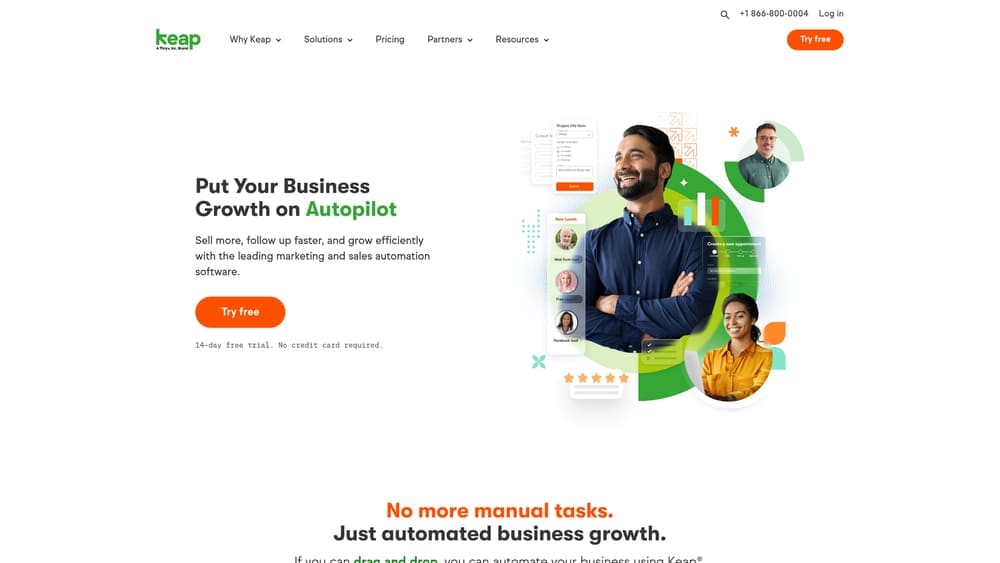
Keap has spent over 20 years perfecting automation specifically for small businesses, transforming from Infusionsoft into a platform that makes enterprise-level marketing sophistication accessible to entrepreneurs and small teams.
Where This Tool Shines
Keap excels at automating the entire customer lifecycle without losing the personal touch that small businesses depend on. Their campaign builder transforms complex automation sequences into visual workflows that anyone can understand and modify.
The platform particularly shines in service-based businesses where relationship building drives revenue. Coaches, consultants, and professional services firms use Keap to automate appointment reminders, follow-up sequences, and payment collection while maintaining that crucial personal connection. What sets Keap apart is how it handles the complete business process—from initial lead capture through payment processing and customer retention—all within one system.
Key Features & Capabilities
Visual Campaign Builder: Drag-and-drop automation sequences that map your entire customer journey without requiring technical expertise.
Keap Pay Integration: Built-in payment processing that triggers marketing actions based on purchase behavior and payment status.
Appointment Scheduling: Automated booking system with confirmation sequences and reminder workflows that reduce no-shows.
Lead Capture & Scoring: Forms and landing pages that automatically tag and score prospects based on their behavior across multiple touchpoints.
Advanced Tagging System: Sophisticated segmentation using tags that enable precise audience targeting without complex database queries.
Best For / Ideal Users
Perfect for service-based businesses, coaches, consultants, and small e-commerce companies that need powerful automation without dedicated technical teams. Ideal for entrepreneurs managing multiple aspects of their business who want to automate repetitive tasks while maintaining personal customer relationships.
Pricing
Plans start at $79/month for up to 500 contacts, with advanced automation features available in higher-tier plans starting at $149/month. All plans include support and training resources.
7. Freshworks CRM
Best for: Growing teams wanting intuitive CRM with built-in marketing capabilities
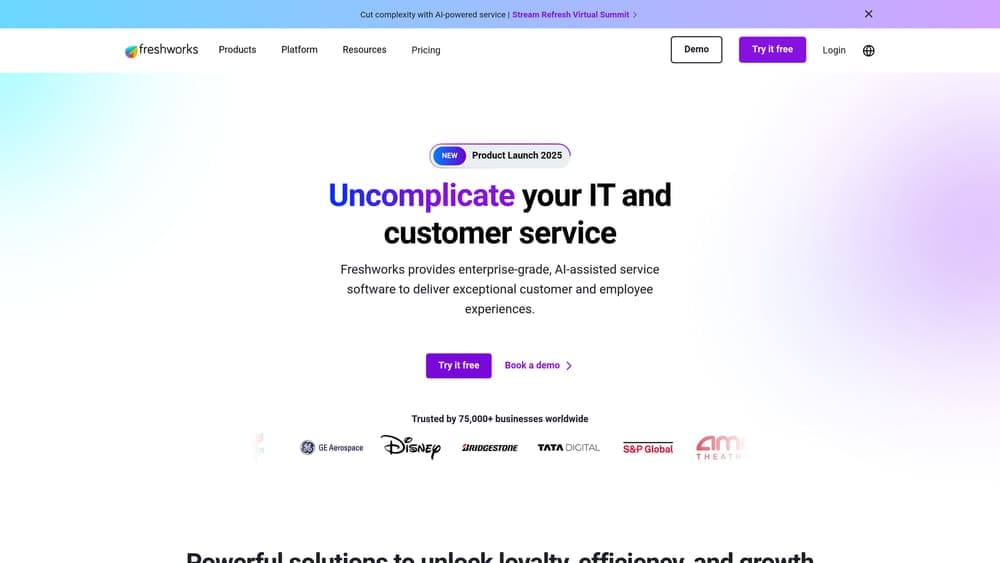
Freshworks CRM delivers enterprise-level marketing automation wrapped in an interface that feels refreshingly simple, making it possible for teams without dedicated marketing ops specialists to run sophisticated campaigns.
Where This Tool Shines
Freshworks excels at eliminating the traditional trade-off between power and usability. Their visual workflow builder lets you create complex automation sequences without touching code, while AI-powered insights surface optimization opportunities you might otherwise miss.
The platform's standout feature is its unified communication timeline. Every email, phone call, chat message, and social media interaction appears in a single chronological view attached to each contact record. This means your sales team can see exactly which marketing campaigns a prospect engaged with before scheduling a demo call.
Key Features & Capabilities
Email Marketing Automation: Built-in campaign builder with drag-and-drop templates, A/B testing, and behavioral triggers that respond to contact actions.
AI-Powered Lead Scoring: Freddy AI analyzes engagement patterns to automatically score and prioritize leads based on conversion likelihood.
Multi-Channel Tracking: Captures and attributes customer interactions across email, phone, chat, social media, and website visits in real-time.
Revenue Attribution: Advanced reporting connects marketing touchpoints to closed deals, showing which campaigns drive actual revenue.
Landing Page Builder: Create conversion-optimized pages with form builders that automatically sync captured leads to your CRM pipeline.
Best For / Ideal Users
Growing B2B Companies: Teams scaling from 10-100 employees who need sophisticated automation without enterprise complexity or price tags.
Sales-Marketing Hybrid Teams: Organizations where the same people handle both sales outreach and marketing campaigns, requiring seamless workflow integration.
CRM Upgraders: Businesses outgrowing basic CRMs like Zoho or Pipedrive but finding Salesforce or HubSpot Professional tier overwhelming or expensive.
Pricing
Growth plan starts at $15/user/month with basic CRM and email capabilities. Marketing automation features unlock at $39/user/month in the Pro tier, with Enterprise options for larger teams requiring advanced customization.
Putting It All Together
The right CRM for marketing integration transforms how you connect with customers at every stage of their journey. HubSpot delivers the most comprehensive all-in-one solution for businesses ready to scale their marketing systematically. Salesforce with Marketing Cloud remains unmatched for enterprise organizations needing sophisticated attribution and account-based marketing capabilities. ActiveCampaign stands out for companies that rely heavily on email marketing and need powerful automation without enterprise complexity.
Your choice ultimately depends on three factors: your current marketing stack, your team's technical expertise, and how you plan to grow. If you're consolidating multiple tools, prioritize platforms with robust native integrations. For teams new to marketing automation, Keap or Freshworks offer gentler learning curves. Sales-driven organizations will find Pipedrive's simplicity refreshing, while budget-conscious businesses can achieve enterprise-level functionality with Zoho's ecosystem approach.
The best CRM becomes the foundation that connects all your marketing efforts into a cohesive system that actually drives revenue. Whether you're tracking campaign performance with analytics tools for measuring campaign success or optimizing your Facebook ads targeting, your CRM should be the central hub that makes every marketing dollar work harder.
Ready to transform how your marketing and sales teams work together? Start with a free trial of your top choice and test how well it connects your existing tools and processes. Need help implementing a marketing-integrated CRM strategy? Learn more about our services and discover how we help businesses build marketing systems that actually deliver results.
Campaign
Creatives
quick links
contact
© 2025 Campaign Creatives.
All rights reserved.