campaign
creatives

Top 5 Where To Find Marketing Analytics Resources For Data-Driven Success
Discover where to find marketing analytics resources that can transform your data into actionable insights and enhance your marketing strategies.
Picture this: you're a marketing manager, buried under mountains of data, yet struggling to derive actionable insights from it. You're not alone—many businesses face the daunting task of finding effective marketing analytics resources that truly deliver. With the ever-increasing complexity of digital marketing, having the right tools at your disposal is more critical than ever. From understanding customer behavior to optimizing campaigns, the right analytics resources can turn raw data into powerful insights that drive your marketing strategies forward.
This article serves as your curated guide, simplifying the hunt for reliable and actionable marketing analytics tools that can elevate your marketing strategies. Whether you're a small startup or a large enterprise, the right tools are crucial for making data-driven decisions. By leveraging these resources, you'll be positioned to analyze performance, understand market trends, and ultimately enhance your marketing efforts.
Below, we've put together a list of top resources designed to enhance your marketing strategy through insightful, data-driven analytics. Let's dive into the top five tools that can help you transform your marketing approach and get the most out of your data.
1. Google Analytics
Best for: Comprehensive tracking of website performance and user behavior.
Google Analytics is the industry standard for web analytics, offering a comprehensive view of website performance. Understanding how to measure ROI in digital advertising is essential for maximizing its benefits.
Overview & Background
Google Analytics has evolved significantly since its inception, becoming an essential tool for marketers worldwide. It provides invaluable insights into visitor behavior, traffic sources, and conversion tracking, making it a cornerstone of digital marketing strategies. Many businesses leverage Google Analytics to monitor user behavior and optimize their sites accordingly, transforming raw data into actionable insights.
Key Features & Capabilities
1. Real-Time Data Reporting: This feature allows marketers to see how users interact with their website in real-time, enabling quick adjustments to marketing strategies.
2. Customizable Dashboards: Users can create dashboards tailored to their specific needs, focusing on the metrics that matter most to them.
3. Integration with Google Ads: Marketers can track the performance of their ads directly within Google Analytics, providing a seamless way to measure ROI.
4. User Segmentation: This feature enables businesses to segment users based on behavior, demographics, and traffic sources, allowing for more targeted marketing efforts.
Pros and Cons
Pros: Google Analytics is free, offers detailed insights, and has vast community support. Cons: It can have a steep learning curve for beginners, which might overwhelm new users.
Pricing & Value Proposition
Google Analytics is free for most users, with a premium version available for businesses needing advanced features. Many businesses find the insights gained far outweigh the costs, making it a valuable tool in their marketing arsenal. To truly grasp the power of Google Analytics, understanding how to measure your ROI in digital advertising is essential.
2. SEMrush
Best for: Comprehensive SEO and competitive analysis.
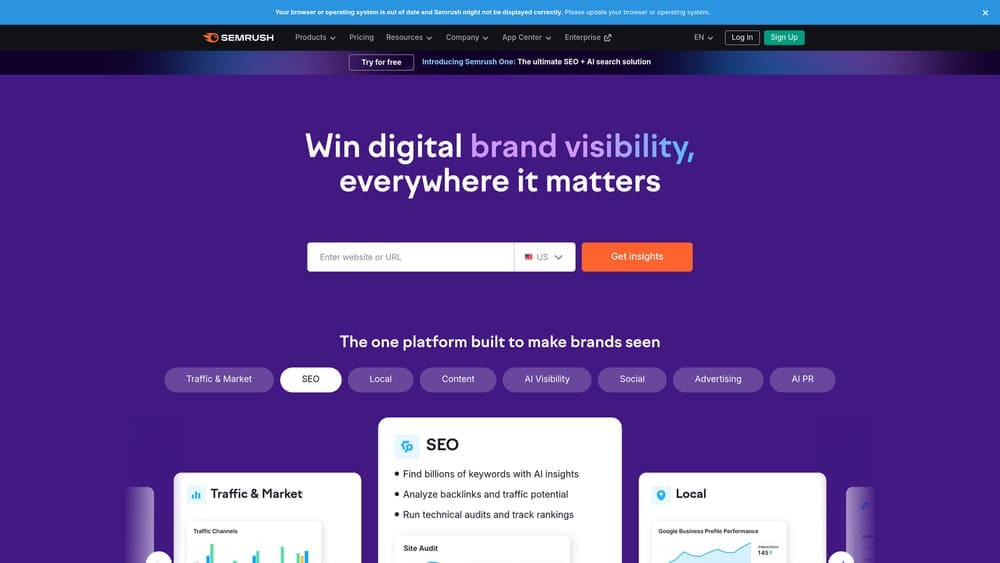
SEMrush is an all-in-one marketing toolkit for improving online visibility and discovering marketing insights.
Overview & Background
SEMrush stands out as a comprehensive tool for SEO and digital marketing analysis, helping businesses improve their search engine rankings and online presence. Marketing teams utilize SEMrush for keyword tracking, site audits, and competitive analysis, making it an indispensable resource for anyone looking to enhance their SEO efforts.
Key Features & Capabilities
1. Keyword Research Tools: SEMrush provides in-depth keyword analysis to help marketers identify high-potential keywords for their content strategies.
2. Backlink Analysis: Users can analyze their backlink profiles and those of competitors, allowing for strategic improvements in link-building efforts.
3. PPC Analysis: The tool offers insights into competitors' PPC strategies, helping users to make informed decisions about their paid advertising.
4. Social Media Tracking: SEMrush enables marketers to track and analyze their social media performance, providing insights into engagement and reach.
Pros and Cons
Pros: SEMrush offers a comprehensive suite of tools and competitive insights. Cons: Pricing can be high for small businesses, making it less accessible for startups.
Pricing & Value Proposition
SEMrush operates on a tiered pricing model, making it suitable for businesses of various sizes. Many users report high ROI when leveraging SEMrush for their campaigns, as the insights gained can lead to significant traffic increases and improved conversion rates. Utilizing SEMrush to enhance your ad campaigns can significantly improve your performance metrics, much like the strategies outlined in our guide on How to Improve Ad Performance on LinkedIn.
3. Tableau
Best for: Powerful data visualization and analysis.
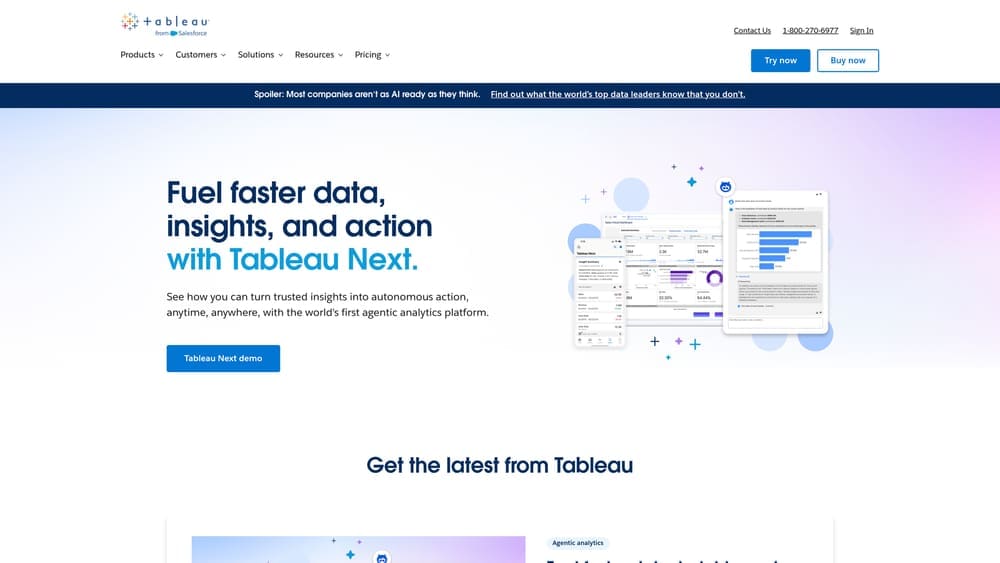
Tableau is renowned for its powerful data visualization capabilities, making complex data understandable.
Overview & Background
Tableau has established itself as a leader in the business intelligence space, allowing organizations to create stunning visual representations of their data. By using Tableau, businesses can gain insights from complex datasets, creating interactive dashboards that facilitate data-driven decision-making.
Key Features & Capabilities
1. Drag-and-Drop Interface: Tableau's user-friendly interface allows users to create visualizations easily without needing extensive technical skills.
2. Integration with Various Data Sources: Tableau can connect to multiple data sources, including Excel, SQL databases, and cloud services, providing a comprehensive view of your data.
3. Advanced Analytics Capabilities: Users can perform complex calculations and statistical analyses directly within the platform.
4. Interactive Dashboards: Tableau enables users to create interactive dashboards that offer real-time insights, helping stakeholders make informed decisions quickly.
Pros and Cons
Pros: Tableau offers excellent visualization options and is user-friendly for those with basic data skills. Cons: It can be expensive for smaller businesses, and there is a learning curve associated with mastering its full capabilities.
Pricing & Value Proposition
Tableau's pricing structure includes a free tier and various paid plans, allowing users to choose options that best suit their needs. Many businesses justify the cost through improved data insights, which can lead to better decision-making and enhanced marketing strategies. Using Tableau for visualizing the differences between PPC and SEO strategies can enhance your understanding, similar to what we outline in our comparison guide.
4. HubSpot
Best for: All-in-one marketing automation and CRM solution.
HubSpot leads the way in marketing automation and CRM solutions, integrating all aspects of marketing, sales, and service data.
Overview & Background
HubSpot offers a comprehensive approach to inbound marketing, providing businesses with the tools needed to attract, engage, and delight customers. Companies use HubSpot to streamline their marketing and sales processes, making it easier to manage customer relationships and optimize marketing efforts.
Key Features & Capabilities
1. Marketing Automation: HubSpot allows users to automate their marketing campaigns, saving time while improving engagement.
2. Email Tracking and Analytics: Users can track email performance metrics, enabling them to refine their email marketing strategies.
3. CRM and Sales Pipeline Metrics: HubSpot's CRM tools help businesses manage customer interactions and analyze sales performance.
4. Content Management System: HubSpot includes a CMS that helps users create and manage their marketing content effectively.
Pros and Cons
Pros: HubSpot is user-friendly and provides a comprehensive set of features that cater to various marketing needs. Cons: Some features may be limited in the free version, which could hinder smaller businesses.
Pricing & Value Proposition
HubSpot operates on a tiered pricing model, offering free and premium options. Many businesses find HubSpot's pricing justified by the increased operational efficiency it offers. Leveraging HubSpot's marketing tools can lead to significant improvements in landing page conversions, as discussed in our guide.
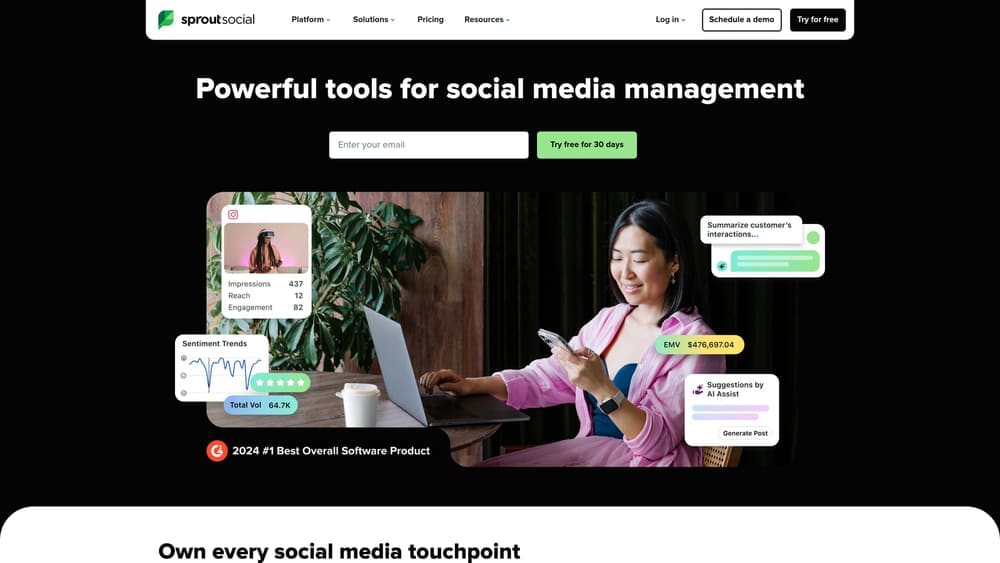
5. Sprout Social
Best for: Social media analytics and management.
Sprout Social excels in social media analytics and management, helping brands understand their social media impact.
Overview & Background
Sprout Social provides comprehensive tools for social media management, allowing brands to track engagement, schedule posts, and analyze performance. It plays a vital role in helping businesses connect with their audiences on social media platforms, making it an essential tool for modern marketing.
Key Features & Capabilities
1. Social Media Scheduling: Users can schedule posts across multiple platforms, ensuring a consistent online presence.
2. Performance Reporting: Sprout Social offers detailed reports that help businesses understand their social media effectiveness.
3. Engagement Tracking: Marketers can monitor engagement metrics, allowing for quick adjustments to their strategies.
4. Social Listening: This feature provides insights into audience sentiment and trends, aiding in content strategy development.
Pros and Cons
Pros: Sprout Social is great for social media teams and offers comprehensive reporting tools. Cons: It can be on the pricier side compared to competitors, which may deter smaller businesses.
Pricing & Value Proposition
Sprout Social offers a variety of pricing plans designed to meet different business needs. Brands often see ROI through improved engagement metrics, validating their investment in the platform. Integrating Sprout Social into your digital marketing strategy can enhance your e-commerce efforts, as emphasized in our exploration of digital marketing's essential role.
Putting It All Together
In today's data-driven world, utilizing marketing analytics resources is not just advantageous; it's essential for effective decision-making. Each of the tools we've explored offers unique features and capabilities that can significantly enhance your marketing efforts. Whether you're looking for comprehensive web analytics with Google Analytics, in-depth SEO insights from SEMrush, powerful data visualization with Tableau, integrated marketing solutions from HubSpot, or effective social media management with Sprout Social, there's a tool here for every marketer.
As you consider which analytics resources to adopt, think about your specific needs—whether that's improving your SEO, visualizing complex data, or managing social media engagement. The right analytics tools can revolutionize your marketing strategy, driving better engagement and conversion rates.
Ready to take your marketing efforts to the next level? Learn more about our services and discover how we can help you leverage data to achieve your marketing goals.
Campaign
Creatives
quick links
contact
© 2025 Campaign Creatives.
All rights reserved.