campaign
creatives

8 Best How To Measure Campaign Performance Metrics Platforms That Actually Connect Marketing To Revenue
Discover eight proven analytics platforms that show you how to measure campaign performance metrics beyond vanity numbers, with tools that track multi-touch attribution and prove which campaigns drive real business outcomes.
You're staring at three different dashboards showing completely different conversion numbers for the same campaign. Your boss wants to know if last month's marketing spend was worth it, but you're not even sure which platform to trust. Sound familiar?
Nearly 40% of marketers struggle to accurately measure campaign ROI, not because they lack data, but because they're drowning in it. The real challenge isn't tracking more metrics—it's knowing which ones actually matter and having tools that connect marketing activities to business outcomes.
Modern campaign measurement demands more than vanity metrics and surface-level analytics. You need platforms that track multi-touch attribution, reveal customer journey complexity, and prove which campaigns drive revenue. The difference between guessing and knowing comes down to choosing the right measurement tools for your specific needs.
Here are ten proven analytics platforms that transform raw campaign data into strategic insights. Whether you're running paid ads, content marketing, or omnichannel campaigns, you'll find practical solutions for answering the question every marketer faces: "Is this actually working?"
1. Google Analytics 4
Best for: Comprehensive website and app analytics with cross-platform tracking capabilities
Google Analytics 4 represents the evolution of web analytics, moving beyond simple pageview tracking to event-based measurement that follows user journeys across devices and platforms.
Where This Tool Shines
GA4 excels at providing a complete picture of user behavior across your digital properties. Unlike its predecessor, it uses machine learning to fill data gaps from users who block cookies, giving you more accurate traffic insights.
The platform automatically tracks scroll depth, video engagement, file downloads, and outbound clicks without requiring custom code. For businesses running both websites and mobile apps, GA4's unified measurement approach means you finally see the complete customer journey instead of fragmented data silos.
Key Features & Capabilities
Event-based tracking model: Captures nuanced user interactions beyond pageviews with flexible parameter structures.
Cross-device journey mapping: Identity resolution connects user behavior across devices and platforms for complete visibility.
Predictive metrics: Machine learning forecasts purchase probability and churn likelihood before they happen.
Enhanced measurement: Automatically tracks common interactions like scrolls and video plays without manual setup.
Custom funnel visualization: Shows exactly where users drop off in conversion paths with detailed step analysis.
Google Ads integration: Native connection tracks ad spend directly to on-site behavior and conversions.
Real-time reporting: Monitor active campaigns as they run with live user activity dashboards.
Best For / Ideal Users
GA4 works best for businesses with significant web traffic who need to understand user behavior patterns and optimize conversion paths.
It's particularly valuable for e-commerce sites, content publishers, and SaaS companies tracking product engagement. Marketing teams who run Google Ads campaigns benefit from native integration that connects ad spend directly to on-site behavior and conversions.
The platform suits teams comfortable with data analysis who want comprehensive insights without enterprise-level costs.
Pricing
Google Analytics 4 is free for most businesses, with a premium Analytics 360 version available for enterprise organizations requiring unsampled data, advanced attribution modeling, and dedicated support. The free tier handles up to 10 million events per month, which covers the needs of most small to mid-sized businesses.
2. HubSpot Marketing Analytics
Best for: Inbound marketing campaigns with integrated CRM tracking from first touch to closed deal
HubSpot Marketing Analytics connects marketing activities directly to sales outcomes, making it invaluable for businesses focused on lead generation and nurturing.
Where This Tool Shines
HubSpot eliminates the frustration of disconnected marketing and sales data by tracking every interaction from anonymous visitor to paying customer. The platform automatically attributes revenue to specific campaigns, content pieces, and channels, answering the critical question of which marketing efforts actually generate business results.
For B2B companies with longer sales cycles, HubSpot's multi-touch attribution shows how different touchpoints contribute to eventual conversions. Instead of crediting everything to the last click, you see the complete influence map—that blog post from three months ago, the webinar they attended, the email sequence that kept them engaged, and the demo request that finally converted them.
Key Features & Capabilities
Campaign Attribution Reporting: Connects marketing spend directly to closed revenue with full visibility into which campaigns influenced deals.
Traffic Analytics: Shows which sources drive the highest-quality leads, not just the most traffic volume.
Email Performance Tracking: Measures engagement metrics and conversion attribution for every email campaign.
Landing Page Analytics: Includes A/B testing capabilities and conversion rate optimization tools built into the platform.
Contact Timeline View: Displays complete interaction history for each lead, giving sales context before outreach.
Best For / Ideal Users
HubSpot Analytics serves B2B companies and service businesses where understanding the complete customer journey matters more than tracking individual sessions. Marketing teams who need to prove ROI to leadership find the revenue attribution features particularly valuable.
Companies already using HubSpot's CRM get the most value from seamless data flow between platforms. Sales teams benefit from seeing which marketing touchpoints influenced their leads before making contact.
Pricing
HubSpot offers a free tier with basic analytics capabilities. Marketing Hub Professional starts at $800/month and includes advanced attribution reporting. Enterprise plans begin at $3,600/month with custom reporting, predictive lead scoring, and multi-touch revenue attribution across unlimited campaigns.
3. Mixpanel
Best for: Product analytics and user behavior tracking for SaaS and mobile applications
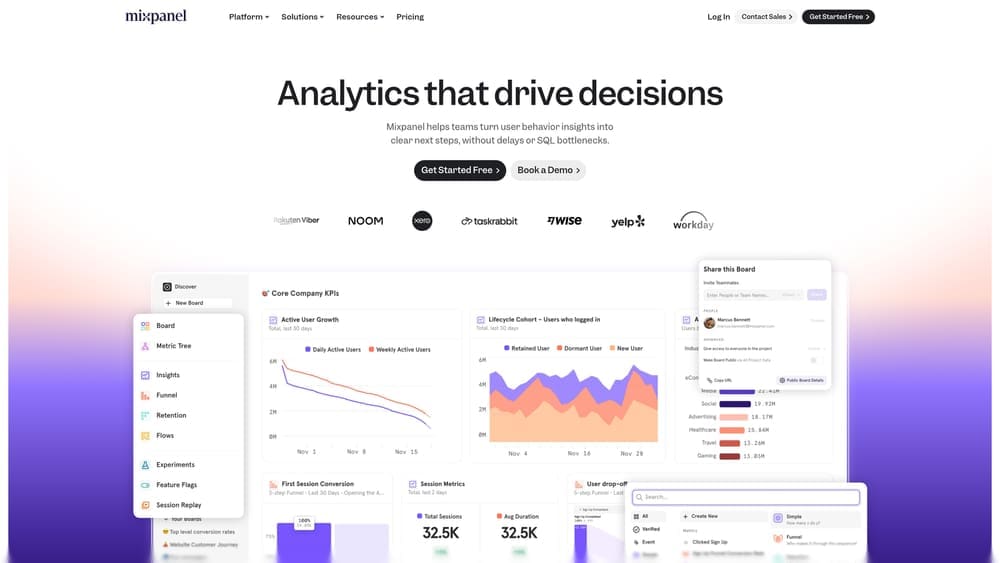
Mixpanel provides analytics that drive decisions by tracking, analyzing, and acting on user behavior to drive acquisition, growth, and retention across digital products.
Where This Tool Shines
While most analytics tools tell you how many people visited your site, Mixpanel reveals what they actually did once they got there. The platform excels at cohort analysis, letting you compare behavior patterns between user segments to identify what drives retention versus churn.
For product-led growth companies, Mixpanel's funnel analysis pinpoints exactly where users get stuck during onboarding or feature adoption. The platform's real power emerges when tracking feature usage over time, helping product and marketing teams understand which capabilities drive long-term engagement and which get ignored.
Key Features & Capabilities
Robust Event Tracking: Captures every user action within your application without rigid hit type limitations.
Product Analytics Engine: Analyzes user behavior patterns to identify what separates engaged users from those who churn.
Cohort Analysis: Compares behavior patterns across different user segments based on actions taken rather than demographics.
Retention Reports: Shows which features and behaviors keep users coming back over days, weeks, or months.
Funnel Visualization: Identifies drop-off points in critical user flows from signup through activation to conversion.
Best For / Ideal Users
Mixpanel serves product managers, growth marketers, and data analysts at SaaS companies, mobile apps, and digital products. It's particularly valuable for businesses with freemium models who need to understand what drives conversion from free to paid tiers.
Teams focused on improving activation rates, feature adoption, and user retention find Mixpanel's behavioral analytics indispensable. The platform works best when you have clear product engagement metrics and want to understand the "why" behind user behavior patterns.
Pricing
Mixpanel offers a free tier supporting up to 20 million events per month, making it accessible for startups and growing products. Paid plans scale based on event volume and feature requirements, with enterprise options including advanced capabilities and dedicated support.
4. Supermetrics
Best for: Centralizing marketing data from multiple platforms into unified reporting dashboards
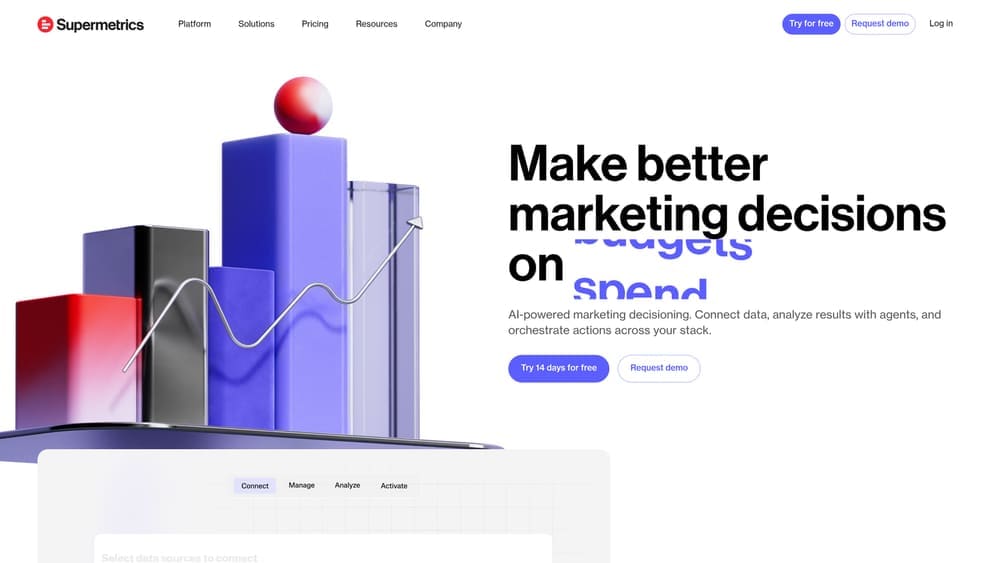
Supermetrics is a Marketing Intelligence Platform that automatically connects, manages, and transfers data from over 150 marketing sources into your preferred reporting tools.
Where This Tool Shines
Running campaigns across Facebook Ads, Google Ads, LinkedIn, TikTok, and other platforms creates a reporting nightmare when each platform requires separate logins and manual data exports. Supermetrics eliminates this friction by automatically pulling metrics from your marketing sources into Google Sheets, Looker Studio, Excel, Power BI, or data warehouses like BigQuery and Snowflake.
The real value emerges when you need to compare performance across channels or create executive dashboards that show complete marketing performance at a glance. Instead of spending hours copying data between platforms and reconciling different metric definitions, marketers can focus on analysis and optimization. The platform handles the tedious data extraction work while you concentrate on finding insights that actually improve campaign results.
Key Features & Capabilities
Pre-built connectors: Access 150+ marketing platforms including all major ad networks, social media platforms, analytics tools, and CRM systems.
Automated data refresh: Schedule automatic updates ensuring reports always display current metrics without manual intervention.
Custom metric calculations: Transform and combine data from multiple sources with calculated fields and custom formulas.
Historical data backfills: Pull years of historical data for trend analysis and year-over-year performance comparisons.
Multi-account management: Handle multiple client accounts or business units from a single interface, ideal for agencies.
Data blending capabilities: Combine metrics from different platforms into unified views that show cross-channel performance.
Best For / Ideal Users
Supermetrics serves marketing agencies managing multiple client accounts, in-house marketing teams running omnichannel campaigns, and data analysts building comprehensive marketing dashboards. It's essential for anyone who needs to report on performance across platforms without manual data exports.
Marketing operations professionals appreciate how it streamlines reporting workflows and ensures data accuracy. Teams using business intelligence tools like Tableau, Power BI, or Looker benefit from Supermetrics' ability to feed clean, structured marketing data into their visualization platforms.
Pricing
Pricing starts at approximately $69/month for individual users connecting single data sources to destinations like Google Sheets. Professional plans range from $239-$479/month depending on the number of data sources, destinations, and accounts. Enterprise solutions with custom connectors, data warehousing capabilities, and dedicated support require custom quotes based on specific requirements.
5. Ruler Analytics
Best for: Multi-touch attribution connecting marketing activities to revenue for lead-generation businesses
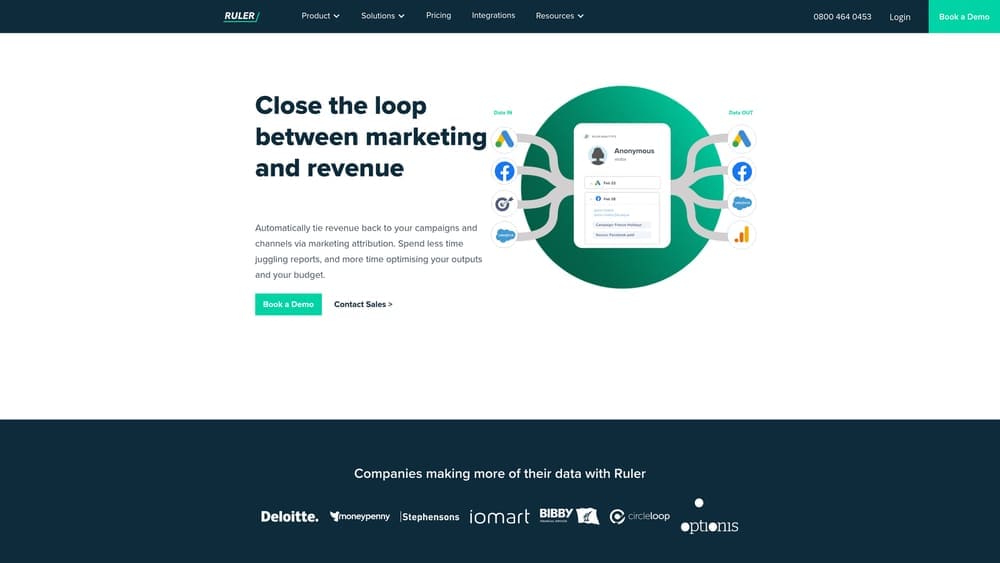
Ruler Analytics specializes in closed-loop attribution, tracking prospects from first anonymous visit through every touchpoint until they become paying customers.
Where This Tool Shines
Most analytics platforms lose the thread once visitors leave your website, creating frustrating blind spots in your attribution story. Ruler maintains visitor identity across multiple sessions and devices, then syncs that journey data back to your CRM when leads convert.
This means you finally see which blog posts, paid ads, or email campaigns influenced deals that closed three months later. For businesses with complex buyer journeys, Ruler's attribution modeling distributes credit across all touchpoints rather than giving everything to the last click before conversion.
Key Features & Capabilities
Visitor-Level Tracking: Follows individual prospects across multiple sessions and devices without losing their identity.
CRM Integration: Syncs conversion data back to original marketing touchpoints, connecting revenue to specific campaigns.
Multiple Attribution Models: Choose between first-touch, last-touch, linear, and time-decay models based on your business needs.
Revenue Attribution: Shows actual deal value connected to marketing activities, not just lead counts.
Call Tracking Integration: Attributes phone conversions to digital campaigns, capturing offline touchpoints in the customer journey.
Marketing Mix Modeling: Reveals how different channels interact and influence each other's performance.
Automated Reporting: Delivers attribution insights to stakeholders on regular schedules without manual data compilation.
Best For / Ideal Users
Ruler Analytics serves B2B companies, professional services firms, and any business where customer journeys span weeks or months before conversion. Marketing teams who need to justify budget to CFOs and sales leaders skeptical of marketing's contribution find particular value here.
Companies with significant phone lead volume benefit from integrated call tracking that attributes offline conversions to online campaigns. If your sales team closes deals through phone conversations but your analytics only track form fills, Ruler bridges that measurement gap.
Pricing
Ruler Analytics pricing starts around £199/month for small businesses with basic attribution needs. Mid-market plans range from £499-£999/month depending on traffic volume and integration requirements. Enterprise solutions with advanced attribution modeling and dedicated support require custom quotes.
6. Improvado
Best for: Enterprise marketing teams managing 50+ data sources who need industrial-strength data infrastructure and automated transformation pipelines
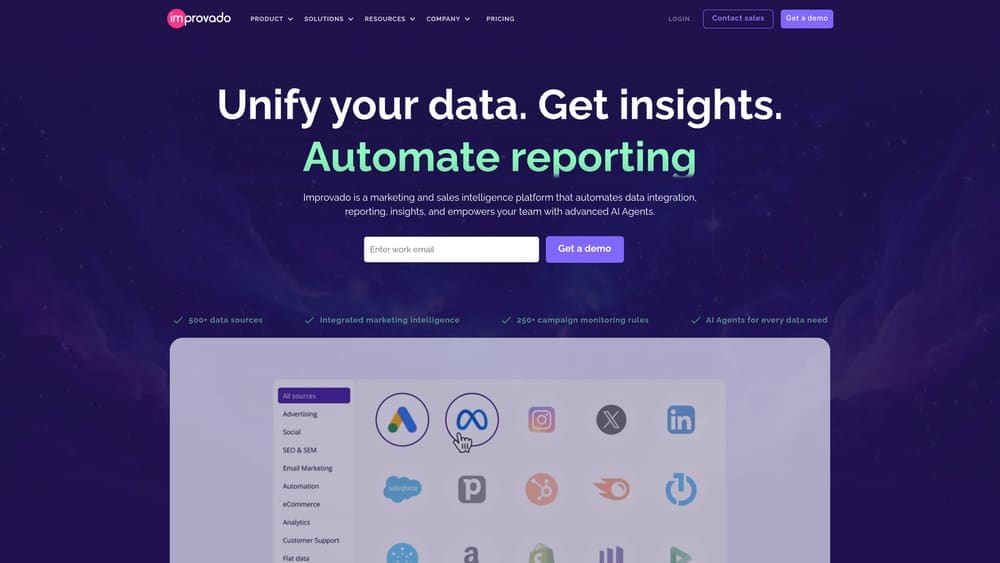
Improvado tackles the data chaos that enterprise marketing organizations face when managing hundreds of platforms, each speaking its own data language.
Where This Tool Shines
Large marketing teams often wrestle with a fundamental problem: their data lives in 50+ different tools, each with unique naming conventions, metrics definitions, and API limitations. One platform calls it "impressions," another "views," and a third "reach"—all measuring slightly different things. Improvado solves this by automatically extracting data from these disparate sources, normalizing it into consistent schemas, and loading it into your data warehouse.
The platform's real value emerges at scale. When you're managing millions in marketing spend across dozens of channels, you need reliable data infrastructure that doesn't break when APIs change or platforms update their reporting. Improvado handles these complexities behind the scenes, ensuring your Tableau or Looker dashboards always display accurate, comparable metrics across all channels.
Key Features & Capabilities
500+ Pre-Built Connectors: Covers advertising platforms, analytics tools, CRM systems, and marketing automation—eliminating custom integration development.
Automated Data Transformation: Normalizes metrics across platforms so "cost per click" means the same thing whether it comes from Google Ads or LinkedIn.
Enterprise Data Warehousing: Native support for Snowflake, BigQuery, and Redshift with optimized data loading processes.
Custom Metric Calculations: Apply business logic during transformation to create calculated fields like blended CAC or marketing efficiency ratio.
Historical Data Backfills: Pull years of historical data for trend analysis and year-over-year comparisons without manual exports.
Best For / Ideal Users
Improvado serves enterprise marketing organizations spending $1M+ annually on marketing who've outgrown basic reporting connectors. Marketing operations teams building sophisticated analytics infrastructure rely on Improvado's reliability when feeding data to business intelligence platforms. Data engineering teams appreciate not having to maintain dozens of custom API integrations as platforms evolve.
The platform makes sense when you need data governance, compliance features, and the confidence that your marketing data infrastructure won't break during critical reporting periods.
Pricing
Enterprise pricing starts around $2,000/month for mid-market implementations. Full enterprise deployments with extensive customization, dedicated support, and high data volumes typically range from $5,000-$15,000/month based on specific requirements.
7. Amplitude
Best for: Product analytics with sophisticated behavioral cohort analysis and predictive insights for digital products
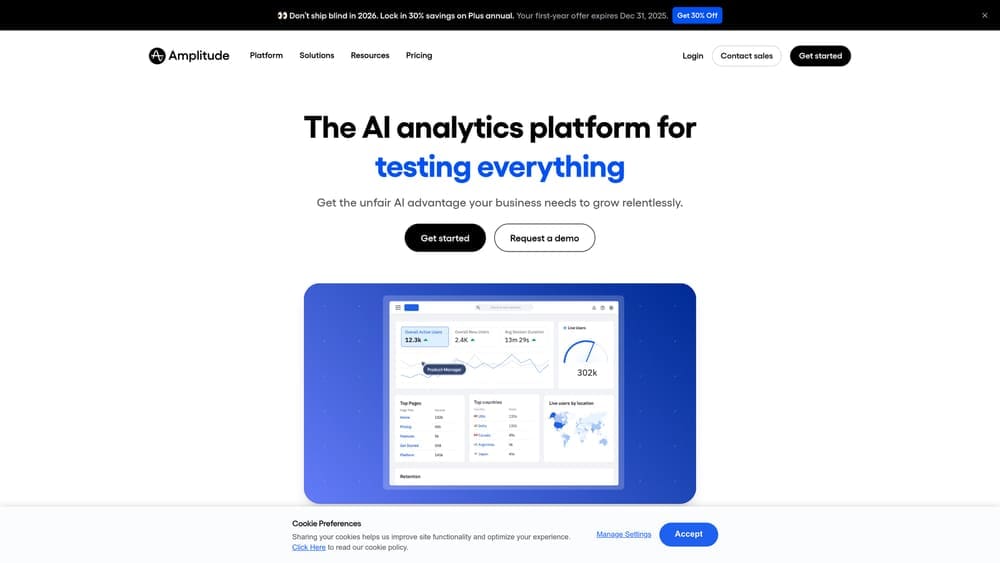
Amplitude is an AI-powered digital analytics platform that helps product teams understand user behavior patterns and optimize for engagement and retention through event-based tracking and experimentation tools.
Where This Tool Shines
Amplitude goes beyond basic event tracking to reveal the behavioral patterns that separate engaged users from those who churn. The platform's Microscope feature lets you drill into any data point to see the individual user sessions behind aggregate metrics, providing context that pure numbers miss.
For growth teams, Amplitude's predictive analytics identify users likely to convert or churn before it happens, enabling proactive intervention. The platform excels at answering complex questions like "What do users who upgrade to paid plans do differently in their first week compared to those who don't?" This behavioral intelligence proves invaluable when optimizing product-led growth strategies.
Key Features & Capabilities
Behavioral Cohort Analysis: Compare user groups based on specific actions taken to identify what drives retention versus churn.
Pathfinder Visualization: See the most common user journey patterns and discover unexpected navigation paths through your product.
Feature Experimentation: Test product changes and measure their impact on key engagement and conversion metrics.
Session Replay: Watch actual user sessions to understand the context behind behavioral data and identify friction points.
AI-Powered Insights: Automated anomaly detection surfaces significant trends and behavioral shifts without manual analysis.
Best For / Ideal Users
Amplitude serves product managers, growth marketers, and data analysts at consumer apps, SaaS products, and digital platforms. It's particularly valuable for companies with freemium models who need to optimize activation and conversion funnels.
Teams focused on improving product-market fit through behavioral insights find Amplitude's analysis capabilities essential. The platform works best when you have sufficient user volume to make cohort comparisons meaningful and when product usage data directly influences business outcomes.
Pricing
Amplitude offers a generous free tier supporting up to 10 million events per month, making it accessible for startups and growing products. Paid plans scale based on event volume and feature requirements, with enterprise solutions including advanced capabilities like predictive analytics and dedicated support.
8. Whatagraph
Best for: Automated marketing reporting with visual dashboards for agencies and marketing teams
Whatagraph is an AI-powered marketing intelligence platform that transforms complex marketing data into clear, visually compelling reports that clients and stakeholders actually want to read.

Where This Tool Shines
Most marketing reports are dense spreadsheets that bury insights under columns of numbers. Whatagraph automatically generates visual reports that highlight performance trends, anomalies, and key metrics in formats designed for presentation.
The platform's strength lies in its client-ready reporting templates—pre-built report structures for common scenarios like monthly performance reviews, campaign recaps, or executive dashboards. For agencies managing multiple clients, Whatagraph's white-label capabilities and automated report distribution save countless hours while maintaining professional presentation standards. The platform positions itself as designed for marketers, not data teams, allowing you to go from data to insights in seconds without needing technical expertise.
Key Features & Capabilities
AI-Powered Intelligence (Whatagraph IQ): Automated insights that surface significant trends and performance changes without manual analysis.
Centralized Data Connection: Connect and centralize data from all your marketing channels into a single source of truth.
Visual Report Builder: Drag-and-drop interface with customizable widgets and visualizations for creating professional reports.
Automated Report Scheduling: Deliver updates to stakeholders on regular cadences without manual intervention.
White-Label Capabilities: Present reports under your own branding for agencies maintaining client relationships.
Cross-Channel Performance Comparison: View metrics across platforms side-by-side to understand relative channel performance.
Public Report Links: Share live dashboards with clients or team members who need ongoing access to performance data.
Best For / Ideal Users
Whatagraph serves marketing agencies, freelance consultants, and in-house marketing teams who need to communicate performance to non-technical stakeholders. It's ideal for professionals who spend too much time creating reports manually and want to automate the process without sacrificing visual quality.
Performance marketers running campaigns across multiple channels benefit from the centralized reporting approach. Account managers appreciate how it simplifies client communication around campaign performance, while global businesses value having their entire reporting stack in one place.
Pricing
Whatagraph offers a free tier to start, making it accessible for small teams testing the platform. Paid plans scale based on the number of data sources, users, and advanced features needed for larger organizations or agencies managing multiple client accounts.
Making the Right Choice
The right analytics tool depends entirely on what you're actually trying to measure. If you need comprehensive website tracking without budget constraints, Google Analytics 4 delivers enterprise-grade capabilities for free. B2B companies focused on lead generation and revenue attribution should prioritize HubSpot or Ruler Analytics for their CRM integration and closed-loop tracking.
Product-led companies benefit most from Mixpanel or Amplitude's behavioral analytics, which reveal exactly how users interact with your application. For teams managing campaigns across multiple platforms, Supermetrics or Improvado eliminate the reporting nightmare by centralizing data automatically. Agencies and marketing teams who spend hours creating reports should explore Whatagraph's automated visual dashboards.
Start by identifying your primary measurement challenge: Is it understanding user behavior? Proving marketing ROI? Consolidating multi-channel data? Your biggest pain point determines which tool delivers the most immediate value. Most successful measurement strategies combine multiple tools—GA4 for traffic analysis, a specialized platform for attribution, and a reporting tool to communicate results.
The tools exist. The data is there. What separates successful campaigns from expensive experiments is the discipline to measure what matters and act on those insights. Ready to transform your campaign measurement approach? Learn more about our services and discover how strategic analytics implementation drives better marketing decisions.
Campaign
Creatives
quick links
contact
© 2025 Campaign Creatives.
All rights reserved.