campaign
creatives

Top 7 Predictive Analytics In Customer Targeting Tools To Maximize ROI
Discover the leading predictive analytics in customer targeting platforms that help businesses forecast customer behavior, reduce churn, and allocate marketing budgets with precision in 2025.
What if you could predict which prospects will convert before they even add items to their cart? Or identify customers about to churn weeks before they disengage? That's the power of predictive analytics in customer targeting—and it's transforming how businesses allocate marketing budgets and personalize experiences.
Traditional marketing relies on historical patterns and demographic segments. You analyze past behavior, create audience groups, and hope your campaigns resonate. Predictive analytics flips this entirely. Instead of looking backward, these tools use machine learning to forecast future customer actions with remarkable precision.
The difference is stark. Conventional analytics tells you "30% of customers who viewed Product A purchased Product B." Predictive analytics tells you "Customer #47291 has an 87% likelihood of purchasing Product B within 14 days if targeted with email variant C." This granular, forward-looking intelligence changes everything.
The challenge? The predictive analytics landscape has exploded with options. Enterprise platforms offer comprehensive capabilities but demand significant investment. Specialized tools excel in specific scenarios but may lack broader functionality. Marketing-focused solutions integrate seamlessly but might sacrifice analytical depth.
We've evaluated leading platforms based on prediction accuracy, implementation complexity, marketing tool integration, and cost-value ratio. Here are the top predictive analytics tools that deliver real targeting intelligence in 2025.
1. Salesforce Einstein Analytics
Best for: Enterprise teams already invested in the Salesforce ecosystem seeking native predictive capabilities
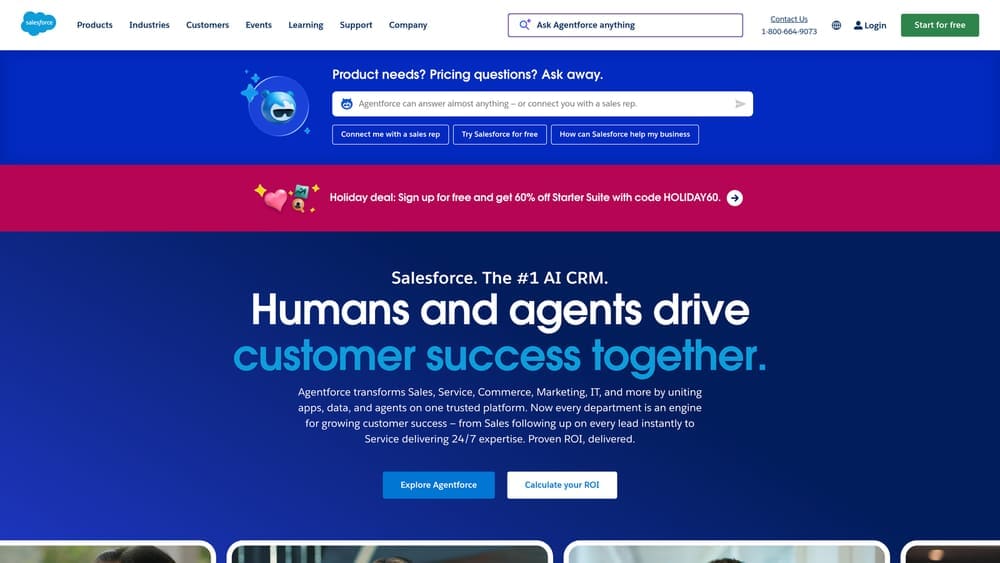
Salesforce Einstein Analytics brings AI-powered predictive analytics directly into your existing Salesforce environment, eliminating the friction of third-party integrations.
Where This Tool Shines
Einstein Analytics excels at turning your existing Salesforce data into actionable predictions without requiring data science expertise. The platform automatically builds predictive models based on your historical customer data, identifying patterns that indicate purchase intent, churn risk, and lifetime value potential.
Because it's native to Salesforce, predictions flow directly into your sales and marketing workflows—your team sees propensity scores right alongside contact records, enabling real-time targeting decisions. The platform's natural language interface lets marketers ask questions like "Which leads are most likely to convert this quarter?" and receive instant, data-backed answers.
Key Features & Capabilities
Automated Model Building: Einstein automatically creates and refines predictive models without manual data science work.
Lead Scoring Intelligence: AI-powered lead scoring that updates in real-time based on behavioral signals and engagement patterns.
Churn Prediction: Identifies customers at risk of churning before they disengage, enabling proactive retention campaigns.
Opportunity Insights: Forecasts deal closure probability and recommends next-best actions to advance opportunities.
Native Salesforce Integration: Predictions appear directly in Sales Cloud, Marketing Cloud, and Service Cloud interfaces.
Natural Language Queries: Ask questions in plain English and receive visual, actionable insights.
Best For / Ideal Users
Einstein Analytics is ideal for mid-market to enterprise B2B companies already using Salesforce as their CRM foundation. Marketing teams benefit from seamless campaign targeting, while sales teams gain predictive lead prioritization.
The platform works best when you have substantial historical data in Salesforce—typically 12+ months of customer interactions—to train accurate models.
Pricing
Einstein Analytics pricing starts at approximately $75 per user per month for Einstein Analytics Plus, with Einstein Analytics Growth starting around $150 per user monthly. Enterprise implementations often require custom pricing based on data volume and feature requirements.
2. Google Analytics 4 with Predictive Metrics
Best for: Digital-first businesses seeking free predictive capabilities integrated with web analytics
Google Analytics 4 represents Google's shift toward predictive, privacy-focused analytics, offering machine learning-powered predictions at no additional cost.
Where This Tool Shines
GA4's predictive metrics democratize customer targeting intelligence by making sophisticated predictions available to businesses of any size. The platform automatically calculates purchase probability, churn probability, and predicted revenue for each user segment without requiring configuration or data science skills.
These predictions improve continuously as GA4 processes more data, and they integrate seamlessly with Google Ads for automated audience targeting. For businesses already using Google's marketing stack, GA4 provides a zero-friction entry point into predictive analytics, turning website behavior into forward-looking customer intelligence that directly informs campaign decisions.
Key Features & Capabilities
Purchase Probability: Predicts likelihood of users completing a purchase within the next 7 days based on behavioral patterns and engagement signals.
Churn Probability: Identifies users unlikely to return to your site within the next 7 days, enabling proactive re-engagement campaigns before they disengage completely.
Predicted Revenue: Forecasts the revenue expected from each user over the next 28 days for smarter budget allocation and customer prioritization.
Predictive Audiences: Automatically creates targetable segments based on predicted behaviors that sync directly to Google Ads campaigns for immediate activation.
Cross-Platform Tracking: Unifies web and app data for comprehensive user journey predictions that account for multi-device behavior patterns.
Privacy-Centric Design: Uses modeling to fill data gaps created by cookie restrictions and privacy regulations, maintaining prediction accuracy despite tracking limitations.
Best For / Ideal Users
GA4 with predictive metrics suits e-commerce businesses, content publishers, and SaaS companies with significant web traffic—typically 1,000+ conversions monthly for reliable predictions. The platform needs sufficient data volume to train accurate models, so very small sites may see limited predictive value initially.
It's particularly valuable for teams already advertising on Google platforms, as predictive audiences sync directly to Google Ads for targeting. Marketing teams without dedicated data science resources benefit from the automated, no-configuration approach to generating predictions.
Pricing
Google Analytics 4 is completely free for standard implementations. GA4 360 (enterprise version) starts at approximately $150,000 annually and includes enhanced support, higher data limits, and advanced features.
3. HubSpot Predictive Lead Scoring
Best for: B2B marketing teams using HubSpot who need integrated lead intelligence without complex setup
HubSpot Predictive Lead Scoring uses machine learning to automatically identify your best-fit leads based on historical conversion patterns.
Where This Tool Shines
HubSpot's predictive lead scoring removes the guesswork from lead prioritization by analyzing thousands of data points across your contact database to identify patterns that correlate with closed deals. Unlike manual scoring systems that require constant adjustment, HubSpot's AI automatically updates scoring criteria as your business evolves.
The system considers behavioral signals like email opens, page views, and content downloads alongside firmographic data such as company size and industry. It also factors in engagement timing to assign each lead a likelihood-to-close score. Sales teams see these scores directly in their contact records, enabling them to focus energy on high-probability opportunities while marketing nurtures lower-scoring leads.
Key Features & Capabilities
Automatic Score Calculation: AI analyzes your historical data to determine which attributes predict conversions.
Continuous Learning: Models improve over time as more deals close, adapting to changing buyer behaviors.
Sales-Marketing Alignment: Shared visibility into lead quality reduces friction between teams.
Workflow Automation: Trigger different nurture sequences based on predictive scores.
Deal Probability Scoring: Extends beyond leads to score existing opportunities for pipeline forecasting.
Native CRM Integration: Scores appear alongside all contact and company records in HubSpot CRM.
Best For / Ideal Users
This tool is perfect for B2B companies with 6-18 month sales cycles who need to prioritize leads efficiently. It works best when you have at least 1,000 contacts and 100+ closed deals in HubSpot to train the model effectively.
Marketing operations teams appreciate the set-it-and-forget-it nature, while sales leaders value the ability to focus rep time on leads most likely to convert.
Pricing
Predictive lead scoring is included in HubSpot's Marketing Hub Enterprise plan, which starts at $3,600 per month (billed annually) for 10,000 marketing contacts. Sales Hub Enterprise (starting at $1,200/month for 10 users) includes predictive deal scoring.
4. Pecan AI
Best for: Mid-market companies seeking enterprise-grade predictive models without requiring a data science team
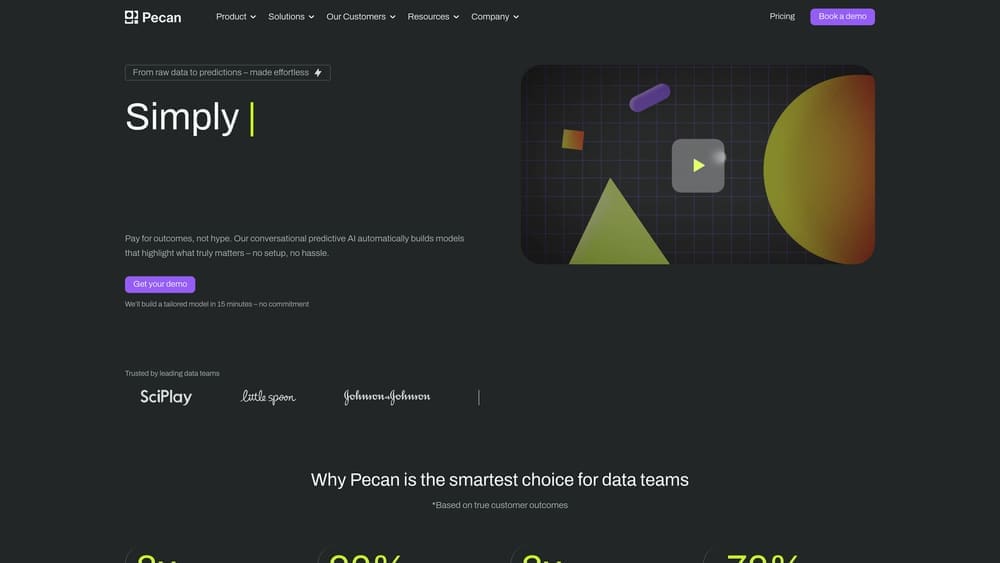
Pecan AI specializes in making sophisticated predictive analytics accessible to business users through automated machine learning.
Where This Tool Shines
Pecan AI bridges the gap between basic analytics and complex data science by automating the entire predictive modeling process. The platform connects to your existing data warehouses, automatically prepares and cleans data, builds multiple model types, and selects the best-performing algorithm—all without requiring SQL knowledge or coding skills.
What sets Pecan apart is its focus on business outcomes rather than technical complexity. Marketing teams define what they want to predict (customer churn, purchase likelihood, lifetime value), and Pecan handles the technical heavy lifting. The platform generates explanations for each prediction, helping you understand why a customer received a particular score and what actions might change that prediction. This transparency transforms predictions from black-box numbers into actionable intelligence.
Key Features & Capabilities
Automated Data Preparation: Connects to data warehouses and automatically handles cleaning, transformation, and feature engineering.
No-Code Model Building: Business users create production-ready models through a visual interface in minutes rather than months.
Multiple Use Cases: Supports churn prediction, LTV forecasting, conversion probability, and custom prediction scenarios.
Prediction Explanations: Provides reasoning behind each prediction for transparency and actionability.
Continuous Monitoring: Automatically retrains models as new data arrives to maintain accuracy over time.
Integration Flexibility: Exports predictions to marketing platforms, CRMs, and data warehouses for seamless workflow integration.
Best For / Ideal Users
Pecan AI is ideal for growth-stage companies and mid-market businesses that need sophisticated predictive capabilities but lack dedicated data science resources. Marketing teams, customer success managers, and growth leaders can build and deploy models independently without technical bottlenecks.
The platform works best for companies with established data infrastructure (typically using Snowflake, BigQuery, or similar warehouses) and sufficient historical customer data to train reliable models.
Pricing
Pecan AI uses custom pricing based on data volume and use cases. Typical implementations start around $2,000-$3,000 per month for mid-market companies, with enterprise pricing available for larger deployments.
5. Adobe Sensei
Best for: Enterprise brands with complex customer journeys across multiple touchpoints seeking unified predictive intelligence
Adobe Sensei powers AI and machine learning capabilities across Adobe's Experience Cloud, delivering predictive insights for sophisticated marketing operations.
Where This Tool Shines
Adobe Sensei excels in environments where customer journeys span multiple channels and touchpoints—web, mobile app, email, in-store, call center, and more. The platform creates unified customer profiles that feed predictive models, enabling marketers to understand propensity across the entire journey rather than in isolated channels.
Sensei's propensity scoring considers hundreds of signals to predict actions like purchase likelihood, content engagement probability, and churn risk. These predictions power Adobe's journey orchestration tools, automatically adjusting messaging, timing, and channel selection based on predicted customer behavior. For enterprise brands managing millions of customer interactions, Sensei provides the scale and sophistication needed to personalize at volume.
Key Features & Capabilities
Unified Customer Profiles: Combines data from all touchpoints into single customer views for comprehensive predictions.
Propensity Scoring: Predicts likelihood of specific actions across customer segments including purchase, churn, and engagement.
Intelligent Journey Orchestration: Automatically adjusts customer journeys based on predicted behaviors and preferences.
Content Intelligence: Recommends optimal content, offers, and messaging based on predicted engagement patterns.
Lookalike Modeling: Identifies new prospects who resemble your best customers for acquisition campaigns.
Attribution Intelligence: Uses machine learning to assign credit across complex multi-touch journeys.
Best For / Ideal Users
Adobe Sensei is built for enterprise marketing teams managing complex, multi-channel customer experiences. It's particularly valuable for retail, financial services, and travel brands with large customer bases and sophisticated personalization requirements.
Organizations already invested in Adobe's marketing ecosystem gain the most value, as Sensei integrates natively with Adobe Analytics, Campaign, and Target. Teams need dedicated resources to manage the platform effectively.
Pricing
Adobe Experience Platform with Sensei capabilities requires custom enterprise pricing. Implementations typically start at $100,000+ annually depending on data volume, user count, and feature requirements.
6. Blueshift
Best for: E-commerce and retail brands prioritizing real-time predictive personalization across marketing channels
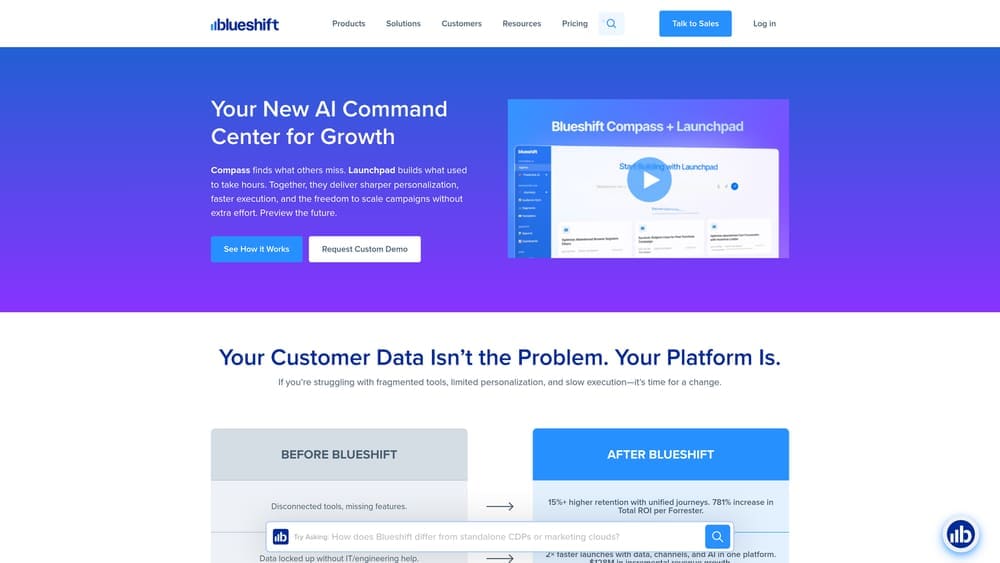
Blueshift positions itself as an AI command center that unifies customer data, predictive intelligence, and cross-channel orchestration into a single platform designed specifically for growth-focused brands.
Where This Tool Shines
Blueshift's core strength lies in its ability to turn customer data into immediate action. The platform operates as both a Customer Data Platform and a predictive engine, continuously analyzing behavioral signals to forecast next-best actions, optimal engagement timing, and product affinity in real-time.
What sets Blueshift apart is its focus on actionable AI rather than just analytical insights. While many platforms generate predictions that require manual interpretation and campaign setup, Blueshift automatically triggers personalized experiences across email, SMS, push notifications, and paid media based on predicted behaviors. When a customer's churn probability crosses a threshold, the system doesn't just alert you—it launches a retention sequence tailored to that individual's preferences and predicted triggers.
The platform's unified customer profiles aggregate data from every touchpoint, creating a comprehensive view that feeds increasingly accurate predictions. This approach eliminates the common problem of siloed predictions that only consider partial customer behavior.
Key Features & Capabilities
Customer AI Suite: Combines agentic, generative, and predictive AI to forecast behaviors and automate personalization decisions without manual intervention.
Real-Time Prediction Updates: Continuously recalculates propensity scores as customers interact with your brand, enabling immediate campaign adjustments rather than waiting for overnight batch processing.
Cross-Channel Orchestration: Coordinates messaging across multiple channels based on predicted engagement likelihood, automatically selecting optimal channels for each customer.
Predictive Product Recommendations: Uses collaborative filtering and behavioral analysis to suggest items customers are most likely to purchase based on affinity patterns.
Send-Time Optimization: Predicts the specific time each individual customer is most likely to engage with messages, personalizing delivery timing at scale.
Unified Customer Profiles: Consolidates data from all sources into single customer views that power more accurate predictions than channel-specific data.
Best For / Ideal Users
Blueshift excels for e-commerce brands, online retailers, and subscription businesses managing significant customer volumes across multiple marketing channels. The platform delivers maximum value when you have substantial behavioral data to analyze—typically companies with 50,000+ active customers who interact across email, web, mobile app, and other touchpoints.
Marketing teams who need to act on predictions immediately rather than just analyze them will appreciate Blueshift's automation capabilities. The platform suits organizations ready to move beyond basic segmentation into individualized, predictive personalization.
Pricing
Blueshift uses custom pricing based on contact volume and feature requirements. Mid-market implementations typically start around $3,000-$5,000 per month, with enterprise pricing scaling based on data complexity and channel usage.
7. Klaviyo Predictive Analytics
Best for: E-commerce brands using Klaviyo for email marketing who want integrated predictive capabilities without additional tools
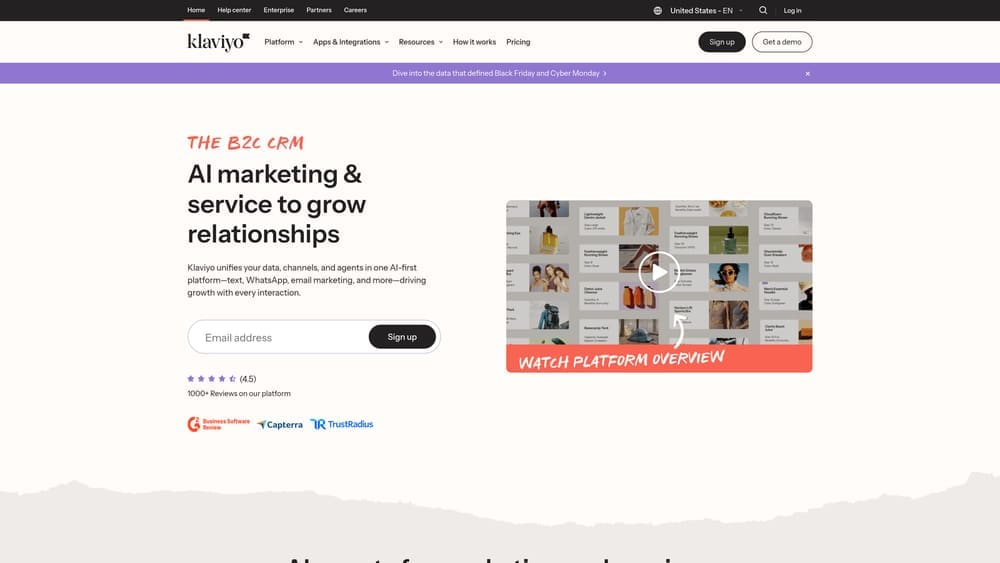
Klaviyo embeds predictive analytics directly into its email marketing platform, turning customer data into actionable forecasts without requiring separate analytics tools or data science expertise.
Where This Tool Shines
Klaviyo transforms predictive analytics from abstract reports into immediate marketing actions. The platform automatically calculates predicted customer lifetime value, expected date of next order, and churn risk for every profile in your database—then makes these predictions available as segmentation criteria.
This integration eliminates the friction that kills most predictive analytics initiatives. You can build email flows targeting "customers with predicted LTV over $500" or "customers predicted to churn within 30 days" just as easily as segmenting by location or purchase history. The predictions update continuously as customers interact with your brand, keeping your targeting current without manual intervention.
Key Features & Capabilities
Predicted Customer Lifetime Value: Forecasts total revenue expected from each customer over their entire relationship with your brand.
Expected Date of Next Order: Predicts when customers will make their next purchase, enabling perfectly timed re-engagement campaigns.
Churn Risk Identification: Flags customers likely to become inactive before they disengage, creating opportunities for proactive retention.
Predictive Segmentation: Use any prediction as criteria for creating targeted email segments alongside traditional demographic and behavioral filters.
Historical Trend Analysis: Compare predicted versus actual performance to refine targeting strategies and validate model accuracy.
Best For / Ideal Users
Klaviyo's predictive analytics suits small to mid-sized e-commerce brands—typically generating $1M-$50M in annual revenue—who want sophisticated targeting without enterprise complexity. The platform works best for businesses with repeat purchase patterns and at least 6-12 months of transaction history to train accurate models.
Direct-to-consumer brands selling consumables, subscription boxes, apparel, or beauty products see particularly strong results. The predictions become more accurate as your customer base grows and purchase patterns emerge.
Pricing
Predictive analytics features are included in Klaviyo's standard pricing, which starts at $20 monthly for up to 500 contacts and scales based on list size. Most e-commerce brands pay $100-$500 monthly depending on contact volume, making sophisticated predictions accessible without enterprise budgets.
Putting It All Together
The right predictive analytics tool depends on your existing tech stack, team capabilities, and targeting complexity. If you're already invested in Salesforce, Einstein Analytics delivers native predictions without integration headaches. E-commerce brands using Klaviyo gain immediate predictive segmentation without additional tools. For teams seeking enterprise-grade models without data science resources, Pecan AI automates the complexity.
Start by assessing your data maturity. Most platforms require 6-12 months of historical customer data to generate reliable predictions. If you're just beginning your analytics journey, Google Analytics 4 offers free predictive metrics to prove value before investing in specialized tools. Mid-market companies ready to scale should evaluate HubSpot or Blueshift for their balance of sophistication and usability.
The predictive analytics landscape will only grow more sophisticated. Tools that seemed enterprise-only two years ago now serve mid-market teams. The competitive advantage goes to businesses that implement these capabilities early, refine their models continuously, and integrate predictions into daily marketing decisions.
Ready to transform your customer targeting strategy? Learn more about our services and discover how we help businesses implement data-driven marketing that delivers measurable results.
Campaign
Creatives
quick links
contact
© 2025 Campaign Creatives.
All rights reserved.