campaign
creatives

9 Best Marketing Analytics Platforms for Data-Driven Growth in 2026
Marketing success in 2026 requires more than collecting data—it demands platforms that connect your website, email, and ad performance into actionable insights that drive revenue growth. This guide evaluates the best marketing analytics platforms based on integration capabilities, reporting depth, and value for different business sizes, helping you choose the right solution to transform scattered data into strategic decisions that identify what's working, eliminate budget waste, and uncover y...
Marketing data is everywhere. Your website analytics show one story, your email platform tells another, and your ad dashboards paint yet another picture. The challenge isn't collecting data anymore—it's making sense of it all and turning those insights into decisions that actually move the needle on revenue.
The right marketing analytics platform doesn't just aggregate numbers. It connects the dots between your marketing efforts and business outcomes, helping you understand what's working, what's wasting budget, and where your next growth opportunity lives.
We've evaluated platforms based on integration capabilities, reporting depth, ease of use, and value across different business sizes. Here are the top marketing analytics platforms driving data-driven growth in 2026.
1. Campaign Creatives Analytics Suite
Best for: Businesses wanting expert-guided analytics without building an in-house data team
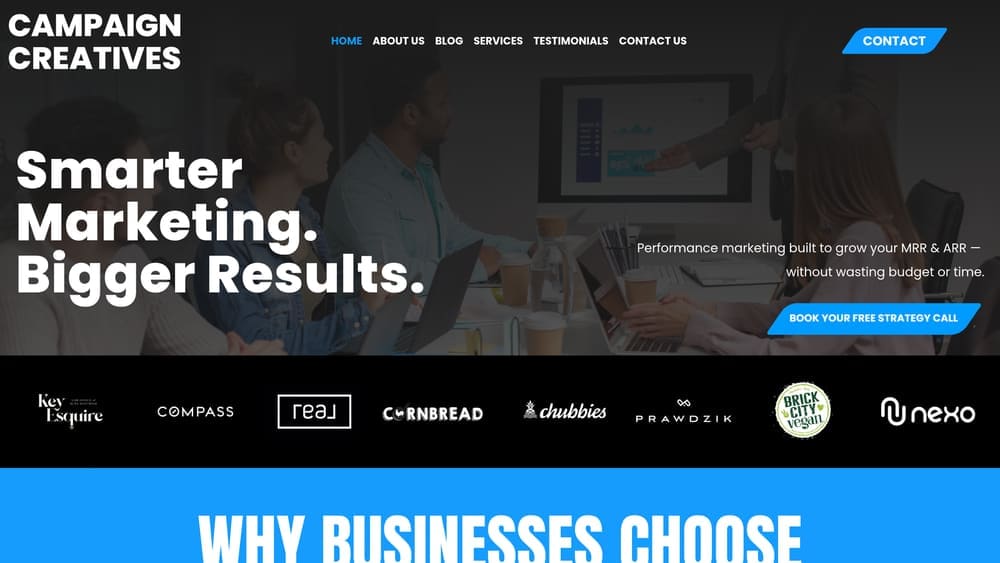
Campaign Creatives Analytics Suite takes a different approach to marketing analytics by combining platform access with human expertise, delivering not just data but interpretation and strategic guidance.
Where This Tool Shines
Think of this as having an analytics department on demand. Rather than wrestling with dashboards alone, you get custom-built reporting tailored to your specific KPIs, plus monthly strategy sessions where experts walk you through what the data actually means for your business.
The cross-channel attribution modeling connects your marketing activities across platforms, showing you the complete customer journey rather than isolated touchpoints. This matters when you're trying to understand whether that LinkedIn ad or that email sequence actually contributed to a sale.
Key Features
Custom Dashboard Creation: Dashboards built around your business goals, not generic templates.
Cross-Channel Attribution: See how different touchpoints work together to drive conversions.
Expert Strategy Sessions: Monthly consultations to interpret data and adjust tactics.
Major Platform Integration: Connects with leading ad platforms, CRMs, and marketing tools.
Plain-Language Reporting: Automated reports that explain insights without requiring a statistics degree.
Best For
Growing businesses that need sophisticated analytics but lack dedicated data analysts. Companies tired of staring at dashboards wondering what action to take next. Marketing teams who want strategic guidance alongside their data.
Pricing
Custom pricing based on your data volume and service level needs. The managed service model means you're paying for expertise and platform access together.
2. Google Analytics 4
Best for: Businesses needing comprehensive web and app tracking with predictive insights
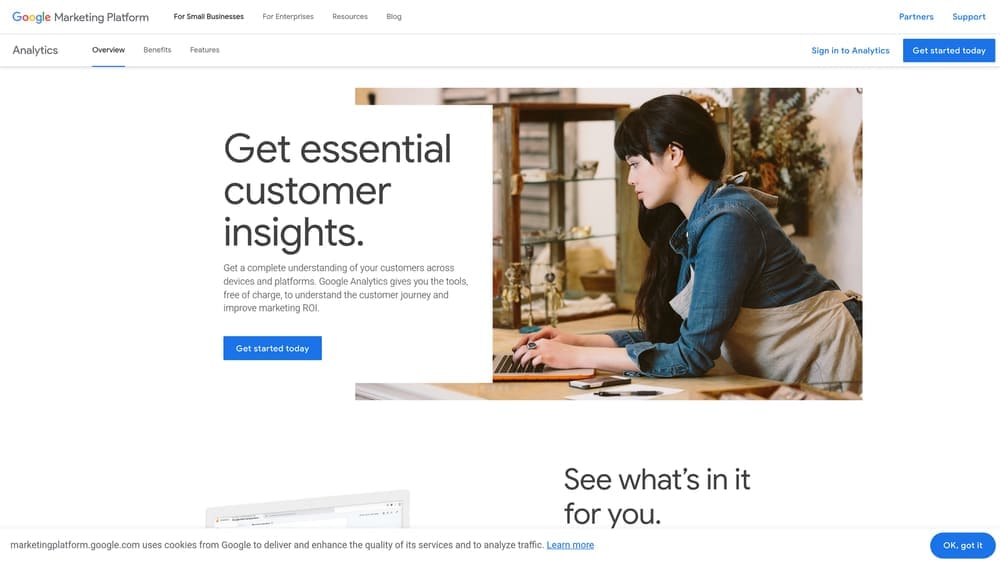
Google Analytics 4 represents Google's complete reimagining of web analytics, moving from session-based to event-based tracking with machine learning baked into the core.
Where This Tool Shines
GA4's event-based model gives you flexibility that the old Universal Analytics never could. Every interaction becomes an event you can track and analyze, from button clicks to video plays to custom business actions.
The predictive metrics are where things get interesting. The platform uses machine learning to forecast purchase probability and churn likelihood, helping you identify high-value users before they convert and at-risk customers before they leave.
Key Features
Event-Based Data Model: Flexible tracking that adapts to your specific measurement needs.
Cross-Platform Analysis: Unified view of user journeys across websites and mobile apps.
Predictive Metrics: AI-powered forecasts for purchase probability and revenue potential.
Google Ads Integration: Seamless connection to optimize ad campaigns with analytics insights.
Privacy-Centric Design: Cookieless measurement options as third-party cookies disappear.
Best For
Any business with a web presence, particularly those running Google Ads or managing both web and mobile app experiences. Companies preparing for a cookieless future.
Pricing
Completely free for standard use. GA4 360 enterprise version available with custom pricing for organizations needing higher data limits and SLA guarantees.
3. HubSpot Marketing Analytics
Best for: B2B companies connecting marketing activities directly to revenue and sales outcomes
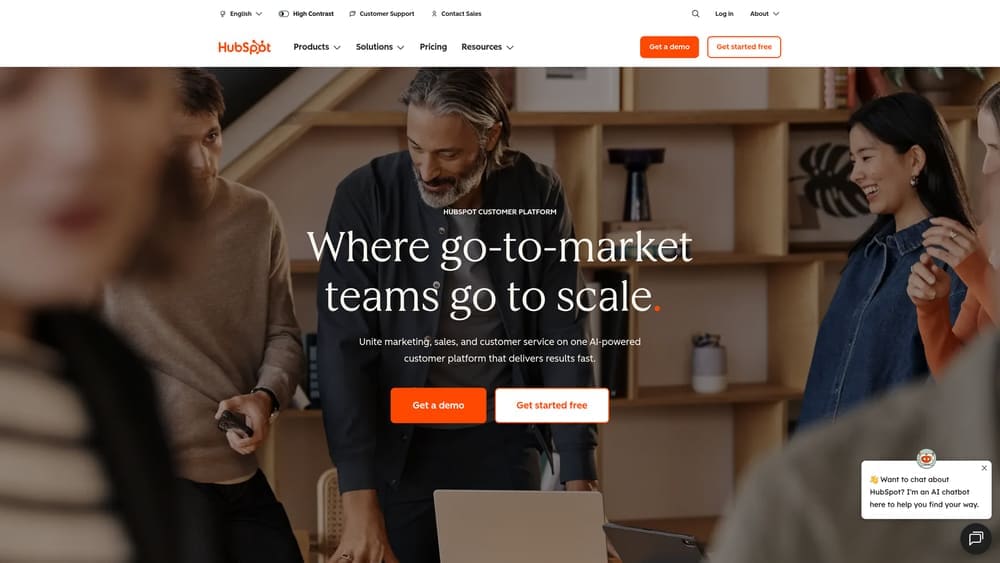
HubSpot Marketing Analytics lives inside HubSpot's CRM ecosystem, creating closed-loop reporting that traces marketing touches all the way to closed deals.
Where This Tool Shines
The power here is contact-level visibility. You can see every blog post someone read, every email they opened, and every form they filled out—then watch how those interactions influenced their path to becoming a customer.
Multi-touch revenue attribution answers the question every marketer asks: which activities actually generate revenue? You'll see first-touch, last-touch, and everything in between, with revenue credited across the entire journey.
Key Features
Multi-Touch Attribution: Revenue credit distributed across all marketing touchpoints in the customer journey.
Cross-Channel Campaign Tracking: Performance measurement across email, social, ads, and content.
Contact Journey Analytics: Individual-level tracking showing complete interaction history.
Custom Report Builder: Create reports matching your specific KPIs and business questions.
CRM Integration: Native connection to sales data for true closed-loop reporting.
Best For
B2B companies with longer sales cycles who need to prove marketing's contribution to revenue. Teams already using HubSpot's CRM or marketing tools.
Pricing
Included with Marketing Hub Professional, which starts at $800 per month. You'll need this tier or higher to access the full analytics capabilities.
4. Adobe Analytics
Best for: Enterprise organizations requiring real-time processing and advanced segmentation at scale
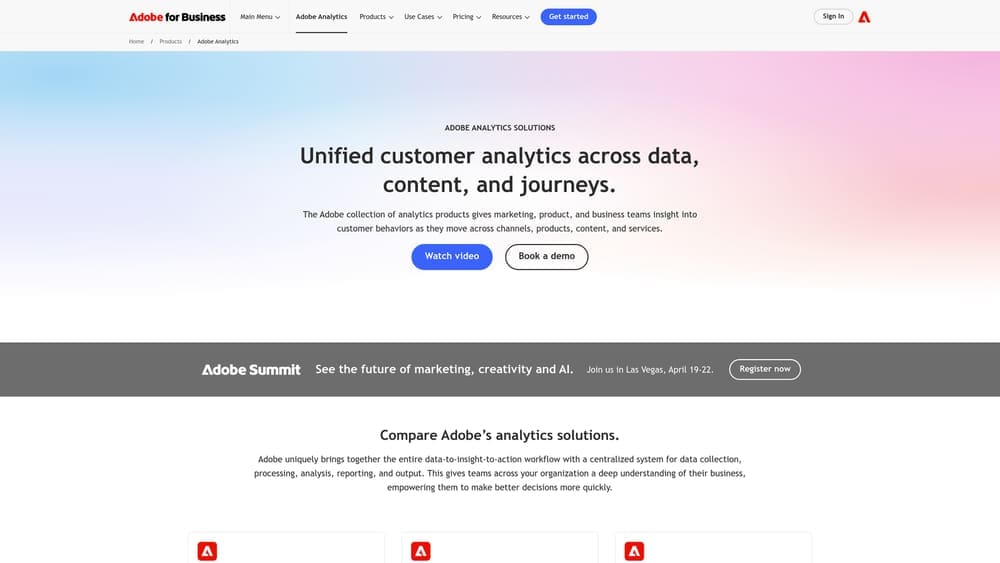
Adobe Analytics is the enterprise heavyweight, built for organizations processing massive data volumes with complex analysis needs.
Where This Tool Shines
Real-time data processing means you're not waiting for yesterday's reports to understand today's performance. The platform handles billions of events without breaking a sweat, making it viable for high-traffic digital properties.
Analysis Workspace is where data analysts live. It's a freeform exploration environment where you can slice data any way imaginable, test hypotheses on the fly, and build visualizations that answer specific business questions rather than relying on pre-built reports.
Key Features
Real-Time Processing: Immediate data availability for time-sensitive decisions and monitoring.
Advanced Segmentation: Create complex audience segments based on behavioral and demographic criteria.
Predictive Analytics: Machine learning models for anomaly detection and forecasting.
Cross-Channel Integration: Unified data from web, mobile, IoT, and offline sources.
Analysis Workspace: Powerful ad-hoc analysis environment for data exploration.
Best For
Large enterprises with significant web traffic, complex digital ecosystems, and dedicated analytics teams. Organizations already invested in Adobe Experience Cloud.
Pricing
Enterprise pricing model with costs typically starting around $100,000 annually, scaling based on data volume and feature requirements.
5. Mixpanel
Best for: Product teams tracking user behavior, engagement, and retention in digital products
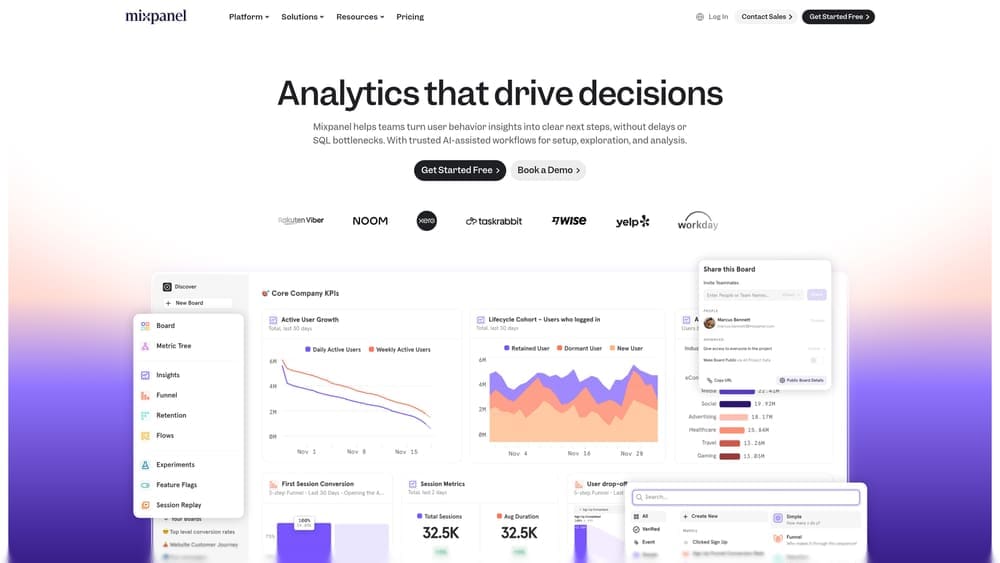
Mixpanel specializes in product analytics, helping teams understand how users interact with features and where they drop off in key flows.
Where This Tool Shines
Funnel analysis is Mixpanel's bread and butter. You can visualize any multi-step process—signup flows, checkout sequences, onboarding paths—and see exactly where users abandon and which segments convert best.
The cohort analysis lets you compare user groups over time. You might compare users who signed up in January versus February, or those who used Feature A versus those who didn't, tracking how retention differs between groups.
Key Features
Event-Based Tracking: Granular behavioral data capturing every user interaction.
Funnel Analysis: Visual conversion tracking through multi-step processes.
Retention Reports: Measure how often users return and what keeps them engaged.
Cohort Comparison: Analyze different user groups to identify what drives success.
Interactive Exploration: Drill into data without waiting for engineering to build reports.
Best For
SaaS companies, mobile apps, and digital products focused on user engagement and retention. Product managers and growth teams optimizing user experiences.
Pricing
Free tier available for up to 20 million events per month. Growth plan starts at $20 monthly, scaling with event volume.
6. Tableau
Best for: Organizations transforming complex marketing data into interactive visual dashboards
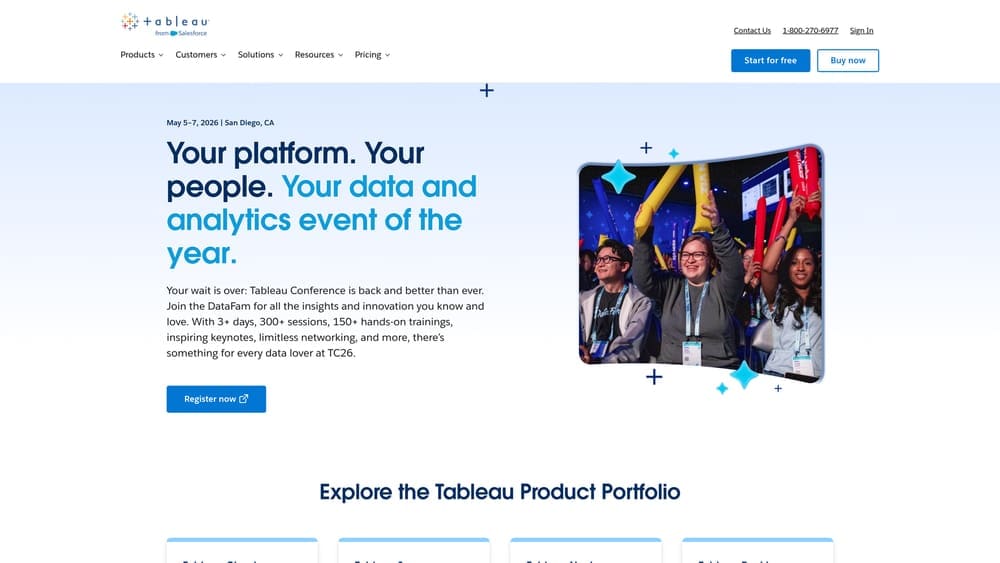
Tableau is the visualization powerhouse that turns spreadsheets and databases into interactive dashboards anyone can understand.
Where This Tool Shines
The drag-and-drop interface means you don't need to code to create sophisticated visualizations. Connect your data sources, drag fields onto the canvas, and Tableau automatically suggests the best chart types for your data.
What sets Tableau apart is the interactivity. Dashboards aren't static images—viewers can filter dates, drill into segments, and explore data themselves. This turns reporting from a one-way broadcast into a conversation with your data.
Key Features
Visual Builder: Intuitive drag-and-drop interface for creating complex visualizations.
Data Source Connectivity: Connects to hundreds of databases, cloud services, and files.
Real-Time Dashboards: Live data connections that update automatically.
Collaborative Sharing: Publish dashboards for team access or embed in websites.
Natural Language Queries: Ask questions in plain English and get visual answers.
Best For
Data-driven organizations needing to democratize analytics across teams. Marketing departments pulling data from multiple sources who need unified reporting.
Pricing
Tableau Creator license starts at $75 per user monthly, including desktop authoring and cloud publishing capabilities.
7. Semrush
Best for: Digital marketers focused on SEO, content performance, and competitive intelligence
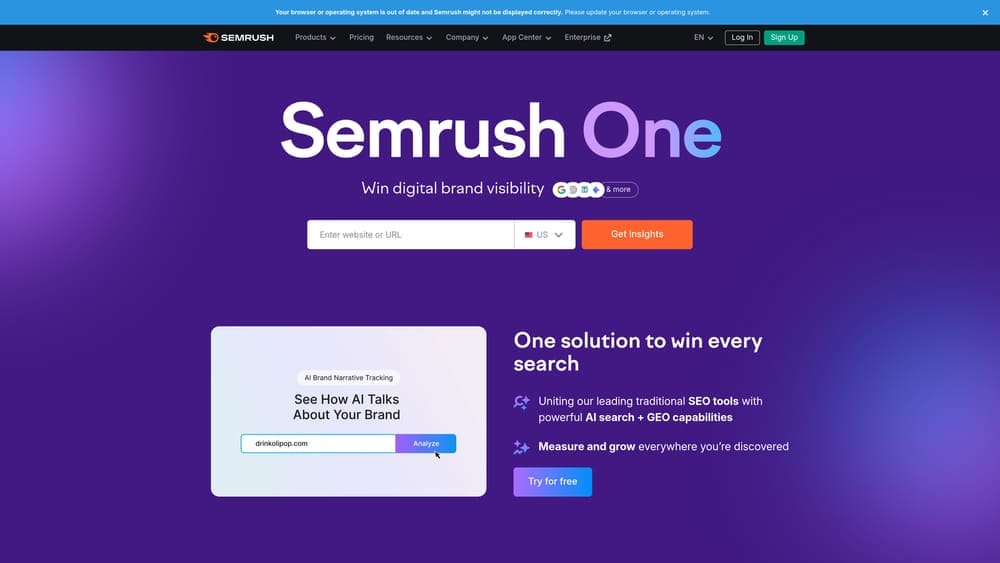
Semrush combines analytics with competitive research, helping you understand not just your performance but how you stack up against competitors.
Where This Tool Shines
The competitive traffic estimation is remarkably useful. Enter a competitor's domain and see their estimated organic traffic, top-performing keywords, and traffic trends over time. This intelligence informs your own SEO and content strategy.
Content performance tracking goes beyond basic page views. You'll see which content ranks for valuable keywords, attracts backlinks, and drives organic traffic—helping you understand what content investments pay off.
Key Features
Organic Traffic Analytics: Track keyword rankings and organic search performance.
Competitor Intelligence: Estimate competitor traffic and discover their top keywords.
Content Performance: Measure which content drives rankings and traffic.
Backlink Analysis: Monitor link-building success and competitor link profiles.
PPC Campaign Analysis: Research competitor ad strategies and keyword bids.
Best For
SEO specialists, content marketers, and digital marketing agencies managing organic search and content strategies. Companies competing in crowded digital spaces.
Pricing
Pro plan starts at $139.95 monthly, with higher tiers offering more projects, keywords, and historical data.
8. Klaviyo
Best for: E-commerce businesses tracking email and SMS marketing with direct revenue attribution
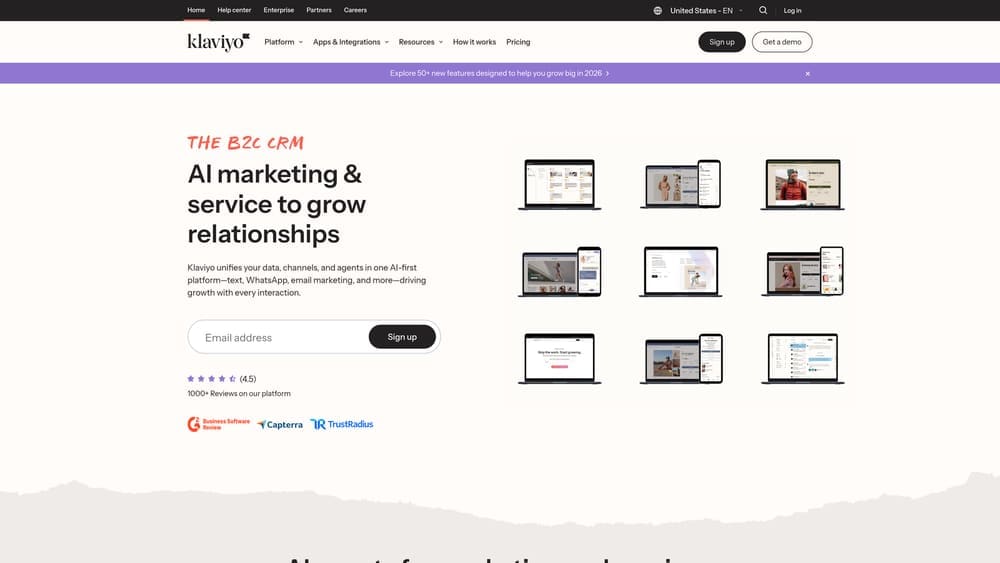
Klaviyo is built specifically for e-commerce, connecting marketing automation with analytics that measure revenue, not just opens and clicks.
Where This Tool Shines
Revenue attribution per campaign changes how you evaluate email marketing. Instead of celebrating a 25% open rate, you see that a campaign generated $8,450 in revenue with a 15x ROI. This shifts the conversation from vanity metrics to business impact.
Customer lifetime value tracking helps you segment high-value customers and predict future spending. The platform identifies your VIPs and customers at risk of churning, enabling targeted retention campaigns before customers leave.
Key Features
Revenue Attribution: Track dollars generated by each campaign, flow, and segment.
Lifetime Value Tracking: Measure and predict customer value over time.
Predictive Analytics: Forecast churn risk and future purchase likelihood.
Segment Performance: Compare revenue and engagement across customer groups.
E-commerce Integration: Native connections to Shopify, WooCommerce, Magento, and others.
Best For
E-commerce brands of any size who want to connect email and SMS marketing directly to revenue. Stores focused on customer retention and lifetime value optimization.
Pricing
Free for up to 250 contacts. Paid plans start at $20 monthly and scale based on contact count and email volume.
9. Looker Studio
Best for: Budget-conscious teams needing customizable dashboards from multiple data sources
Looker Studio (formerly Google Data Studio) is Google's free reporting tool that creates shareable dashboards from virtually any data source.
Where This Tool Shines
The price is unbeatable—completely free with unlimited reports and dashboards. For small businesses or agencies managing multiple clients, this removes budget as a barrier to professional reporting.
Community connectors expand what's possible. While native integrations cover Google products, the community has built hundreds of connectors for platforms like Facebook Ads, LinkedIn, Mailchimp, and countless others. If there's a data source you need, someone has probably built a connector for it.
Key Features
Unlimited Reports: Create as many dashboards as needed at no cost.
Google Product Integration: Seamless connection to Analytics, Ads, Search Console, and Sheets.
Community Connectors: Hundreds of third-party integrations built by the community.
Interactive Filtering: Date ranges and filters that update visualizations dynamically.
Easy Sharing: Share dashboards via link or embed them in websites.
Best For
Small businesses and startups needing professional reporting without budget. Agencies creating client dashboards at scale. Teams already using Google's marketing stack.
Pricing
Completely free with no usage limits or premium tiers.
Finding Your Analytics Match
The right platform depends on your business model and what questions you need answered. E-commerce brands tracking revenue per campaign will find value in Klaviyo's direct attribution, while B2B companies with longer sales cycles benefit from HubSpot's closed-loop reporting.
Budget matters, but so does expertise. Free tools like Google Analytics 4 and Looker Studio offer powerful capabilities, but they require knowledge to configure and interpret. Managed solutions provide both platform access and the strategic guidance to act on insights.
For small to mid-sized businesses, consider starting with Google Analytics 4 for web tracking, supplemented by Looker Studio for custom reporting. E-commerce stores should prioritize platforms like Klaviyo that connect marketing directly to revenue. Product teams benefit from Mixpanel's behavioral focus.
Enterprise organizations with complex data needs and dedicated analytics teams can leverage Adobe Analytics or Tableau's advanced capabilities. If competitive intelligence drives your strategy, Semrush's combination of analytics and competitor research proves valuable.
Here's the thing about analytics platforms: they show you what happened, but translating data into strategy requires expertise. The gap between seeing a metric and knowing what to do about it is where many marketing teams struggle.
That's where combining technology with expert interpretation creates the most value. Having someone who understands your business goals, interprets your data in that context, and helps you adjust tactics based on what the numbers reveal—that's when analytics transforms from reporting to growth driver.
Learn more about our services and how data-driven marketing can complement your analytics stack, turning insights into action and action into measurable growth.
Campaign
Creatives
quick links
contact
© 2025 Campaign Creatives.
All rights reserved.