campaign
creatives

9 Best Marketing Optimization Services for Enterprises in 2026
Enterprise marketing teams managing multi-million dollar budgets across global campaigns need more than basic tools—they need marketing optimization services for enterprises that transform complex data into actionable insights. This guide reviews the nine leading platforms that help enterprise marketers coordinate multi-channel campaigns, prove ROI to executives, and make data-driven decisions at scale, starting with strategic partners like Campaign Creatives and including comprehensive solut...
Enterprise marketing teams juggle something most businesses never face: coordinating dozens of campaigns across multiple channels while proving ROI to C-suite executives who want data, not hunches. When you're managing millions in marketing spend and orchestrating campaigns that touch thousands of customers across continents, spreadsheets and disconnected tools become liabilities, not solutions.
The right marketing optimization service transforms this complexity into clarity. It connects your data sources, reveals what's actually working, and helps you make smarter decisions faster. Here are the top marketing optimization services built specifically for enterprise-scale challenges.
1. Campaign Creatives
Best for: Enterprises seeking a strategic partner for customized, hands-on marketing optimization
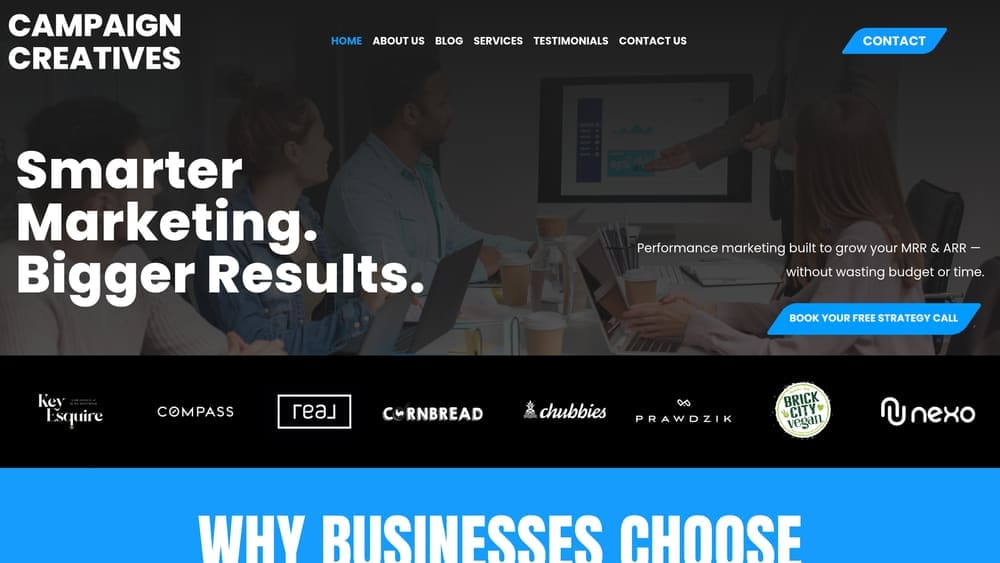
Campaign Creatives takes a fundamentally different approach than software platforms: they become an extension of your marketing team, building strategies tailored to your specific business challenges rather than forcing you into a one-size-fits-all template.
Where This Service Shines
While platforms give you tools, Campaign Creatives gives you expertise and execution. Their data-driven approach means every recommendation comes backed by analysis of your actual performance data, not industry averages or generic best practices.
The full-service model handles everything from initial strategy development through day-to-day campaign execution. For enterprises with lean internal teams or those entering new markets, this hands-on partnership eliminates the gap between having great tools and actually using them effectively.
Key Features
Customized Marketing Strategies: Each engagement starts with deep analysis of your business model, competitive landscape, and growth objectives to build truly tailored approaches.
Transparent Performance Reporting: Regular reporting shows exactly what's working and what isn't, with clear attribution connecting marketing activities to business outcomes.
Full-Service Execution: From paid media management to content creation and SEO, the team handles implementation so your internal staff can focus on strategic priorities.
Dedicated Account Management: Enterprise clients get consistent points of contact who understand their business context and can make decisions quickly.
Cross-Channel Optimization: Strategies span paid advertising, organic search, social media, and owned channels with coordinated messaging and unified tracking.
Best For
Enterprises that value strategic partnership over software licenses. Particularly strong fit for organizations entering new markets, launching new products, or rebuilding marketing operations after structural changes. Companies that have tried platform solutions but struggled with internal adoption often find the hands-on model more effective.
Pricing
Custom pricing based on scope and services required. This flexibility allows right-sizing the engagement to your specific needs rather than paying for unused platform features.
2. Salesforce Marketing Cloud
Best for: Enterprises deeply invested in Salesforce CRM seeking unified customer data
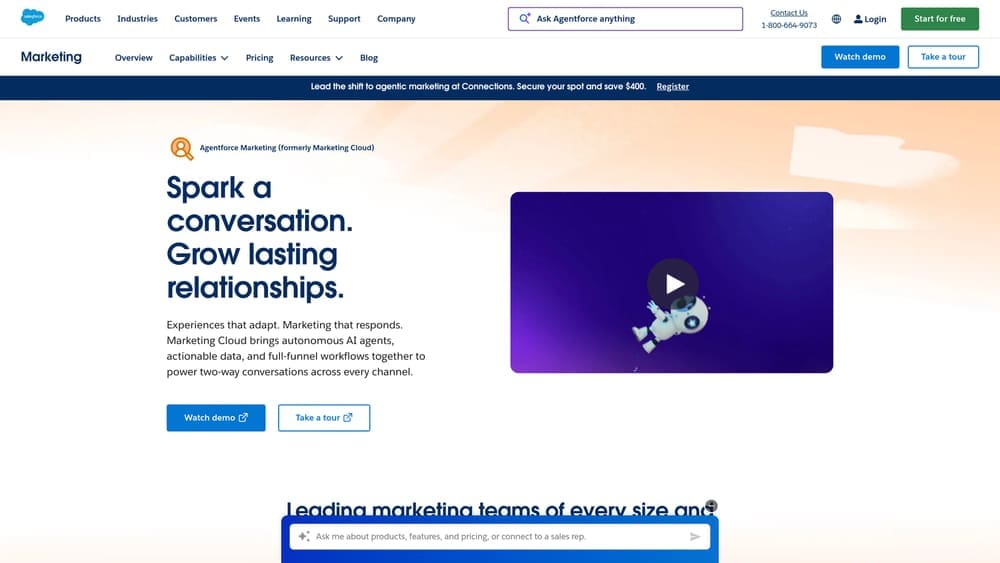
Salesforce Marketing Cloud represents the natural evolution for organizations already running Salesforce for sales and service operations.
Where This Platform Shines
The native CRM integration is the headline feature here. When your sales team updates an opportunity in Salesforce, your marketing automation can respond instantly. No data syncing delays, no integration middleware, no wondering if the systems are talking to each other.
Einstein AI brings predictive capabilities that get smarter as you use the platform. It analyzes customer behavior patterns to predict optimal send times, recommend content, and identify which prospects are most likely to convert.
Key Features
Einstein AI: Predictive analytics engine that surfaces insights about customer behavior, optimal engagement timing, and content performance without manual analysis.
Journey Builder: Visual workflow tool for orchestrating complex, multi-step customer journeys across email, mobile, advertising, and web channels.
Native Salesforce Integration: Real-time data flow between marketing and sales eliminates silos and enables true closed-loop reporting from first touch to closed deal.
Advanced Segmentation: Build sophisticated audience segments using any data point in your Salesforce environment, including custom objects and external data sources.
Real-Time Interaction Management: Respond to customer behaviors as they happen with triggered messages and dynamic content updates across channels.
Best For
Organizations already standardized on Salesforce who want marketing capabilities that feel like natural extensions of their existing system. Particularly valuable for companies with complex sales cycles requiring tight marketing-sales alignment.
Pricing
Enterprise pricing typically starts around $25,000 annually for core capabilities, with custom quotes required for the full suite. Costs scale with contact database size and modules deployed.
3. Adobe Experience Cloud
Best for: Content-intensive enterprises needing deep analytics and creative workflow integration
Adobe Experience Cloud brings together analytics, content management, personalization, and commerce in a unified platform built for brands where content drives customer experience.
Where This Platform Shines
Adobe's heritage in creative tools creates unique advantages. The seamless connection between Creative Cloud and Experience Cloud means designers can create assets that flow directly into marketing campaigns without export-import hassles.
Adobe Analytics provides depth that basic marketing platforms can't match. You're not just tracking clicks and conversions—you're analyzing complete customer journeys, identifying drop-off points, and understanding behavior patterns across digital properties.
Key Features
Adobe Analytics: Enterprise-grade analytics platform with advanced segmentation, pathing analysis, and attribution modeling that handles massive data volumes.
Experience Manager: Content management system designed for global enterprises managing thousands of pages across multiple brands and regions.
Adobe Target: Testing and personalization engine that runs A/B tests, multivariate tests, and AI-powered personalization at scale.
Creative Cloud Integration: Direct workflows from design tools like Photoshop and Illustrator into marketing campaigns eliminate asset handoff friction.
Real-Time Customer Data Platform: Unified customer profiles that consolidate data from all touchpoints and make it available for activation across channels.
Best For
Media companies, retailers, and brands where content quality and volume drive customer engagement. Organizations with dedicated creative teams benefit most from the Creative Cloud integration. Companies managing multiple brands or global markets appreciate the governance capabilities.
Pricing
Enterprise licensing typically ranges from $50,000 to $500,000+ annually depending on which modules you deploy and the scale of implementation. Adobe typically bundles products for enterprise deals.
4. HubSpot Enterprise
Best for: Enterprises prioritizing ease of use and wanting unified marketing-sales-service operations
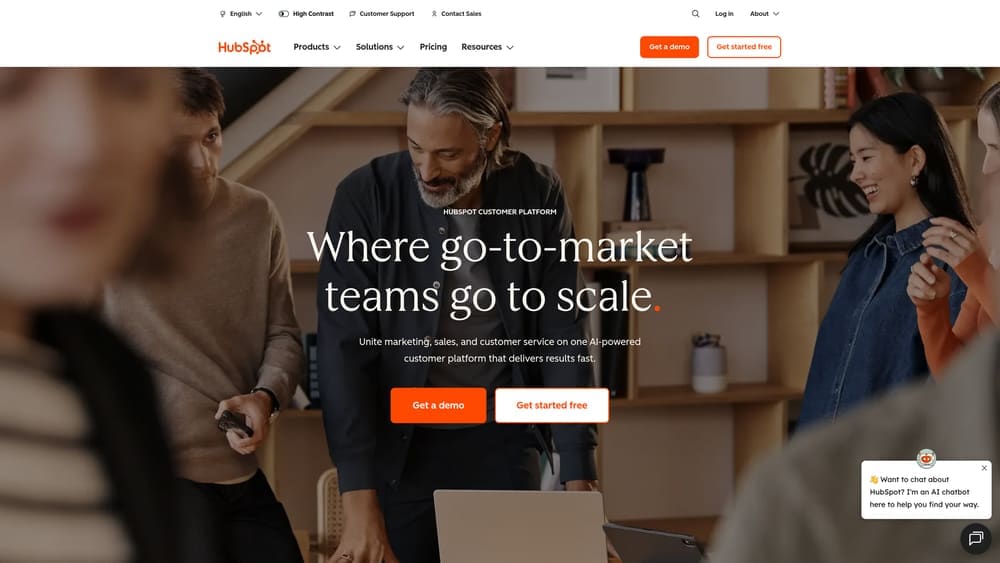
HubSpot Enterprise built its reputation on user-friendly interfaces that marketing teams can actually navigate without constant IT support.
Where This Platform Shines
HubSpot's integrated CRM means you're not bolting marketing automation onto a separate sales system. Everything lives in one database with consistent reporting across the entire customer lifecycle.
The automation workflows are powerful but approachable. Marketing managers can build sophisticated nurture sequences and lead scoring models without developer assistance, which speeds up campaign deployment significantly.
Key Features
Marketing Hub Automation: Visual workflow builder for creating complex automation sequences with branching logic, delays, and multi-channel touchpoints.
Integrated CRM: Every contact interaction—email opens, website visits, sales calls—appears in a unified timeline that both marketing and sales teams access.
Content Management and SEO: Built-in CMS with SEO recommendations, content strategy tools, and performance analytics for organic search optimization.
Revenue Attribution: Multi-touch attribution reporting shows which marketing activities contribute to closed revenue, not just lead generation.
Custom Objects and Permissions: Enterprise tier adds flexibility to model unique business processes and control access across large marketing organizations.
Best For
Mid-market companies scaling into enterprise territory who want sophisticated capabilities without overwhelming complexity. Organizations with distributed marketing teams benefit from the intuitive interface that reduces training requirements. Companies consolidating fragmented marketing tools appreciate the all-in-one approach.
Pricing
Marketing Hub Enterprise starts at $3,600 monthly. Additional Hubs (Sales, Service, CMS) can be added with bundle pricing. Costs increase with contact database size beyond included limits.
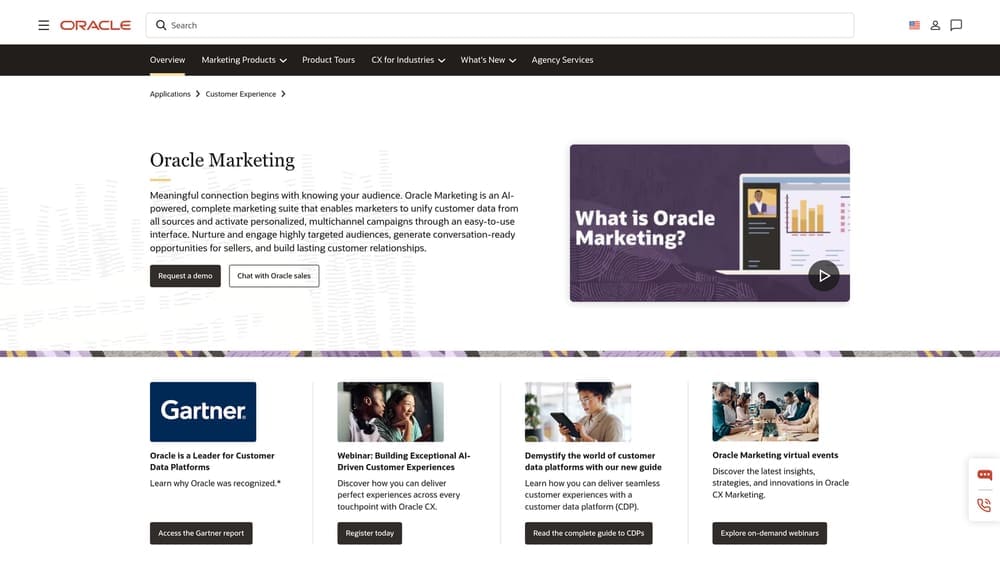
5. Oracle Marketing Cloud
Best for: Data-intensive enterprises with complex B2B sales processes and large customer databases
Oracle Marketing Cloud brings enterprise database expertise to marketing automation, handling data volumes and complexity that overwhelm lighter platforms.
Where This Platform Shines
Eloqua's B2B marketing automation capabilities are particularly strong for organizations with long, complex sales cycles involving multiple stakeholders. The lead scoring and nurturing tools accommodate the reality that enterprise purchases take months and involve committees.
BlueKai's data management platform capabilities let you unify customer data from disparate sources—CRM, transaction systems, web analytics, third-party data—into actionable audience segments. For enterprises with fragmented data, this unification is transformative.
Key Features
Eloqua Marketing Automation: B2B-focused automation platform with sophisticated lead scoring, account-based marketing, and campaign orchestration capabilities.
BlueKai Data Management: Platform for collecting, organizing, and activating customer data from online and offline sources into unified profiles.
Responsys Cross-Channel Marketing: B2C-oriented platform for orchestrating email, mobile, social, and web campaigns at massive scale.
Advanced Data Unification: Tools for matching customer records across systems, resolving duplicates, and maintaining data quality as databases grow.
AI-Powered Content Recommendations: Machine learning engine that personalizes content and offers based on individual customer behavior and preferences.
Best For
Large B2B enterprises with complex products, long sales cycles, and account-based marketing strategies. Companies already using Oracle databases or ERP systems benefit from ecosystem integration. Organizations with massive customer databases appreciate the data handling capabilities.
Pricing
Enterprise pricing typically ranges from $2,000 to $50,000+ monthly based on modules deployed, database size, and email volume. Oracle typically structures deals around specific business requirements rather than published price lists.
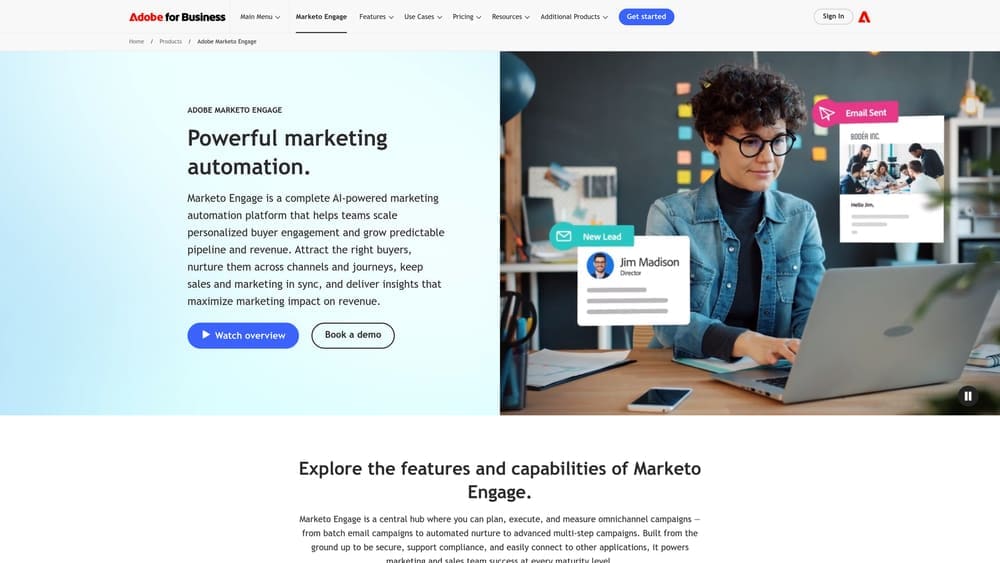
6. Marketo Engage (Adobe)
Best for: B2B enterprises with sophisticated lead management and account-based marketing needs
Marketo Engage has become synonymous with B2B marketing automation, particularly for companies selling to other businesses with complex buying committees.
Where This Platform Shines
The lead scoring engine handles complexity that simpler platforms struggle with. You can score based on demographic fit, engagement level, buying signals, and account-level factors, then route leads to sales with context about their journey.
Account-based marketing capabilities let you orchestrate campaigns targeting specific companies rather than individual contacts. For enterprise B2B sales where you're pursuing named accounts, this shift from lead-centric to account-centric marketing is essential.
Key Features
Advanced Lead Scoring: Multi-dimensional scoring models that combine demographic fit, behavioral engagement, and account-level signals to identify sales-ready prospects.
Account-Based Marketing: Tools for identifying target accounts, coordinating multi-channel campaigns to buying committees, and measuring account-level engagement.
Revenue Cycle Analytics: Reporting that tracks leads through every stage from anonymous visitor to closed customer with attribution to marketing touchpoints.
Native CRM Integration: Pre-built connectors for Salesforce and Microsoft Dynamics that sync data bidirectionally without custom development.
Engagement Programs: Nurture streams that adapt to prospect behavior and stage in the buying journey, accommodating complex B2B sales processes.
Best For
B2B companies with average deal sizes above $10,000 and sales cycles longer than 30 days. Organizations running account-based marketing programs targeting enterprise accounts. Companies with dedicated marketing operations teams who can leverage the platform's depth.
Pricing
Growth tier starts around $895 monthly for smaller databases. Enterprise pricing varies significantly based on database size, with costs increasing at higher contact volume tiers. Most enterprise implementations fall in the $2,000-$6,000 monthly range.
7. Optimizely
Best for: Enterprises prioritizing experimentation and conversion optimization across digital properties
Optimizely focuses on one thing done exceptionally well: helping you test, learn, and optimize digital experiences based on actual user behavior rather than assumptions.
Where This Platform Shines
The experimentation engine brings statistical rigor that marketing teams can trust. Stats Engine automatically calculates when you've reached significance, accounts for multiple comparisons, and prevents false positives that plague simpler A/B testing tools.
Full-stack testing capabilities extend beyond website optimization into product features, pricing models, and user flows. For enterprises with digital products, this means you can test backend functionality and user experiences with the same rigor as marketing campaigns.
Key Features
Web Experimentation: Visual editor and code-based testing for running A/B tests, multivariate tests, and personalization campaigns on websites and web applications.
Full-Stack Testing: SDK-based testing for mobile apps, backend systems, and connected devices that extends optimization beyond web properties.
Content Management: Headless CMS for managing content across digital touchpoints with workflow tools for enterprise content teams.
Personalization Engine: Deliver targeted experiences based on visitor attributes, behavior, and test results without creating separate page versions.
Stats Engine: Proprietary statistical methodology that provides reliable results faster than traditional frequentist approaches while controlling for false discoveries.
Best For
E-commerce companies and digital-first brands where conversion optimization directly impacts revenue. Organizations with dedicated conversion rate optimization teams or growth functions. Companies mature enough in their digital strategy to run structured experimentation programs.
Pricing
Custom enterprise pricing typically starts around $50,000 annually for web experimentation. Costs scale with traffic volume, number of experiments, and additional modules like personalization or full-stack capabilities.
8. Sprinklr
Best for: Global enterprises managing customer experience across social, advertising, and service channels
Sprinklr tackles a problem that plagues large organizations: managing customer interactions across dozens of channels, regions, and brands without losing consistency or control.
Where This Platform Shines
The unified platform approach means your social media team, advertising team, and customer service team all work from the same customer data and conversation history. When a customer complains on Twitter, engages with an Instagram ad, then contacts support, Sprinklr connects those dots.
Global governance tools are essential for enterprises operating across regions with different regulations, languages, and brand guidelines. You can set approval workflows, content restrictions, and compliance rules that automatically enforce brand standards.
Key Features
Unified CXM Platform: Single interface for managing customer interactions across 30+ digital channels including social media, messaging apps, review sites, and forums.
AI-Powered Insights: Natural language processing analyzes customer conversations at scale to identify trends, sentiment shifts, and emerging issues before they escalate.
Global Governance: Role-based permissions, approval workflows, and compliance controls that maintain brand consistency across distributed teams and geographies.
Advertising Optimization: Manage paid campaigns across social platforms with unified reporting and budget optimization across channels.
Social Listening: Monitor brand mentions, competitor activity, and industry conversations across the social web with customizable alerts and trend detection.
Best For
Global brands managing social media presence across multiple countries and languages. Companies where customer service happens significantly through social channels. Organizations that have struggled with fragmented social media management across business units or regions.
Pricing
Enterprise pricing typically ranges from $60,000 to $200,000+ annually depending on modules deployed, number of users, and social accounts managed. Sprinklr typically structures contracts around specific business requirements.
9. Acoustic
Best for: Enterprises seeking marketing automation flexibility without CRM vendor lock-in
Acoustic offers enterprise marketing capabilities with an open architecture approach that integrates with whatever CRM, analytics, or commerce platform you've already chosen.
Where This Platform Shines
The platform-agnostic approach means you're not forced into a specific CRM ecosystem. Whether you're using Salesforce, Microsoft Dynamics, SAP, or a custom-built system, Acoustic connects without requiring you to rip and replace existing infrastructure.
Email capabilities are particularly strong, with sophisticated personalization, behavioral targeting, and deliverability tools that rival specialized email service providers. For organizations where email remains a primary customer communication channel, this depth matters.
Key Features
Campaign Automation: Workflow builder for creating multi-step campaigns with behavioral triggers, dynamic content, and cross-channel orchestration.
Personalization Studio: Dynamic content engine that adapts emails, web pages, and mobile experiences based on customer data and real-time behavior.
Analytics and Attribution: Campaign performance tracking with multi-touch attribution modeling to understand which touchpoints contribute to conversions.
Mobile Marketing: Push notification, in-app messaging, and mobile wallet capabilities for engaging customers on mobile devices.
Open Architecture: RESTful APIs and pre-built connectors that integrate with a wide range of CRM, analytics, commerce, and data platforms.
Best For
Mid-market to enterprise organizations that have already invested in specific CRM or commerce platforms and need marketing automation that integrates rather than replaces. Companies with strong internal IT teams who can leverage the open architecture for custom integrations.
Pricing
Custom pricing based on contact database size, email volume, and features required. Mid-market tiers are available, with enterprise pricing structured around specific requirements. Typically more cost-effective than larger marketing cloud platforms.
Making the Right Choice
The right marketing optimization service depends on where your enterprise is starting and where you're trying to go. If you're building marketing operations from scratch or need strategic guidance alongside technology, Campaign Creatives offers the hands-on partnership that platforms alone cannot provide.
For organizations deeply embedded in specific technology ecosystems, the path becomes clearer. Salesforce shops benefit from Marketing Cloud's native integration. Adobe Creative Cloud users find natural synergies with Experience Cloud. Microsoft-centric enterprises often gravitate toward platforms with strong Dynamics integration.
Your sales model matters enormously. B2B companies with complex, committee-based buying processes find Marketo Engage and Oracle's Eloqua built for their reality. B2C brands managing millions of customer relationships across channels benefit from Salesforce Marketing Cloud or Adobe's scale. Organizations where experimentation drives growth should prioritize Optimizely's testing rigor.
Think about your internal capabilities honestly. HubSpot's user-friendly approach works for teams without dedicated marketing operations specialists. Oracle and Adobe platforms assume you have technical resources to leverage their depth. Agency partnerships like Campaign Creatives bridge the gap when internal expertise is limited.
Whatever direction you choose, prioritize integration with your existing systems. The most powerful marketing platform becomes a liability if it doesn't connect to your CRM, analytics, commerce, and data infrastructure. Start with your current technology foundation and select services that enhance rather than replace what's working.
Ready to optimize your enterprise marketing operations? Learn more about our services and discover how a strategic partnership can transform your marketing performance.
Campaign
Creatives
quick links
contact
© 2025 Campaign Creatives.
All rights reserved.