campaign
creatives

8 Best Comparison Of Digital Marketing Platforms For Businesses To Drive Measurable Growth In 2025
This comparison of digital marketing platforms for businesses evaluates eight leading solutions based on implementation ease, ROI potential, integration capabilities, and scalability to help you choose the right platform for your specific business needs and budget.
Your marketing dashboard shows traffic from six different platforms, but you're not sure which ones actually drive revenue. You've got three email tools that don't talk to each other, social media scheduling happening in two places, and analytics scattered across platforms you forgot you were paying for. Sound familiar?
The digital marketing platform landscape in 2025 offers more options than ever—but that abundance creates its own problem. A B2B company selling enterprise software needs completely different capabilities than a DTC brand selling skincare. A startup with $2,000 monthly budget faces different constraints than an established business spending six figures on ads.
We've tested these platforms extensively, analyzed thousands of user reviews, and evaluated which tools deliver measurable business results versus impressive feature lists. This comparison focuses on what actually matters: ease of implementation, realistic ROI potential, integration capabilities, and whether the platform grows with your business.
Here are the leading digital marketing platforms that businesses are using to drive real growth in 2025.
1. HubSpot Marketing Hub
Best for: Mid-sized B2B companies seeking an all-in-one inbound marketing solution
HubSpot Marketing Hub has evolved from a simple email tool into a comprehensive marketing automation platform that many businesses consider the gold standard for inbound marketing.

Where This Tool Shines
HubSpot excels at connecting every piece of your marketing funnel into one cohesive system. Unlike platforms that force you to juggle multiple tools, HubSpot integrates email marketing, landing pages, social media management, SEO tools, and analytics into a single dashboard.
The platform's real strength lies in its lead nurturing capabilities—you can track a prospect's entire journey from first website visit through closed deal. The visual workflow builder makes complex automation accessible even for non-technical marketers, and the reporting dashboards provide clear visibility into what's actually driving revenue.
For businesses committed to content marketing and inbound strategies, HubSpot's CMS and blogging tools create a seamless content-to-conversion pipeline. The unified data model means every customer interaction feeds into a single contact record, enabling true omnichannel understanding.
Key Features & Capabilities
Drag-and-drop email builder: Create professional campaigns with A/B testing and smart send times that optimize delivery based on recipient behavior.
Landing page creator: Build conversion-optimized pages with built-in recommendations for improving performance.
Lead scoring and segmentation: Automatically identify your hottest prospects based on behavior, demographics, and engagement patterns.
Marketing automation workflows: Design sophisticated customer journeys with branching logic that adapts to individual actions.
Native CRM integration: Track the complete customer lifecycle from first touch to closed deal without switching platforms.
Attribution reporting: Connect marketing activities directly to revenue with multi-touch attribution models showing which channels drive actual results.
Best For / Ideal Users
HubSpot Marketing Hub works best for B2B companies with longer sales cycles who need to nurture leads over time. It's particularly valuable for businesses with $50K+ annual marketing budgets who want to consolidate multiple tools into one platform.
Companies with dedicated marketing teams of three or more people will maximize the platform's capabilities, though smaller teams can still benefit from the starter tier. The platform requires commitment to the inbound methodology—it's not just software, but a complete approach to attracting and converting customers through valuable content.
Businesses should be prepared for a learning curve. Most companies don't see significant ROI until months three or four as they build content, configure automation, and optimize based on performance data.
2. Google Ads
Best for: Businesses prioritizing search intent and immediate conversion opportunities
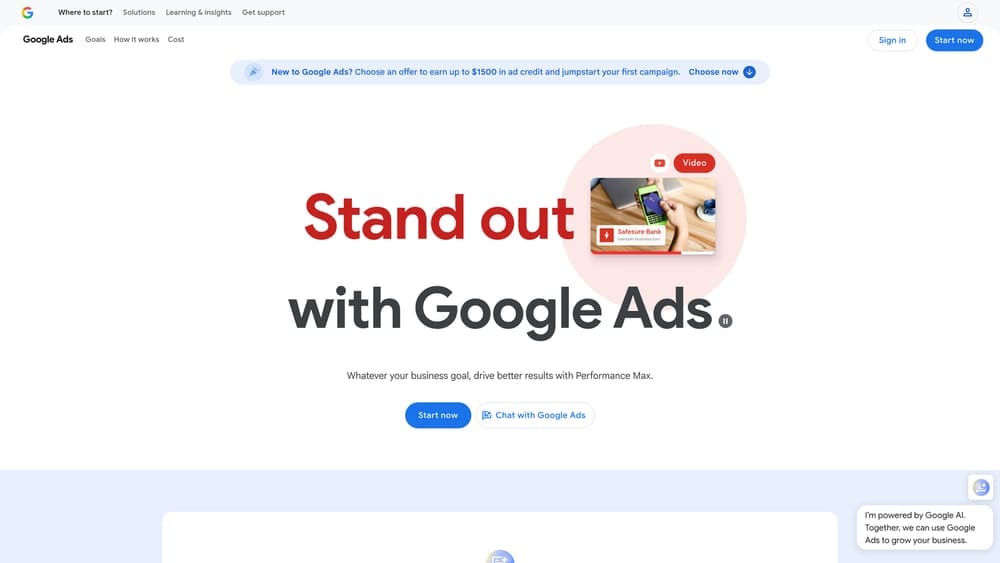
Google Ads remains the dominant platform for capturing high-intent traffic when people are actively searching for solutions.
Where This Tool Shines
Google Ads captures demand that already exists rather than creating it. When someone searches "CRM software for small business" or "emergency plumber near me," they're signaling clear intent. Your ad appears precisely when they need you most.
The platform's machine learning has matured significantly. Smart Bidding strategies now outperform manual optimization for most advertisers by analyzing thousands of signals in real-time—device type, location, time of day, browsing history—to adjust bids for maximum conversions. Beyond search ads, the Google Display Network reaches 90% of internet users across millions of websites, while YouTube advertising provides video engagement at scale. The integration with Google Analytics creates powerful remarketing opportunities, letting you re-engage website visitors across Google's entire ecosystem.
Key Features & Capabilities
Search Ads: Target specific keywords matching user intent, appearing above organic results when prospects actively search for solutions.
Display Network: Reach audiences across millions of websites and apps with visual ads, ideal for brand awareness and remarketing.
YouTube Advertising: Engage viewers with video ads using precise demographic and interest-based targeting across the world's second-largest search engine.
Shopping Campaigns: Showcase product images, prices, and details directly in search results—essential for e-commerce businesses.
Smart Bidding: Machine learning automatically optimizes bids based on conversion likelihood, removing guesswork from bid management.
Audience Targeting: Layer demographic, interest, and behavioral targeting onto keyword campaigns for precision reach.
Conversion Tracking: Measure actions that matter—purchases, leads, calls, sign-ups—with cross-device attribution showing the complete customer journey.
Best For / Ideal Users
Google Ads works for virtually any business offering products or services people actively search for online. It's especially effective for businesses with clear conversion goals and the ability to track ROI accurately.
Companies new to paid advertising should start here due to the high-intent nature of search traffic. Local businesses benefit tremendously from location extensions and local service ads that drive foot traffic and phone calls. E-commerce businesses see strong returns from Shopping campaigns that showcase products directly in search results.
The platform requires analytical thinking and willingness to test and optimize.
3. Meta Business Suite
Best for: B2C brands targeting specific demographics and building community engagement
Meta Business Suite provides unified management of Facebook and Instagram advertising, offering unparalleled audience targeting capabilities for visual storytelling.
Where This Tool Shines
Meta's advertising platform excels at reaching specific demographic and psychographic audiences through visual content. The platform's targeting capabilities remain industry-leading despite privacy changes—you can reach people based on interests, behaviors, life events, and detailed demographics that other platforms simply can't match.
Instagram's visual-first format drives exceptional engagement for lifestyle brands, fashion, food, and consumer products. Facebook's broader user base captures older demographics often missed on other platforms. The platform's creative testing tools let you rapidly iterate on ad concepts, while Advantage+ campaigns use AI to optimize creative, audience, and placement automatically.
For e-commerce businesses, dynamic product ads automatically show relevant products to interested users based on their browsing behavior. The platform's pixel tracking follows users across devices, enabling sophisticated retargeting that brings window-shoppers back to complete purchases.
Key Features & Capabilities
Unified Campaign Management: Control Facebook and Instagram ads from a single dashboard with shared budgets and audiences.
Detailed Audience Targeting: Reach users based on demographics, interests, behaviors, and custom audiences from your customer data.
Multiple Ad Formats: Choose from Stories, Reels, carousel, video, collection ads, and more to match your creative vision.
Dynamic Product Ads: Automatically show relevant products to users who've browsed your website or app.
Advantage+ Campaigns: AI-powered campaigns that optimize creative, audience, and placement automatically for best results.
Instagram Shopping Integration: Enable seamless product discovery and purchase directly within Instagram.
Messenger and WhatsApp Ads: Initiate direct conversations with prospects through messaging platforms.
Lookalike Audiences: Find new customers similar to your best existing customers based on Meta's data.
Best For / Ideal Users
Meta advertising works best for B2C brands with visually appealing products or services. It's particularly effective for e-commerce, local businesses, events, and brands building community engagement.
Companies targeting consumers under 45 will find the most engaged audiences, though Facebook still reaches older demographics effectively. Businesses with strong visual content—product photography, lifestyle imagery, video—see the best results.
The platform suits brands willing to invest in creative testing and iteration, as visual content performance varies significantly. E-commerce businesses benefit most from the sophisticated retargeting.
4. Mailchimp
Best for: Small businesses and startups building their first email marketing program
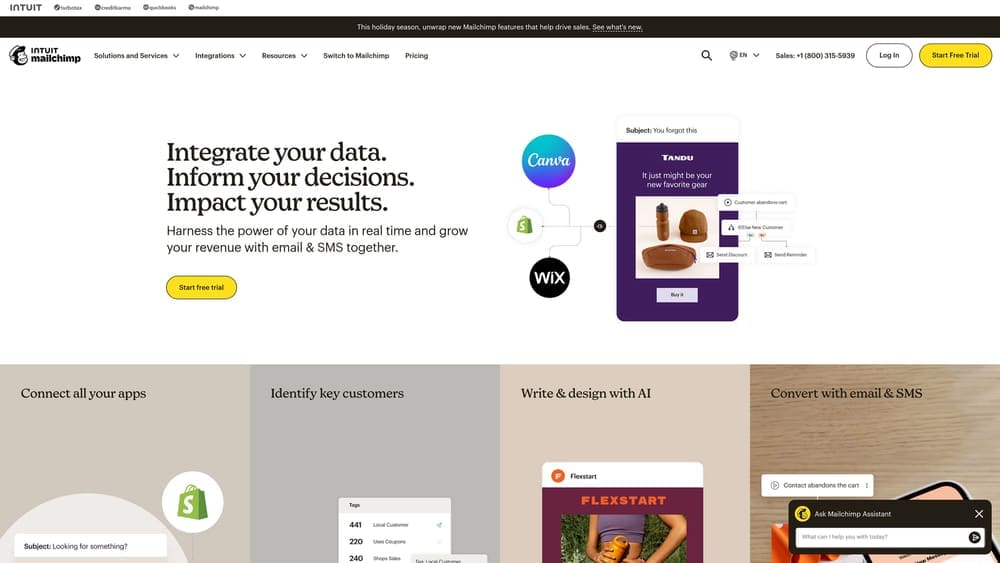
Mailchimp has evolved from a simple email tool into a comprehensive marketing platform while maintaining its user-friendly approach.
Where This Tool Shines
Mailchimp makes email marketing accessible for businesses without dedicated marketing teams. The platform's intuitive drag-and-drop builder lets anyone create professional-looking emails without design skills, while the InLine AI Assistant helps generate content ideas and optimize messaging—a feature that's been used to send over 3.1 billion emails.
The real value lies in how Mailchimp uses real-time behavior data to personalize campaigns automatically. When someone browses your website or clicks specific links, the platform adjusts future messaging accordingly. Pre-built automation workflows handle common scenarios like welcome series, abandoned cart recovery, and post-purchase follow-ups—you just customize the content to match your brand voice.
Key Features & Capabilities
Email Marketing & Automation: Drag-and-drop builder with mobile preview and pre-built automation workflows for common marketing scenarios.
AI-Powered Recommendations: InLine AI Assistant provides content suggestions and optimization recommendations for opens, clicks, and sales.
Audience Segmentation: Target specific groups based on purchase history, engagement levels, and custom tags you create.
SMS Marketing Integration: Combine email and text messaging campaigns for multi-channel customer engagement.
Landing Page Builder: Create lead capture pages without needing a separate tool or technical skills.
E-commerce Integrations: Connect with Shopify, WooCommerce, and other platforms for automated product recommendations.
Social Media Management: Schedule and manage social posts alongside your email campaigns from one dashboard.
Revenue Attribution: Track which campaigns generate actual sales, with Mailchimp reporting 24X ROI on their Standard Plan and 25X ROI on paid plans overall.
Best For / Ideal Users
Mailchimp works best for small businesses and startups with email lists under 50,000 contacts who need straightforward email marketing without complexity. It's ideal for solopreneurs and small teams (1-3 people) who want to automate basic marketing tasks without hiring specialists.
E-commerce businesses benefit particularly from the shopping integrations and automated product recommendation features. Service-based businesses appreciate the simple automation for client onboarding.
5. Semrush
Best for: Businesses prioritizing SEO and competitive intelligence in their digital strategy
Semrush has evolved into a comprehensive online visibility platform that goes far beyond basic keyword research, offering AI-powered tools for SEO, PPC, content marketing, and competitive analysis.

Where This Tool Shines
Semrush excels at revealing the complete picture of your competitive landscape while providing actionable insights to improve your own performance. The platform's keyword research database covers over 25 billion keywords across 130+ countries, giving you unprecedented visibility into what your audience actually searches for. What sets Semrush apart is how it connects SEO data to broader marketing strategy—you can see not just which keywords competitors rank for, but their entire content strategy, backlink profile, and paid advertising approach.
The site audit feature crawls your website like a search engine would, identifying technical issues that harm rankings. Unlike tools that simply list problems, Semrush prioritizes fixes based on impact and provides specific implementation guidance. For content teams, the SEO Writing Assistant analyzes your content in real-time, suggesting improvements for readability, keyword usage, and tone consistency before you publish.
Key Features & Capabilities
Keyword Magic Tool: Access 25+ billion keywords with search volume, difficulty scores, and intent classification to identify opportunities competitors miss.
Domain Overview: Analyze any competitor's complete digital presence including organic rankings, paid ads, backlinks, and traffic estimates in one dashboard.
Position Tracking: Monitor daily ranking changes for target keywords across locations and devices, with automated reporting and competitor comparison.
Site Audit: Identify technical SEO issues with prioritized recommendations and track improvements over time with scheduled crawls.
Backlink Analysis: Discover link building opportunities by analyzing competitor backlink profiles and identifying high-authority domains in your industry.
Content Marketing Toolkit: Research trending topics, optimize content with AI-powered suggestions, and track content performance across channels.
Advertising Research: Reverse-engineer competitors' Google Ads strategies including ad copy, keywords, and estimated budgets.
Best For / Ideal Users
Semrush works best for businesses where organic search drives significant revenue and competitive intelligence provides strategic advantage. It's particularly valuable for companies with dedicated SEO specialists or content marketing teams who can leverage the platform's depth.
The platform requires marketing sophistication to maximize value—you need to understand SEO fundamentals to interpret data correctly and implement recommendations effectively. Agencies managing multiple clients benefit from the white-label reporting and project management features.
Companies in competitive industries (legal, finance, SaaS) find the competitive intelligence features particularly valuable.
6. ActiveCampaign
Best for: Growing businesses needing sophisticated automation without enterprise complexity
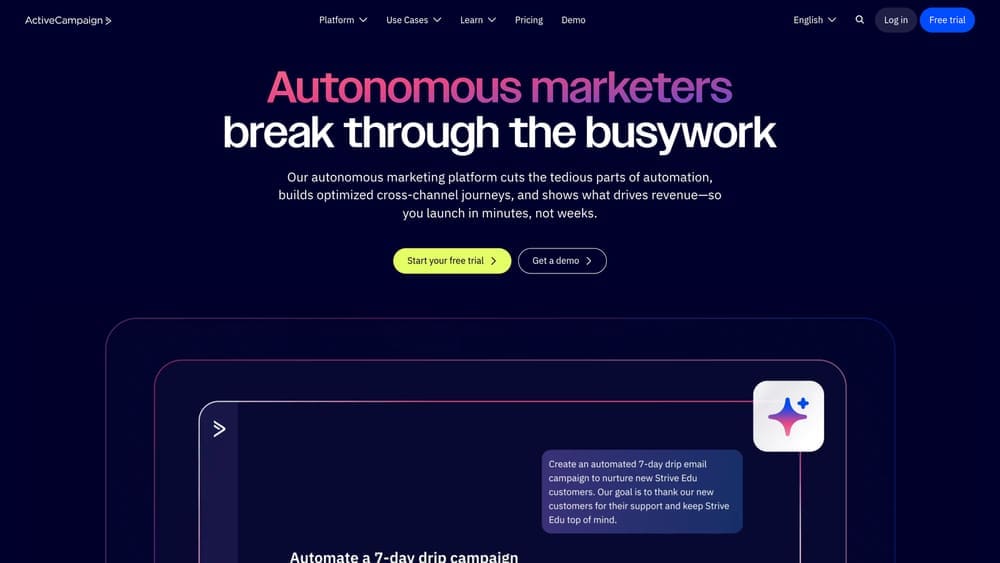
ActiveCampaign positions itself as an autonomous marketing platform powered by AI agents that handle email, SMS, and WhatsApp campaigns backed by billions of data points.
Where This Tool Shines
ActiveCampaign's automation builder creates multi-step customer journeys that adapt based on individual behavior—without requiring technical expertise. The visual workflow editor uses conditional logic to send different messages depending on what contacts click, which pages they visit, or how they've engaged previously.
The integrated CRM connects marketing activities directly to sales outcomes. You can track deals through your pipeline while seeing exactly which marketing touches influenced each opportunity. Lead scoring automatically surfaces your hottest prospects by assigning points for specific actions, demographics, or engagement patterns.
Key Features & Capabilities
AI-Powered Automation: Autonomous agents handle multi-channel campaigns across email, SMS, and WhatsApp with intelligent optimization.
Visual Workflow Builder: Create complex automation sequences with branching logic based on contact behavior and attributes.
Integrated CRM: Track deals through your sales pipeline with full visibility into marketing touchpoints that influenced each opportunity.
Predictive Sending: Machine learning determines optimal send times when each contact is most likely to engage.
Dynamic Content: Personalize email content that changes based on contact data, behavior, or custom fields.
Multi-Channel Messaging: Coordinate campaigns across email, SMS, and WhatsApp from a single platform.
Site Tracking: Monitor which website pages contacts visit before converting to understand their journey.
Attribution Reporting: Connect marketing activities to revenue with reports showing which campaigns drive actual sales.
Best For / Ideal Users
ActiveCampaign works best for growing businesses with 10-200 employees that have outgrown basic email tools but aren't ready for enterprise-level complexity. It's particularly valuable for B2B companies with multi-touch sales processes where understanding the customer journey matters.
Online course creators and digital product sellers benefit from the platform's ability to deliver personalized content based on purchase history and engagement. Service businesses with multiple offerings use the segmentation capabilities to ensure each audience receives relevant messaging.
Teams with at least one person dedicated to marketing automation will maximize the platform's capabilities. The visual builder makes complex workflows accessible, but you'll need someone who understands customer journey mapping and automation strategy.
Pricing
Plans start at $29/month for Lite with limited automation, $49/month for Plus with full automation capabilities.
7. LinkedIn Campaign Manager
Best for: B2B companies targeting decision-makers and professional audiences with high-value offerings
LinkedIn Campaign Manager delivers precision targeting that no other platform can match when you need to reach specific business professionals.

Where This Tool Shines
LinkedIn's advertising platform operates in a fundamentally different context than consumer-focused channels. When someone scrolls LinkedIn, they're in professional mode—thinking about work challenges, industry trends, and business solutions. This mindset shift matters enormously for B2B advertisers.
The targeting precision is unmatched. You can reach CFOs at companies with 500-1,000 employees in the healthcare industry who have "budget authority" listed in their profiles. Or target IT directors at Fortune 500 companies who recently changed jobs (often a prime buying window). This granularity means your ad budget reaches exactly the decision-makers who matter, not a broad audience hoping some qualify.
Lead generation forms pre-fill with LinkedIn profile data—name, email, company, job title—dramatically reducing friction. Users click your ad, see their information already populated, and submit with one additional click. Conversion rates on LinkedIn lead forms typically run 2-3x higher than sending traffic to external landing pages.
Key Features & Capabilities
Job Title & Seniority Targeting: Reach specific roles like "Marketing Director" or seniority levels like "VP-level and above" to focus budget on decision-makers.
Company Targeting: Upload lists of specific companies for account-based marketing campaigns, or target by company size, industry, and growth rate.
Sponsored Content: Native ads appearing in the LinkedIn feed that drive engagement without feeling like traditional advertising.
InMail Campaigns: Send personalized messages directly to prospects' LinkedIn inboxes with higher open rates than cold email.
Conversion Tracking: Track leads, sign-ups, and purchases with LinkedIn's Insight Tag, connecting ad spend to business outcomes.
Best For / Ideal Users
Enterprise Software & SaaS Companies: Reaching IT decision-makers and executives evaluating business software solutions.
Professional Services: Consulting firms, agencies, and B2B service providers targeting specific industries or company sizes.
High-Ticket B2B Offerings: Products or services with deal values of $10,000+ where reaching the right person justifies premium costs.
Pricing
LinkedIn operates on pay-per-click or pay-per-impression bidding with costs significantly higher than other platforms. Expect $5-15 per click.
8. Klaviyo
Best for: E-commerce businesses maximizing customer lifetime value through email and SMS
Klaviyo has become the dominant email marketing platform for e-commerce brands focused on revenue growth rather than vanity metrics.
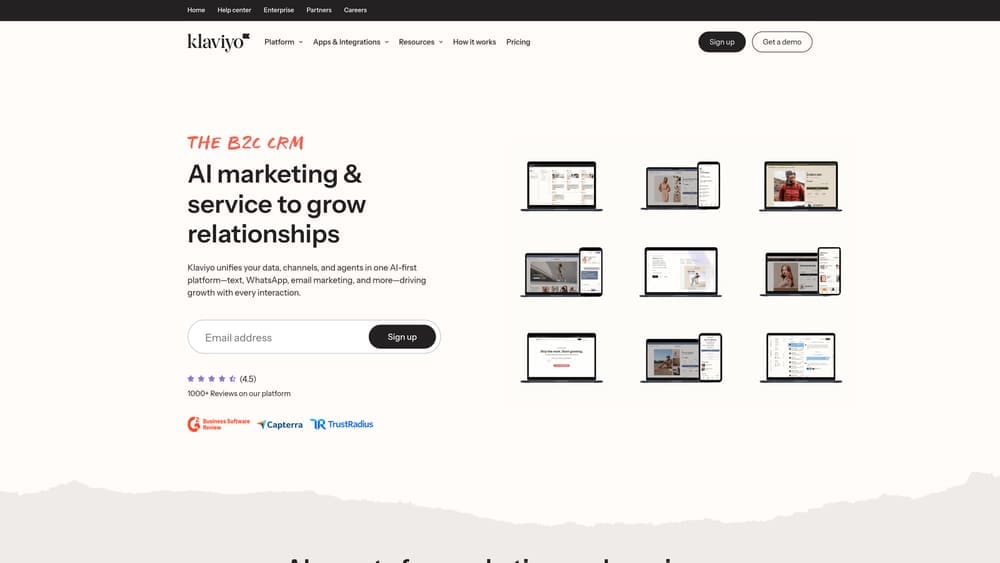
Where This Tool Shines
Klaviyo's deep e-commerce integrations transform customer data into revenue-driving campaigns with minimal manual work. The platform automatically syncs purchase history, browsing behavior, and customer preferences from your Shopify, WooCommerce, or BigCommerce store, enabling hyper-personalized product recommendations that feel custom-built for each customer.
The pre-built flows handle the heavy lifting—abandoned cart recovery, post-purchase follow-ups, win-back campaigns for dormant customers, and browse abandonment sequences all run automatically once configured. What sets Klaviyo apart is how these flows use actual customer data: someone who abandoned a $200 cart gets different messaging than someone who abandoned a $50 cart, and the product recommendations in follow-up emails reflect what they've actually browsed or purchased before.
Key Features & Capabilities
AI-Powered Email Marketing: K:AI Agents analyze customer behavior patterns to optimize send times, subject lines, and content for each recipient automatically.
SMS Marketing Integration: Coordinate email and text campaigns in unified customer journeys, with SMS triggering based on email engagement or vice versa.
Customer Hub and Helpdesk: Centralized view of each customer's purchase history, campaign interactions, and support conversations for personalized service.
Predictive Analytics: Machine learning identifies customers likely to make their next purchase, churn risk scores, and predicted customer lifetime value.
Dynamic Product Recommendations: Automatically populate emails with products based on browsing history, purchase patterns, and inventory availability.
Revenue Attribution Reporting: Track exactly how much revenue each campaign, flow, and segment generates—not just opens and clicks.
Best For / Ideal Users
Klaviyo works best for e-commerce businesses doing $500K+ annual revenue who've outgrown basic email tools and need sophisticated automation. It's particularly valuable for brands with repeat purchase potential—subscription boxes, consumables, fashion, beauty—where customer lifetime value matters more than single transactions.
The platform requires someone comfortable with data and segmentation logic. Businesses with dedicated email marketing managers or agencies will maximize Klaviyo's capabilities, though the pre-built flows make it accessible for smaller teams willing to invest learning time.
Pricing
Free plan available for up to 250 contacts and 500 monthly email sends. Paid plans start based on contact count.
Putting It All Together
The right digital marketing platform depends entirely on your business model and growth stage. If you're a B2B company focused on lead nurturing, HubSpot or ActiveCampaign provide the automation depth you need. E-commerce businesses will find Klaviyo's revenue-focused features and product recommendation engines deliver the fastest ROI. For companies just starting their digital marketing journey, Mailchimp offers an accessible entry point without overwhelming complexity.
Google Ads and Meta Business Suite remain essential for most businesses—they're not either/or decisions but complementary channels that capture different customer behaviors. LinkedIn Campaign Manager justifies its premium pricing when you're targeting specific B2B decision-makers. And if organic search drives your business, Semrush's competitive intelligence capabilities are worth the investment.
The biggest mistake? Trying to do everything at once. Start with one or two platforms that align with your primary customer acquisition channel, master them, then expand. A focused strategy on the right platform beats scattered efforts across multiple tools every time.
Need help determining which platforms fit your specific business goals and budget? Learn more about our services and discover how we help businesses build effective, integrated marketing systems that actually drive growth.
Campaign
Creatives
quick links
contact
© 2025 Campaign Creatives.
All rights reserved.