campaign
creatives

8 When To Use Programmatic Advertising Tools To Maximize Campaign ROI
Discover eight leading programmatic advertising platforms and learn when to use programmatic advertising based on your specific goals, budget, and targeting complexity to achieve the best return on investment.
Your ad campaigns are running, but you're manually adjusting bids at midnight, chasing inventory across a dozen publisher sites, and wondering if there's a better way. There is—programmatic advertising automates the entire process, handling billions of ad transactions daily through sophisticated algorithms and real-time bidding systems.
The challenge isn't whether programmatic works. It's knowing when it makes sense for your specific situation. Should you invest in these platforms when your current approach delivers results? The answer depends on your goals, budget, and targeting complexity. Programmatic excels when you need scale, precision audience targeting, or real-time optimization—but it's not the right fit for every campaign.
This guide examines eight leading programmatic advertising platforms, each excelling in different scenarios. You'll discover which tools align with your specific needs, what makes each platform unique, and the types of businesses that benefit most from their capabilities. From enterprise-level demand-side platforms to accessible self-service solutions, understanding where each tool shines helps you make informed decisions about when programmatic advertising delivers the best return on investment.
1. Google Display & Video 360
Best for: Enterprise advertisers needing comprehensive programmatic access across multiple channels
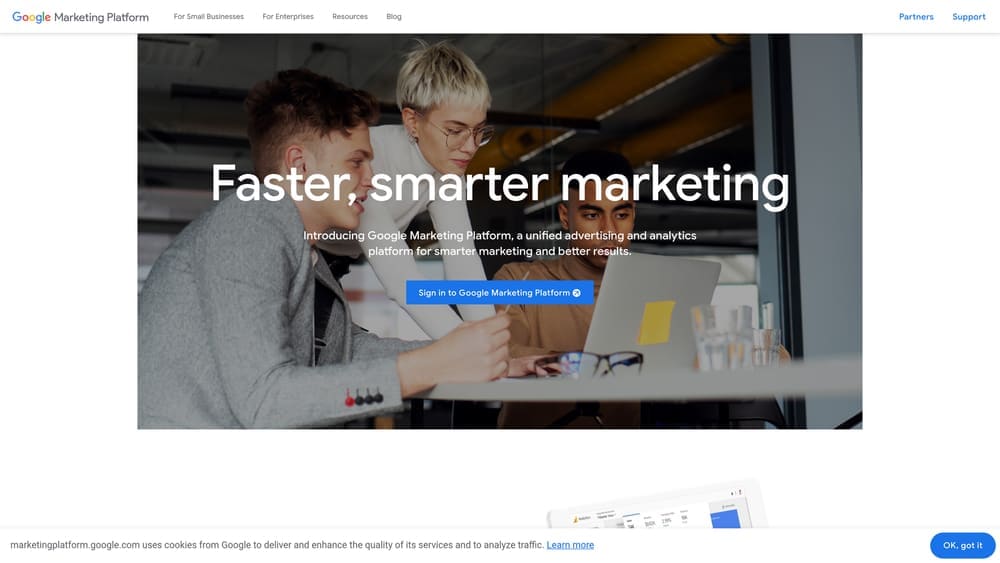
Google Display & Video 360 represents the gold standard for enterprise programmatic advertising, providing full-featured demand-side platform capabilities with access to Google's extensive inventory alongside third-party exchanges.
Where This Tool Shines
DV360 excels when you need unified campaign management across display, video, audio, and connected TV. The platform's integration with Google's ecosystem provides unmatched reach and data capabilities, particularly valuable for organizations already using Google Analytics or other Google marketing tools.
Its strength lies in handling complex, multi-channel campaigns that require sophisticated audience targeting and real-time optimization. Large advertisers appreciate the granular control over bidding strategies, creative rotation, and frequency capping across all inventory sources. The platform's machine learning capabilities continuously improve campaign performance based on conversion data and engagement signals, though this requires proper Floodlight tag implementation and sufficient optimization time.
Key Features & Capabilities
Premium Inventory Access: Direct connections to YouTube, Gmail, and Google Display Network, plus major third-party ad exchanges and private marketplaces.
Advanced Audience Targeting: Combines Google's first-party data with your customer data and third-party segments for precise audience building.
Cross-Device Management: Track and optimize campaigns across smartphones, tablets, desktops, and connected TVs with unified frequency capping.
Automated Bidding: Multiple machine learning-powered bidding strategies optimized for conversions, viewability, or reach goals.
Integrated Measurement: Native connections to Google Analytics 360 and Campaign Manager for comprehensive cross-channel attribution.
Dynamic Creative Optimization: Automatically tests creative variations and serves best-performing ads to different audience segments.
Brand Safety Controls: Extensive verification tools and inventory filtering to protect brand reputation across all placements.
Best For / Ideal Users
DV360 serves enterprise advertisers, agencies managing multiple clients, and brands with substantial advertising budgets exceeding $50,000 monthly. The platform requires dedicated programmatic specialists who can navigate its complexity and leverage advanced features effectively.
Organizations running coordinated campaigns across multiple channels benefit most from the unified management approach. Companies already invested in Google's marketing ecosystem gain particular advantages through seamless data integration and cross-platform measurement capabilities.
Pricing
DV360 operates on a percentage-of-spend model, typically requiring minimum monthly spends in the five-figure range. Pricing varies based on managed spend volume and included features, with enterprise contracts including dedicated support.
2. The Trade Desk
Best for: Independent advertisers seeking transparency and control over programmatic campaigns
The Trade Desk has built its reputation on transparency and advertiser-first principles, positioning itself as an independent DSP that prioritizes your interests over platform-owned inventory.
Where This Tool Shines
The Trade Desk distinguishes itself through complete transparency into where your ads run and exactly how your budget gets spent. Unlike platforms that obscure pricing details or bundle fees, you see precisely what you're paying for inventory versus platform costs. This clarity matters when you're managing substantial budgets and need to justify every dollar.
The platform's independence creates a fundamental advantage. Without owned media properties to promote, The Trade Desk focuses solely on finding the best inventory for your campaigns. This neutral stance eliminates the conflict of interest that arises when platforms prioritize their own inventory over what actually performs best for your goals.
Key Features & Capabilities
Transparent Pricing Structure: Clear breakdown of media costs and platform fees with no hidden charges.
Connected TV Excellence: Sophisticated targeting options for streaming content across major CTV platforms and services.
Unified ID 2.0 Integration: Future-proof identity solution using encrypted email addresses as cookie alternatives.
Koa AI Optimization: Machine learning engine that continuously improves campaign performance based on conversion data.
Cross-Device Attribution: Track user journeys across smartphones, tablets, desktops, and connected TVs with household-level precision.
Private Marketplace Access: Negotiate custom deals with premium publishers for exclusive inventory access.
Custom Data Integration: Connect first-party data, CRM systems, and third-party data providers seamlessly.
Best For / Ideal Users
The Trade Desk serves mid-to-large advertisers and agencies who prioritize transparency and want complete control over campaign optimization. Organizations with programmatic expertise who prefer to manage campaigns independently rather than relying on managed services find the platform's tools highly effective.
Brands investing heavily in connected TV advertising gain particular advantages from the platform's streaming inventory relationships and household targeting capabilities. Companies concerned about data privacy and preparing for cookie deprecation benefit from the Unified ID 2.0 framework.
The platform works best for organizations with monthly advertising budgets exceeding $20,000 who can justify the platform fees and achieve meaningful optimization scale.
Pricing
The Trade Desk charges a percentage of media spend, typically ranging from 15-20% depending on volume and service level. Minimum monthly spend requirements usually start around $20,000. Custom enterprise pricing available for larger advertisers with substantial budgets.
3. Amazon DSP
Best for: E-commerce brands and retailers targeting high-intent shoppers with proven purchase behavior
Amazon DSP transforms how e-commerce brands reach consumers by leveraging shopping data from hundreds of millions of Amazon customers.
Where This Tool Shines
Amazon DSP's power comes from something no other platform can match: direct access to actual shopping behavior. While other platforms rely on browsing patterns or demographic assumptions, Amazon knows exactly what people buy, search for, and consider purchasing.
The platform lets you target consumers who've viewed your competitor's products, abandoned carts with specific items, or purchased complementary products. This shopping intent data creates remarkably precise audience segments. You can reach someone who searched for "wireless headphones" on Amazon with your headphone ad across the entire web—not just on Amazon properties.
Key Features & Capabilities
Shopping Behavior Targeting: Reach audiences based on actual Amazon searches, product views, and purchase history across categories.
Amazon-Owned Inventory: Place ads on IMDb, Twitch, Fire TV, and Amazon's extensive publisher network beyond the main retail site.
Product-Level Precision: Target consumers interested in specific products, brands, or categories with granular control.
Closed-Loop Attribution: Track how display and video ads drive actual Amazon sales through Amazon Attribution integration.
Cross-Web Retargeting: Follow Amazon shoppers across the internet with relevant product recommendations based on their browsing.
Best For / Ideal Users
Amazon DSP delivers exceptional results for brands selling consumer products on Amazon who want to drive sales both on and off the platform. Consumer packaged goods companies benefit from the ability to reach shoppers actively researching their category.
Retailers competing for market share use the platform's competitive conquesting features to reach consumers viewing rival products. The platform works particularly well for brands with clear purchase intent signals—products people actively search for rather than impulse buys.
Pricing
Amazon DSP offers self-service access starting around $35,000 minimum spend, with managed service options requiring higher commitments. Platform fees typically range from 15-20% of media spend depending on service level and volume.
4. MediaMath
Best for: Marketers requiring customizable programmatic solutions with strong data integration
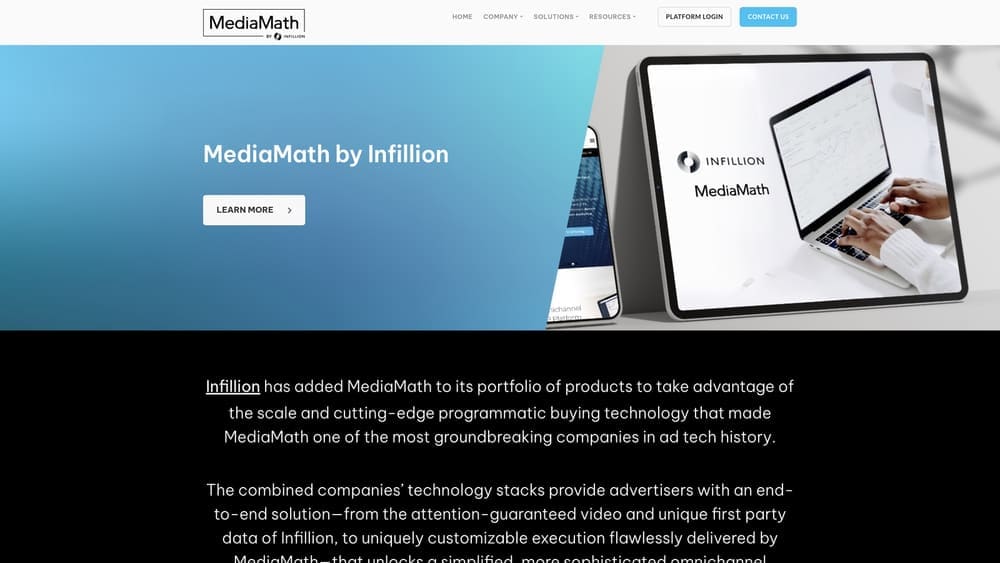
MediaMath delivers enterprise-grade programmatic advertising built for brands that need flexibility beyond standard platform configurations.
Where This Tool Shines
MediaMath's open architecture separates it from competitors by enabling deep customization of campaign logic and bidding strategies. The platform connects seamlessly with CRM systems, data management platforms, and proprietary analytics tools—essential for organizations with complex marketing technology stacks. You can build sophisticated audience segments by combining multiple data sources, then apply custom bidding rules aligned with specific business outcomes rather than generic metrics.
The platform's Brain optimization engine uses machine learning to improve performance across channels, learning from your unique conversion patterns and business objectives. MediaMath particularly excels when standard optimization goals don't match your needs—whether you're optimizing for customer lifetime value, specific product margins, or custom engagement metrics that matter to your business.
Key Features & Capabilities
Customizable Bidding Algorithms: Build bidding strategies based on your specific KPIs rather than platform-defined goals.
Extensive Data Marketplace: Access third-party data providers while integrating your proprietary customer data seamlessly.
API Access: Connect MediaMath with your existing tools through comprehensive API documentation for custom integrations.
Cross-Channel Orchestration: Coordinate campaigns across display, video, mobile, and connected TV from a unified platform.
Advanced Attribution Tools: Track customer journeys across touchpoints with flexible attribution modeling that matches your business logic.
Best For / Ideal Users
MediaMath serves enterprise advertisers with dedicated programmatic teams who need platform flexibility. Organizations with unique business models benefit most—those requiring custom optimization goals, complex data integrations, or specialized reporting that standard platforms can't accommodate.
Agencies managing sophisticated client campaigns appreciate the platform's ability to implement custom strategies without platform limitations. Brands with mature marketing technology ecosystems find value in MediaMath's integration capabilities with existing tools and data sources.
Pricing
MediaMath operates on percentage-of-spend pricing with minimum monthly commitments typically starting around $50,000. Enterprise contracts include platform access, technical support, and training resources. Custom pricing structures available based on required features, managed services, and integration complexity.
5. StackAdapt
Best for: Mid-market advertisers seeking user-friendly programmatic with strong native advertising capabilities
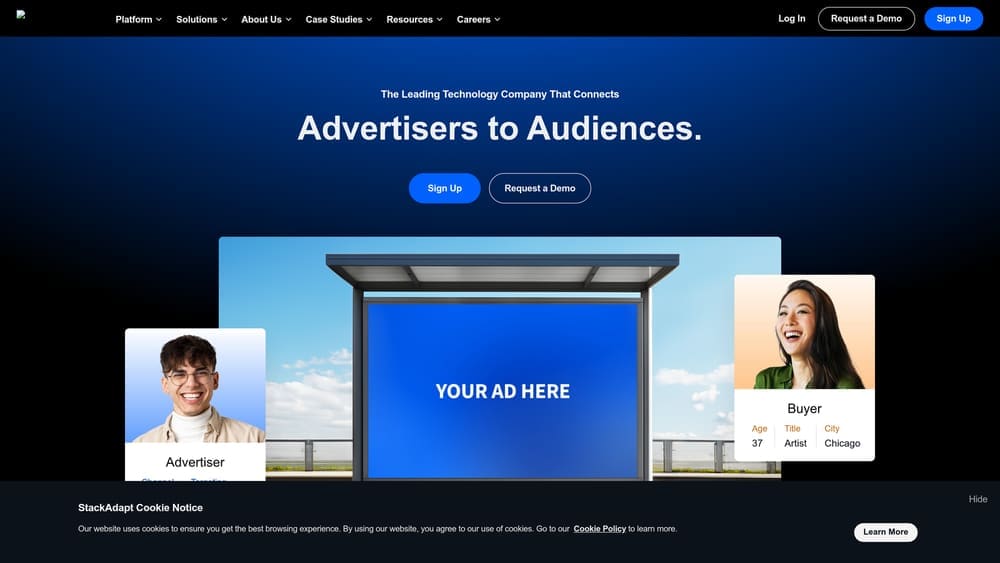
StackAdapt has emerged as a go-to platform for growing businesses that want programmatic sophistication without enterprise-level complexity.
Where This Tool Shines
StackAdapt distinguishes itself through exceptional native advertising capabilities that blend seamlessly with publisher content. The platform's interface simplifies complex programmatic concepts, enabling marketers to launch effective campaigns without extensive DSP experience. Its machine learning automatically optimizes toward conversion goals while maintaining budget efficiency across channels.
The platform particularly excels for B2B advertisers and content marketers who rely on native formats to reach professional audiences. StackAdapt's contextual targeting capabilities help brands reach relevant audiences without heavy reliance on third-party cookies—a critical advantage as privacy regulations evolve. The platform's full-funnel approach spans Connected TV, Digital Out-of-Home, programmatic audio, and in-game advertising alongside traditional display and video formats.
Key Features & Capabilities
Ivy™ AI Marketing Assistant: Provides intelligent campaign recommendations and automated optimization suggestions based on performance data.
Multi-Channel Integration: Unified management across native, display, video, Connected TV, audio, and digital out-of-home advertising.
Intuitive Campaign Builder: Streamlined interface for creating and testing ad variations without technical complexity.
Advanced Audience Targeting: Contextual, behavioral, and demographic targeting options with extensive premium ad inventory access.
Real-Time Optimization: Machine learning algorithms continuously adjust bids and placements to maximize conversion performance.
Comprehensive Reporting: Detailed audience insights and performance analytics integrated with major analytics platforms.
Retargeting Capabilities: Create lookalike audiences and retarget engaged users across multiple channels and devices.
Best For / Ideal Users
StackAdapt serves mid-market advertisers who want programmatic capabilities without the complexity and high minimums of enterprise platforms. B2B companies find particular value in the platform's native advertising strength and professional audience targeting.
Agencies managing diverse client portfolios appreciate the platform's balance between sophisticated features and ease of use. Content-focused brands that prioritize native formats and contextual relevance over aggressive display tactics benefit from StackAdapt's publisher relationships and creative flexibility.
Marketing teams without dedicated programmatic specialists can launch and optimize campaigns effectively using the platform's intuitive interface and AI-powered recommendations.
Pricing
StackAdapt offers flexible pricing with minimum monthly spends typically starting around $5,000-$10,000. Platform fees are based on percentage of media spend, with pricing varying by service level and included features.
6. Yahoo DSP
Best for: Advertisers targeting premium publisher inventory with strong mobile reach
Yahoo DSP delivers programmatic access to premium inventory across Yahoo's extensive property portfolio and partner network.
Where This Tool Shines
Yahoo DSP's competitive edge comes from direct ownership of high-traffic properties that attract millions of engaged users daily. When you run campaigns through Yahoo DSP, you're accessing audiences on Yahoo News, Yahoo Finance, Yahoo Sports, and Yahoo Mail—environments where users actively consume content rather than passively scroll.
The platform excels at mobile advertising. With extensive in-app inventory and mobile web placements, Yahoo DSP reaches consumers where they spend most of their digital time. The platform's identity graph connects user activity across devices, enabling you to follow customers from their morning smartphone browsing to their evening tablet usage.
Brand safety represents another core strength. Yahoo's owned properties maintain strict content standards, providing advertisers with confidence that their messages appear alongside quality journalism and professional content. This matters particularly for regulated industries or brands sensitive to adjacency concerns.
Key Features & Capabilities
Premium Inventory Access: Direct connections to Yahoo-owned properties eliminate intermediaries and provide priority placement opportunities.
Cross-Device Attribution: Track user journeys across smartphones, tablets, desktops, and connected TVs with Yahoo's identity resolution technology.
Mobile-First Capabilities: Extensive app inventory and mobile web placements reach consumers on their primary devices.
Contextual Targeting: Place ads based on content context without heavy reliance on third-party cookies.
Video & Native Formats: Multiple creative formats including video pre-roll, native ads, and display placements.
Best For / Ideal Users
Yahoo DSP serves brand advertisers who prioritize quality placements over maximum reach. If your brand values appearing alongside trusted content more than achieving the lowest possible CPM, this platform delivers.
Financial services companies find particular value in Yahoo Finance's professional audience. The property attracts investors, business decision-makers, and financially engaged consumers—a demographic difficult to reach at scale elsewhere.
Brands with strong mobile strategies benefit from Yahoo's app network and mobile web inventory. The platform's cross-device capabilities help you maintain consistent messaging as consumers switch between devices throughout their day.
Pricing
Yahoo DSP operates on percentage-of-spend pricing with minimums varying by service level. Self-service options typically start around $10,000 monthly, while managed services require higher commitments. Platform fees generally range from 15-25% depending on services and volume.
7. Adobe Advertising Cloud
Best for: Enterprise marketers using Adobe Experience Cloud seeking integrated campaign management
Adobe Advertising Cloud integrates programmatic advertising with Adobe's comprehensive marketing suite, creating unified workflows from customer data analysis to campaign execution.
Where This Tool Shines
Adobe Advertising Cloud's competitive advantage emerges from its native integration with Adobe Experience Cloud, Analytics, and Audience Manager. Marketers activate audience segments created in Adobe tools directly into programmatic campaigns without data exports or manual transfers.
The platform's cross-channel orchestration coordinates campaigns across search, display, video, and social from a single interface. Adobe's Sensei AI analyzes performance patterns across all channels, automatically shifting budgets toward top-performing placements while maintaining overall campaign goals. Organizations using Adobe for content management and customer data benefit from seamless data flow between systems—audience insights from Analytics inform targeting decisions, while campaign performance data enriches customer profiles.
Key Features & Capabilities
Native Adobe Integration: Direct connections to Experience Cloud, Analytics, and Audience Manager eliminate data silos.
Cross-Channel Management: Unified control over display, video, search, and social campaigns with coordinated optimization.
Sensei AI Optimization: Machine learning engine improves targeting and bidding based on cross-channel performance signals.
Unified Audience Management: Create and activate audience segments across all advertising channels from single platform.
Journey Analytics: Advanced attribution modeling shows how programmatic touchpoints contribute to conversions across customer journey.
Creative Management: Dynamic creative optimization personalizes ad content based on audience characteristics and behavior.
Private Marketplace Access: Negotiate programmatic guaranteed deals and access premium inventory through direct publisher relationships.
Best For / Ideal Users
Adobe Advertising Cloud serves enterprise organizations already invested in Adobe's marketing ecosystem. Large brands with complex customer journeys requiring cross-channel coordination find particular value in the unified approach to campaign management and measurement.
Companies with substantial advertising budgets and dedicated programmatic teams benefit from the platform's comprehensive capabilities. Organizations prioritizing data integration between their customer data platform, analytics tools, and advertising systems gain efficiency from the seamless Adobe ecosystem connections.
Pricing
Adobe Advertising Cloud uses enterprise licensing with pricing based on managed spend and included features. Minimum commitments typically start in the six-figure annual range, with pricing bundled as part of broader Adobe Experience Cloud contracts including platform access, integration support, and training.
8. Criteo Commerce Media Platform
Best for: E-commerce and retail brands focusing on performance-driven retargeting and dynamic product advertising
Criteo Commerce Media Platform specializes in performance advertising for e-commerce businesses, leveraging AI-powered product recommendations to drive measurable sales and revenue.
Where This Tool Shines
Criteo built its reputation on sophisticated retargeting technology that transforms browsing behavior into personalized product recommendations. The platform's AI engine analyzes millions of shopping signals—product views, cart additions, purchase patterns—to predict which items individual consumers are most likely to buy. This goes beyond simple "you viewed this, here's the ad" retargeting into predictive commerce advertising.
The platform's commerce data network provides unique competitive advantages. By working with thousands of retailers globally, Criteo gains insights into shopping behaviors, seasonal trends, and product performance across categories. This collective intelligence helps optimize campaigns beyond what individual retailers could achieve with their own data alone. For businesses with extensive product catalogs, Criteo's dynamic creative automatically generates ads featuring the most relevant products for each consumer.
Key Features & Capabilities
AI-Powered Product Recommendations: Machine learning algorithms analyze browsing and purchase data to serve personalized product ads that drive conversions.
Dynamic Creative Optimization: Automatically generates ad variations featuring relevant products from your catalog based on user behavior and preferences.
Performance-Based Bidding: Optimization algorithms focus on revenue and return on ad spend rather than vanity metrics like clicks or impressions.
Retail Media Network Access: Reach shoppers across major retail media networks and publisher sites where purchase intent is highest.
Cross-Device Retargeting: Follow consumers across smartphones, tablets, and desktops to maintain consistent messaging throughout the shopping journey.
Commerce Audience Insights: Access aggregated shopping behavior data and competitive benchmarks to inform targeting strategies.
Best For / Ideal Users
Criteo serves e-commerce businesses and online retailers with transactional websites and product catalogs. The platform works particularly well for fashion retailers, consumer electronics brands, travel companies, and any business where product selection and personalization drive purchase decisions.
Performance marketers who prioritize measurable outcomes—actual sales and revenue—over brand awareness metrics find Criteo's optimization approach highly effective. Companies with seasonal inventory or frequently changing product assortments benefit from the platform's ability to automatically update creative based on catalog feeds.
Pricing
Criteo typically operates on performance-based pricing models, charging based on conversions or revenue generated rather than flat platform fees. Minimum spend requirements generally start around $5,000-$10,000 monthly, with both self-service and managed service options available.
Putting It All Together
The right programmatic platform depends on your specific needs and resources. Google DV360 and The Trade Desk dominate the enterprise space with comprehensive features and extensive inventory, but they require substantial budgets and dedicated teams. Amazon DSP and Criteo excel for e-commerce brands prioritizing shopping intent and performance-driven results. StackAdapt offers the sweet spot for mid-market advertisers who want sophisticated capabilities without enterprise complexity.
Start by assessing three factors: your monthly ad budget, your team's programmatic expertise, and your primary campaign objectives. Enterprise advertisers managing multi-channel campaigns across video, display, and connected TV benefit from DV360 or The Trade Desk. E-commerce brands should prioritize Amazon DSP or Criteo for their commerce-focused optimization. B2B marketers and content-driven brands find StackAdapt's native advertising capabilities particularly effective. If you're already invested in specific ecosystems—Adobe, Google, or Yahoo—their respective platforms provide seamless integration advantages.
Programmatic advertising delivers the strongest results when you have clear conversion goals, sufficient budget for optimization, and the ability to act on performance insights. Most platforms require minimum monthly spends between $5,000 and $50,000, with enterprise solutions starting higher. Begin with one platform aligned to your primary objective, master its capabilities, then expand to additional channels as your expertise grows.
Ready to develop a programmatic strategy tailored to your business goals? Learn more about our services and discover how we help brands maximize their programmatic advertising investments.
Campaign
Creatives
quick links
contact
© 2025 Campaign Creatives.
All rights reserved.